For importers, distributors, wholesalers, and private-label buyers, private label candy packaging preparation is not only a product question. It is a sourcing workflow question. The buyer needs enough information to compare options, request samples, and receive a quote that will not be rewritten after packaging, quantity, or market details become clearer.
This guide is designed to help private-label buyers prepare artwork inputs before asking for packaging design or pricing. It is written for B2B teams that want a practical route before starting a detailed quotation discussion.
Latest market insight
- Axios reported on April 15, 2026 that U.S. private-label sales reached $330 billion in 2025, so packaging briefs now need retailer-grade label discipline from the first RFQ.
- The White House ordered the suspension of duty-free de minimis treatment for all countries on July 30, 2025, making low-value sample and packaging rounds less forgiving on timing and paperwork.
- Food & Wine’s June 23, 2026 Sweets & Snacks Expo trend recap highlighted interactive textures and functional candy ideas, so claim space and front-of-pack hierarchy should be planned before artwork starts.
Sources reviewed: Axios, The White House, Food & Wine.
Start with the retail and label market
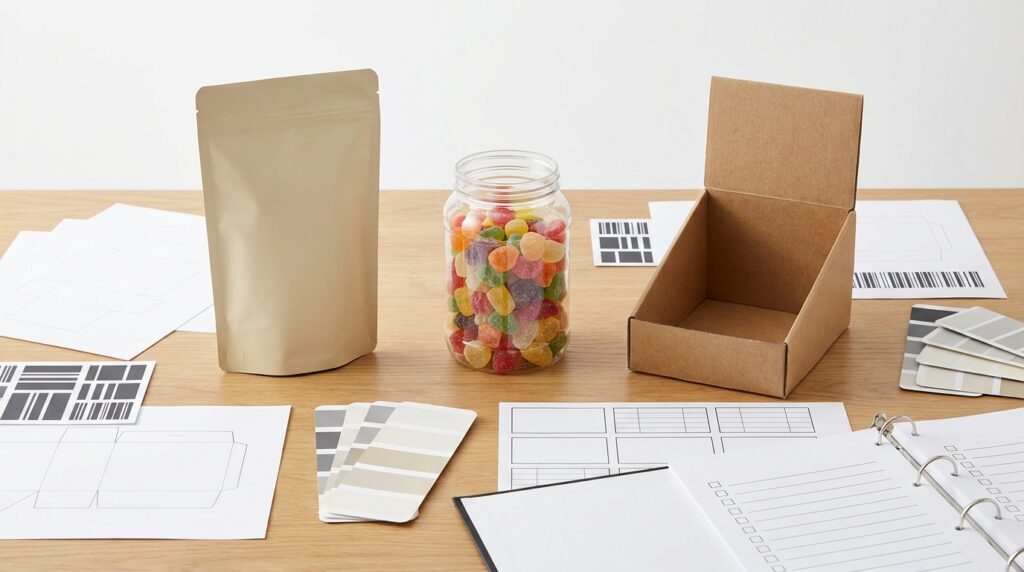
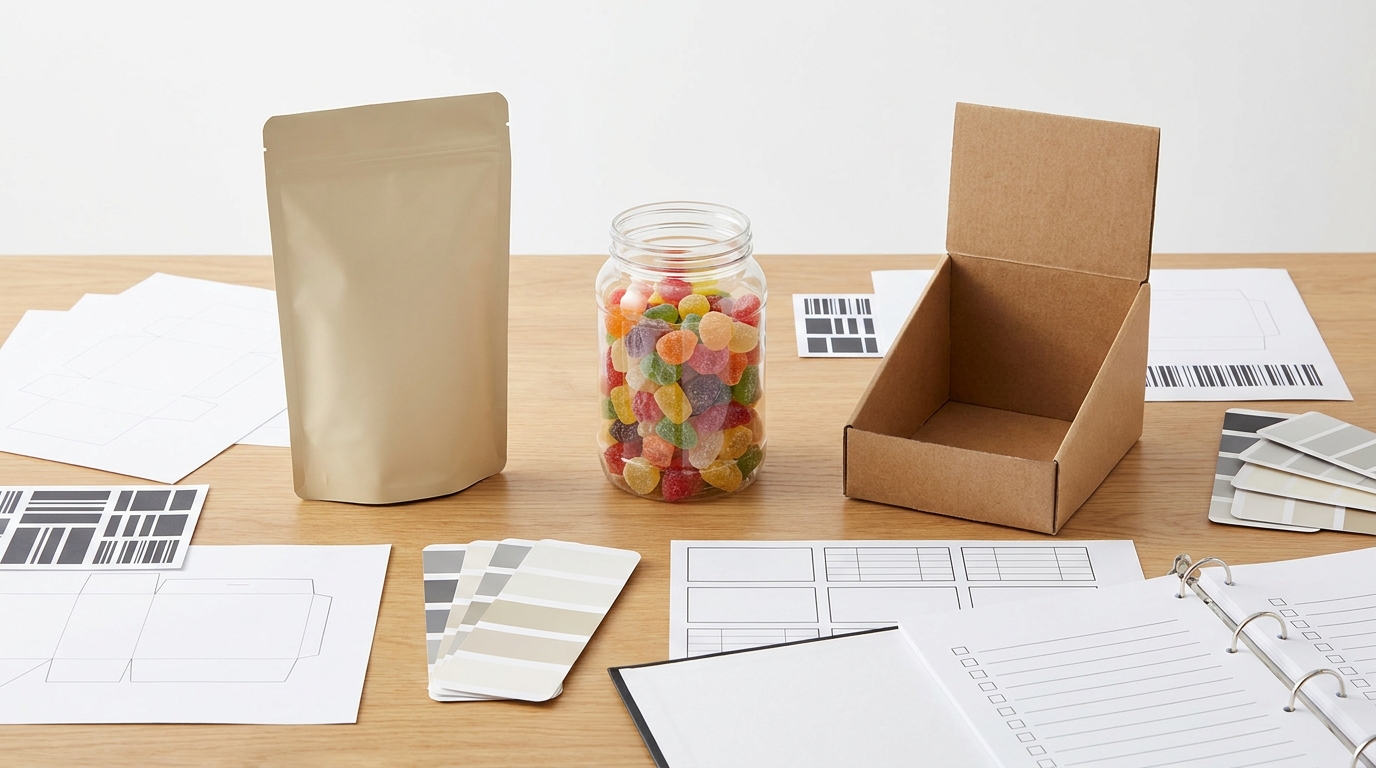
Private-label candy packaging gets clearer when the buyer states the destination country, sales channel, and shelf role before any design work starts. A supermarket pouch, a club-store jar, and a convenience-store display box do not use the same label structure, barcode space, carton logic, or launch timing.
A short market brief is usually enough to stop the supplier from building artwork around the wrong route.
Lock the candy format and pack architecture together
Product format and packaging should be defined at the same time. A gummy stand-up pouch, a hard-candy jar, a blister card, and a mixed novelty display all change fill weight, front-panel hierarchy, print area, and MOQ logic. If the format shifts after the first quote, the artwork brief usually needs to be rebuilt.
The goal is not to finish every regulatory detail immediately. It is to make the next supplier reply specific enough to judge packaging cost, sample route, and timing.
Build one artwork-input sheet before design starts
Brand name, product name, flavor callout, net weight, label language, barcode, importer line, date-code format, and warning statements should be collected in one buyer-approved sheet. Even when final market review is still pending, the supplier and designer need one working version instead of scattered chat messages and screenshots.
When these inputs are clear, price, mockups, samples, and carton planning move faster.
Use samples to check print logic, not only taste
Pre-production samples should be used to check seal quality, date-code position, readability, shelf impact, and whether the pack still looks commercial after handling. Buyers who only test taste can miss the problems that actually delay retail approval.
This is also the point where buyers can separate a realistic packaging route from a vague mockup exercise.
Quick checklist before you ask for a quote
| Area | What to prepare | Why it matters |
|---|---|---|
| Market | Destination country, shelf channel, and target retail price band | Helps the supplier size the front panel, language stack, and pack route |
| Product | Candy format, flavor set, net weight, and piece count | Prevents design work on the wrong SKU structure |
| Packaging | Pouch, jar, display box, blister card, or bulk route | Changes print area, MOQ, carton logic, and freight efficiency |
| Label data | Barcode, importer line, date-code format, and required warnings | Reduces artwork rework after the first mockup |
| Timing | Sample deadline, launch window, and document requirements | Keeps quote, print, and approval timing commercially realistic |
Related KidStar pages
- Review product families on Product Catalog.
- Compare custom pack routes on Packaging Customization.
- Check MOQ and timing basics on MOQ and Lead Time.
- For documentation questions, visit Certifications and Compliance.
Send a clearer brief
If you are preparing a private-label packaging inquiry, send KidStar your market, candy format, pack route, label language, estimated quantity, and launch timing. The team can respond with a more focused packaging and quote path instead of a generic catalog reply.