
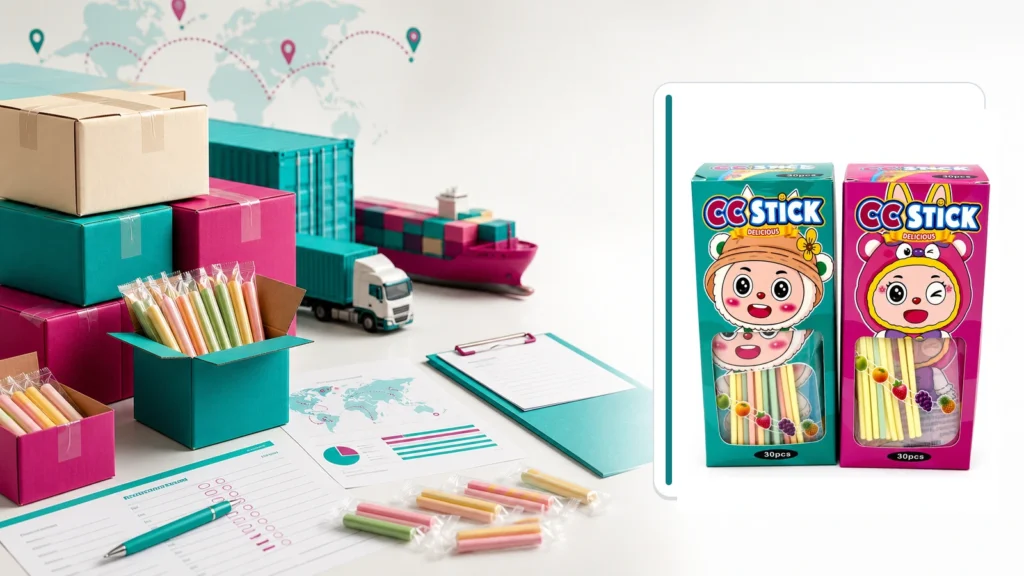
For U.S.-facing buyers, the question is no longer whether low-value shipment rules might change someday. As of Tuesday, July 21, 2026, the White House orders reviewed show that duty-free de minimis treatment under 19 U.S.C. 1321(a)(2)(C) has been suspended for covered low-value commercial shipments in a way that materially changes how many importers should plan routine candy programs. For KidStar SKU YMX-011, that matters because it is a 15.5 g hard candy packed as 30 pcs × 20 display boxes/carton. That is already a carton-ready B2B route, not a casual small-parcel experiment.
This article is not legal advice, and buyers should confirm entry treatment with qualified customs advisers. But it does answer a practical sourcing question: if a U.S. importer is considering YMX-011, what should change in the commercial brief now that the old "under $800 and low-friction" assumption is less reliable for ordinary covered shipments?
What the official U.S. timeline says right now
The date sequence matters because buyers should not plan around vague summaries.
Based on the White House and CBP sources reviewed:
- On July 30, 2025, the White House issued Executive Order 14324, titled *Suspending Duty-Free De Minimis Treatment for All Countries*.
- That order states that the de minimis exemption under 19 U.S.C. 1321(a)(2)(C) "shall no longer apply" to covered shipments, except for a temporary postal carveout structure described in the order.
- Section 5 of that order says the requirements become effective for covered goods entered for consumption on or after 12:01 a.m. EDT on August 29, 2025.
- On February 20, 2026, the White House issued Executive Order 14388, titled *Continuing the Suspension of Duty-Free De Minimis Treatment for All Countries*.
- That later order says the de minimis exemption "shall not apply" to covered shipments regardless of value, country of origin, mode of transportation, or method of entry, and it continues duty collection for shipments not sent through the international postal network.
CBP’s current e-commerce page also says the agency now processes nearly 4 million low value shipments entering the U.S. each day and maintains current de minimis statistics and guidance resources around Section 321 processing.
The careful reading for a candy importer is this: as of July 21, 2026, a buyer should not build an ordinary commercial hard-candy program on the assumption that a sub-$800 shipment can still move under the old duty-free de minimis logic. That does not mean every shipment uses the same filing path, and it does not replace broker advice. It does mean the old shortcut mindset is no longer a safe default.
Why YMX-011 is better planned as a carton program, not a loophole program
YMX-011 is a hard-candy display-box line. Commercially, that already points toward a structured importer route:
- known SKU
- known unit count
- known carton logic
- retail-facing display presentation
- easier comparison against broader wholesale or distributor planning
That is why the de minimis shift matters. A buyer who previously treated small replenishment shipments as a light admin workaround now needs to think more like a normal importer from the first quote onward. The YMX-011 product page should therefore be treated as the starting point for a formal B2B brief rather than a simple low-value parcel candidate.
For many distributors and wholesalers, this is not bad news. It can actually improve discipline. A carton-ready display-box SKU like YMX-011 often performs better when the buyer aligns price, duty assumptions, broker routing, and downstream shelf logic from the beginning instead of discovering those costs after a sample or repeat order is already moving.
Use a route table before asking for the first U.S. quote
The right sourcing move is not "avoid the U.S." The right move is to stop mixing trial logic with import logic.
| Buyer route | Better use of YMX-011 | Why it fits current conditions | What to ask first |
|---|---|---|---|
| U.S. distributor trial with real resale intent | Formal carton-based quote | The product is already packed as a display-box wholesale line | Ask for carton count, duty-planning assumptions, and repeat-order logic |
| Small courier sample for internal review only | Keep it as a sample step, not a commercial cost model | Samples still answer product questions, but not the full landed-cost question | Separate sample review from commercial import planning |
| First mixed order with several retail-ready SKUs | Build a combined importer brief | Duty and entry planning should match the real commercial basket | Tell the supplier which SKUs may ship together |
| Private-label U.S. launch still in artwork stage | Treat import routing and artwork timing as linked | Rework gets more expensive if the route is still undefined later | Align packaging customization with customs timing early |
| Buyer still hopes to use old de minimis assumptions for routine replenishment | Do not rely on that as the default | The official sources reviewed no longer support that shortcut for covered commercial shipments | Confirm broker and duty path before calling the quote "ready" |
This table helps because it turns a policy headline into an operational decision. YMX-011 is not harder to import because it is hard candy. It becomes harder only when the buyer keeps using an outdated small-parcel mindset for a wholesale program.
Change the first brief in four practical ways
For a U.S.-bound YMX-011 inquiry, the first commercial brief should now make four things visible:
1. Commercial role: Is this a sample, a pilot resale order, or a repeat wholesale line? 2. Routing expectation: Is the buyer planning standard importer entry and duty collection from the start? 3. SKU grouping: Will YMX-011 move alone or with other lines in the same order? 4. Timing discipline: Does the buyer need the fastest first sample, or the cleanest repeatable import route?
That structure works well with the MOQ and lead time page because speed questions and order-shape questions now need to be kept apart. The sample phase may still move quickly. The commercial import phase needs cleaner documentation, entry planning, and landed-cost visibility.
The confectionery manufacturer page can also help a buyer compare whether YMX-011 should stand alone or sit inside a broader U.S.-ready hard-candy assortment. That matters because duty planning becomes easier when the buyer already knows which group of SKUs belongs in the same commercial decision.
Keep compliance language precise and conservative
There are three mistakes buyers should avoid in emails and internal planning files:
- saying the old duty-free de minimis assumption still works as a normal commercial default for covered U.S. candy shipments
- claiming that one sample parcel answers the whole landed-cost and entry question
- treating White House orders as a substitute for shipment-specific customs advice
The more accurate statement is narrower: as of July 21, 2026, the White House orders reviewed show that duty-free de minimis treatment has been suspended for covered shipments in a way that materially changes how ordinary low-value commercial imports should be planned. For a display-box hard candy like YMX-011, that means the buyer should think in importer-route terms earlier.
Let YMX-011 work like a proper importer SKU
YMX-011 becomes easier to manage when the buyer uses it as a formal commercial line: one exact SKU, one known display count, one visible route into the U.S. market. That is stronger than trying to protect the project with assumptions that no longer match the official orders.
If you want KidStar to review whether YMX-011 should be quoted as a standalone U.S. test line or grouped into a broader wholesale brief, send the market, order type, and target timing through the contact page. That makes it possible to answer with a cleaner import plan instead of a vague hard-candy estimate.