
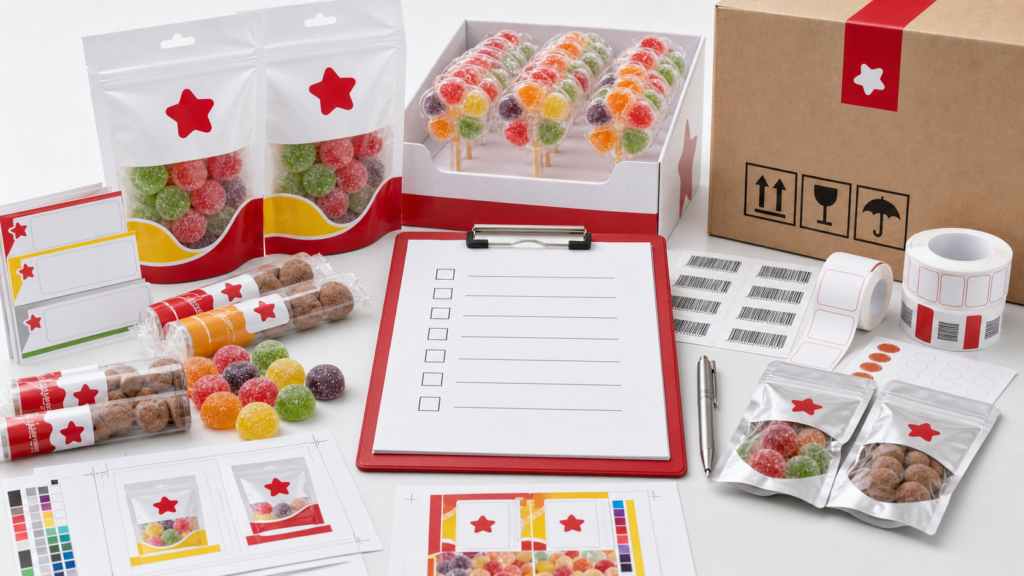
For importers, distributors, wholesalers, and private-label buyers, candy shelf life is not only a date printed on the package. It affects product selection, packaging route, warehouse planning, label review, samples, and the final quotation. If shelf-life details are discussed too late, the buyer may need to revise artwork, carton marks, shipping timing, or even the product format.
This guide is designed to help B2B candy buyers ask better shelf-life questions before placing an order. The goal is not to make unsupported claims, but to create a clearer sourcing brief so the supplier can respond with practical product, packaging, and documentation advice.
Start with the destination market
Shelf-life planning should begin with the market where the candy will be sold. Importers may need to consider local label language, date format, storage wording, importer information, and retailer expectations before final artwork approval.
A buyer does not need to solve every compliance question before contacting a supplier, but the destination country and sales channel should be clear. A supermarket program, a wholesale carton program, and a seasonal promotional pack may have different timing and label-review pressure.
Ask how product format affects shelf life
Different confectionery formats can have different storage and handling considerations. Gummies, hard candy, lollipops, pressed candy, filled candy, and mixed packs may not follow the same planning logic. A mixed confectionery pack also needs extra attention because the shortest shelf-life item may shape the final pack decision.
When requesting a quote, buyers should describe the product type, flavor direction, pack size, and whether the order is for stock-style products, private label, or a custom assortment. This helps the supplier avoid a vague answer and check the route more carefully.
Confirm packaging before final date coding
Packaging can affect how shelf-life information is shown and managed. A pouch, jar, display box, individual wrap, and outer carton may each need product text, date coding, batch information, or carton marks. If the pack route changes after the quote, the label and carton discussion may need to restart.
Buyers should ask where production date, expiry date, lot number, and carton marks will appear. They should also confirm whether the packaging layout leaves enough space for required market language and importer details.
Use samples to check more than taste
Samples are useful for checking flavor, texture, color, and package appearance, but they should also support shelf-life planning. Buyers can use samples to review label text, seal quality, pack presentation, date-code visibility, and how the product will look after normal handling.
For private-label projects, sample review should happen before final artwork approval. It is easier to adjust product direction, pack route, or text structure early than after printed packaging has already been arranged.
Shelf-life questions to include in the inquiry
| Area | Question to ask | Why it matters |
|---|---|---|
| Product | What shelf-life range is normally used for this product format? | Helps the buyer compare product routes without assuming all candy behaves the same |
| Market | What date format and label language should be prepared for the destination country? | Prevents artwork changes after the first design or quote |
| Packaging | Where will production date, expiry date, and lot number appear? | Reduces rework on pouch, jar, display box, wrap, and carton layouts |
| Mixed packs | Does every item in the pack follow the same shelf-life logic? | Avoids a mixed pack being limited by one component |
| Storage | What storage wording should be reviewed before printing? | Helps the buyer align label text, warehouse handling, and retailer expectations |
| Documents | What product information and export documents can be prepared for review? | Gives the importer a clearer checklist before final order approval |
Separate supplier information from importer responsibility
A supplier can provide product information, packaging details, sample support, and export documentation inputs. The importer still needs to confirm local label rules, registration needs, and retailer requirements in the destination market. Treat shelf-life planning as a shared workflow, not a last-minute file request.
This distinction matters because a supplier quote can support the project, but the buyer’s market requirements decide what must appear on the finished retail pack.
Related KidStar pages
- Review product families on Product Catalog.
- Compare pack routes on Packaging Customization.
- Check timing basics on MOQ and Lead Time.
- For label and document questions, visit Certifications and Compliance.
Send a clearer shelf-life brief
If you are preparing a candy sourcing inquiry, send KidStar your destination market, product type, packaging route, target quantity, and label or documentation questions. The team can respond with a more focused product recommendation and quote path instead of a generic catalog reply.