For importers, distributors, wholesalers, and private-label buyers, the right candy packaging route is not only a product question. It is a sourcing workflow question. The buyer needs enough information to compare options, request samples, and receive a quote that will not be rewritten after packaging, quantity, or market details become clearer.
This guide is designed to help buyers choose packaging by market channel, shelf presentation, MOQ, and launch complexity. It is written for B2B teams that want a practical route before starting a detailed quotation discussion.
Latest market insight
- 2025-2026 buyers are asking for lower freight weight and clearer shelf display, so pouches fit fast-moving retail and e-commerce more often than jars.
- Private-label and halal-focused programs need packaging that can change artwork quickly; pouches and display boxes are usually easier to customize than rigid jars.
- Jars still work for premium gifting or counter display, while display boxes help wholesalers test mixed flavors without committing to full private-label packs.
Pouches fit flexible retail and faster comparison
Pouch or bag formats are often useful when buyers want size flexibility and a practical retail route. They can be easier to compare across flavors, weights, and assortment ideas before the final launch path is fixed.
A short buyer brief is usually enough to help the supplier avoid a generic answer.
Jars create stronger shelf identity but need planning
Jar packaging can improve visibility and perceived value, but it also affects shipping space, label design, and carton protection. Buyers should compare jar routes only after quantity and channel expectations are reasonably clear.
The goal is not to prepare every technical detail immediately, but to make the next supplier reply more specific.
Display boxes are useful when presentation drives sales
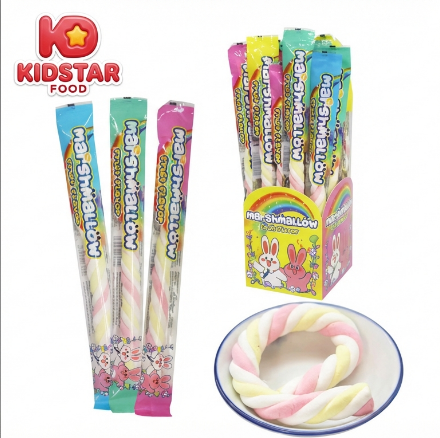
Display boxes work well for impulse purchases, mixed packs, and novelty candy programs. The trade-off is that structure, artwork, and carton details need earlier coordination than a simple bulk route.
When these inputs are clear, price, samples, and packaging discussions move faster.
Choose packaging by channel, not by appearance alone
The right pack route depends on wholesale, supermarket, convenience-store, e-commerce, or promotional use. A visually attractive pack can still be the wrong choice if MOQ, freight, or retail handling does not fit the channel.
This is also the point where buyers can separate a realistic quote path from a vague catalog exchange.
Quick checklist before you ask for a quote
| Area | What to prepare | Why it matters |
|---|---|---|
| Market | Destination country, sales channel, and target buyer type | Helps the supplier judge pack route, label needs, and quote assumptions |
| Product | Candy category, flavor direction, size, and assortment idea | Avoids a generic catalog reply when the project needs matched options |
| Packaging | Pouch, jar, display box, individual wrap, or bulk route | Changes MOQ, artwork, carton logic, and sample preparation |
| Quantity | Trial order, repeat order target, or container plan | Makes pricing and production planning more realistic |
| Timing | Sample deadline, launch window, and required documents | Prevents quote changes after the buyer reveals urgent constraints |
Related KidStar pages
- Review product families on Product Catalog.
- Compare custom pack routes on Packaging Customization.
- Check MOQ and timing basics on MOQ and Lead Time.
- For documentation questions, visit Certifications and Compliance.
Send a clearer brief
If you are preparing a packaging inquiry, send KidStar your market, product direction, packaging route, quantity range, and timing. The team can respond with a more focused product recommendation or quote path instead of a generic catalog reply.