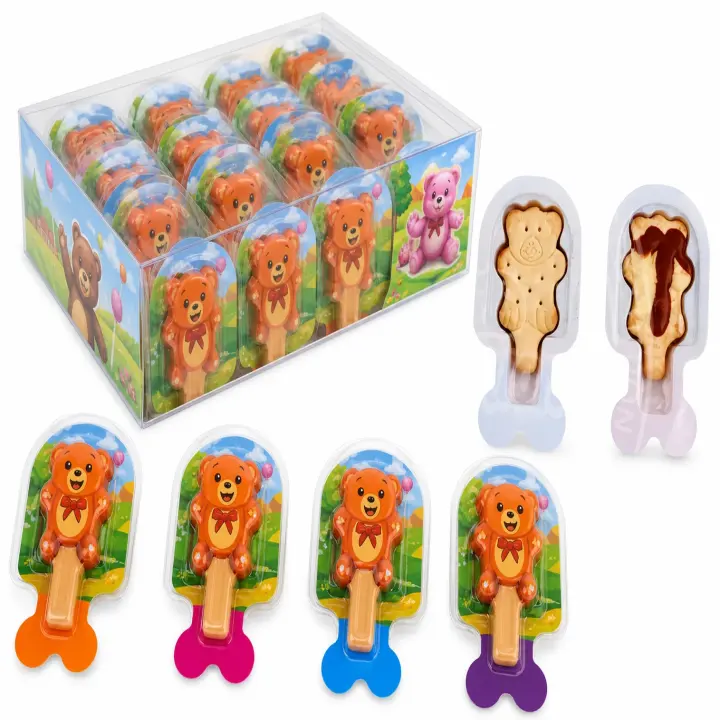
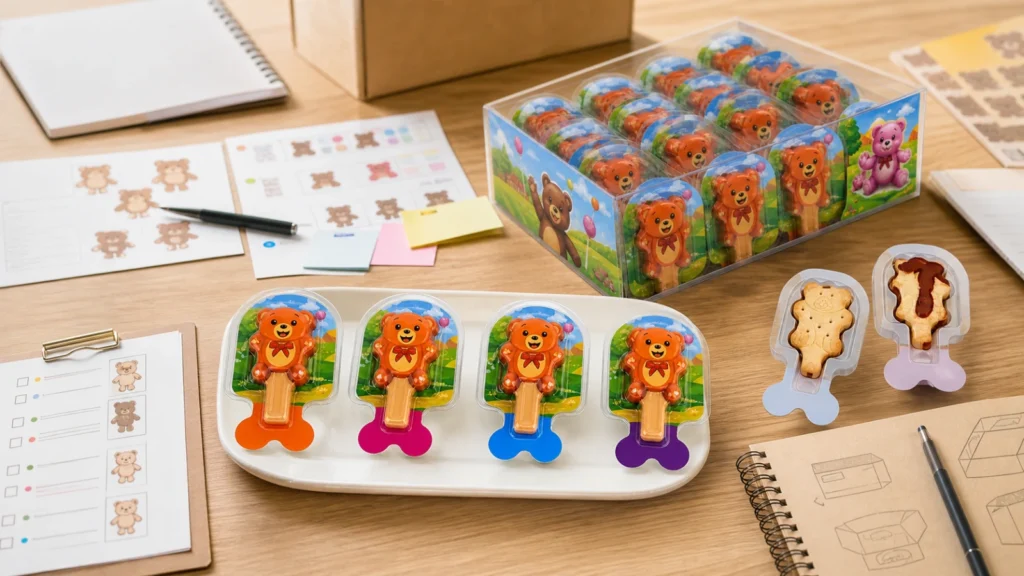
KidStar SKU YMX-143 is easy to underestimate because the product looks simple when a buyer only sees the bear shape. In practice, a buyer is often approving several layers at once: the novelty shape, the marshmallow eating experience, the unit presentation, and the route that will turn a sample into a usable first quote. The exact SKU is a Bear Marshmallow line packed as 10 g × 30 pcs × 20 boxes, so the approval brief needs to explain more than whether the sample is “cute” or “good.”
Importers, distributors, wholesalers, and private-label buyers should therefore treat the approval note as a commercial working file. A clean approval brief tells the supplier what has been accepted, what is still open, and what the next step should be. That is what keeps a novelty marshmallow project from drifting between sample praise and quotation confusion.
Approve the route in layers, not as one vague yes
For YMX-143, buyers should usually separate at least four approval layers:
- product concept approval
- exact unit and pack-route approval
- display or assortment-role approval
- commercial next-step approval
Those layers are related, but they are not identical. A buyer may like the bear shape while still being unsure whether the item belongs in a general trade line, a novelty mix, or a private-label concept route. Another team may approve the stock unit for a first trial but still leave branding and channel position open.
That is why the exact YMX-143 product page matters. The approval note should stay anchored to one real SKU and one real pack route so the supplier knows what product was actually reviewed.
Use an approval-brief table before asking for price updates
The best way to reduce rework is to define the approval scope before pricing starts to move.
| Approval area | What buyers should record for YMX-143 | Why it matters |
|---|---|---|
| SKU identity | Confirm that the reviewed sample is exact SKU YMX-143 | Prevents later confusion with a similar marshmallow or novelty item |
| Unit acceptance | Note whether the unit presentation is acceptable for the intended outlet | Buyers often like the concept but are still uncertain about the selling-unit route |
| Market role | State whether the item is for novelty support, impulse, mixed assortments, or a more focused line | The first quote changes when the role changes |
| Carton logic | Confirm whether the 30 pcs × 20 boxes route fits the first commercial plan | Carton and quantity assumptions affect the usefulness of the quote |
| Next action | Name whether the team wants a pilot quote, more sample review, or a hold | Prevents “approved sample” from being misread as “ready for production” |
Once these points are written down, the approval brief becomes something the supplier can actually use.
Keep sample approval separate from order approval
Many novelty-food projects become messy because buyers praise the sample and then assume the product is automatically quote-ready. That is rarely true.
For YMX-143, sample approval might mean:
- the concept works for the buyer’s range
- the marshmallow format is acceptable
- the stock unit looks usable for a first review
Order approval is narrower and harder. It usually means the buyer can also state:
- target market
- outlet type
- whether the first route is a pilot or a repeat-minded order
- whether the item stands alone or sits beside other SKUs
- whether the current pack route is acceptable for phase one
The samples page should therefore support a structured response, not just a reaction. Buyers who define those missing commercial points earlier usually get cleaner first quotations.
Record what purchasing, sales, and packaging each still need
A useful approval brief should help more than one internal team. For YMX-143, buyers should try to note:
- what sales likes about the product and where it expects the item to sell
- what purchasing still needs before it can compare quantities or routes
- what packaging questions are still open, if any
- whether the stock export route is acceptable for the first step
- whether local language, importer information, or retailer-specific requirements are already relevant
That is where packaging customization and certifications and compliance become useful. They should support the next-stage questions without pretending those questions are already solved. If the buyer is still at concept-and-pilot stage, the brief should say so clearly.
Decide whether YMX-143 is a pilot item or a repeat-minded line
Quotes get rewritten when the supplier thinks the buyer is building one route and the buyer is actually building another. For YMX-143, the approval brief should therefore name whether the item is:
- a light pilot to test reaction in one market
- a support line inside a broader novelty assortment
- a candidate for repeat ordering if the first route performs
- an early-stage private-label idea that still needs more channel definition
This matters because the MOQ and lead time conversation changes when the buyer moves from “interesting novelty product” to “repeat-minded line with a visible role.” If the supplier does not know which phase the buyer is in, the quotation may be detailed but still misaligned.
End the brief with one controlled next step
The strongest approval brief for YMX-143 usually finishes with one of these actions:
- send a pilot-ready quote for the stock route
- compare YMX-143 with one or two companion novelty SKUs
- hold until the target outlet type is fixed
- hold branding questions until the stock-route pilot is judged
- move to a broader assortment discussion only after the SKU’s role is clearer
That is what makes the approval useful. The brief does not need to solve every future decision. It needs to prevent the sample review from being mistaken for a complete commercial green light.
The product catalog is helpful for that comparison work because buyers can judge whether YMX-143 belongs as a support line, a mixed novelty candidate, or part of a more focused marshmallow or kids’ assortment. The contact page is then where the buyer can send the exact next-step request.
Bear marshmallow approval checklist
- Tie the note to exact SKU YMX-143 and its 30 pcs × 20 boxes route.
- Separate concept approval from commercial approval.
- Record the intended market role before asking for a revised quote.
- State whether the first route is a pilot, a support line, or a repeat-minded item.
- Use the stock route for phase one unless the channel and branding route are already clear.
- Finish with one next action through the contact page, not a vague “please advise.”
If you want KidStar to turn YMX-143 into a cleaner approval brief, send the target market, outlet type, companion SKUs, and current approval notes through the contact page. That makes it easier to answer with a next-step route instead of a generic marshmallow quotation.