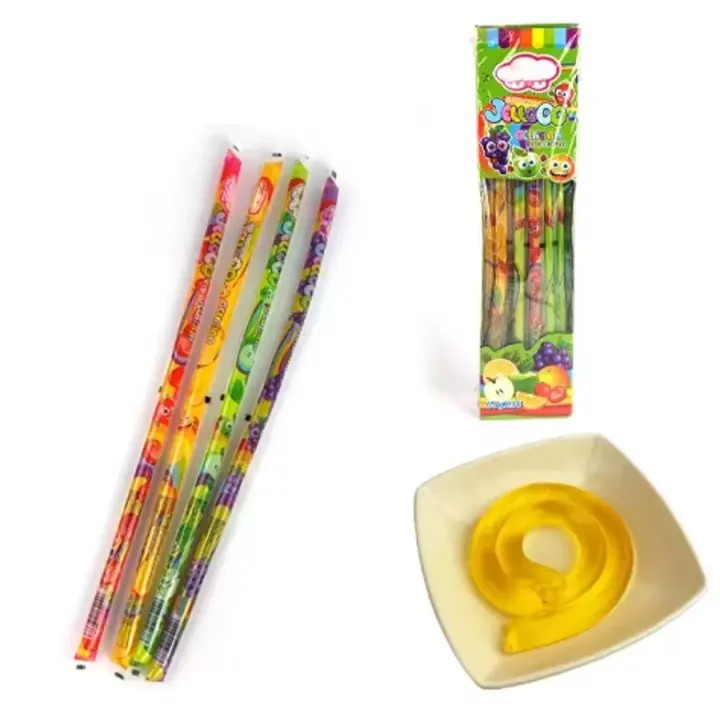
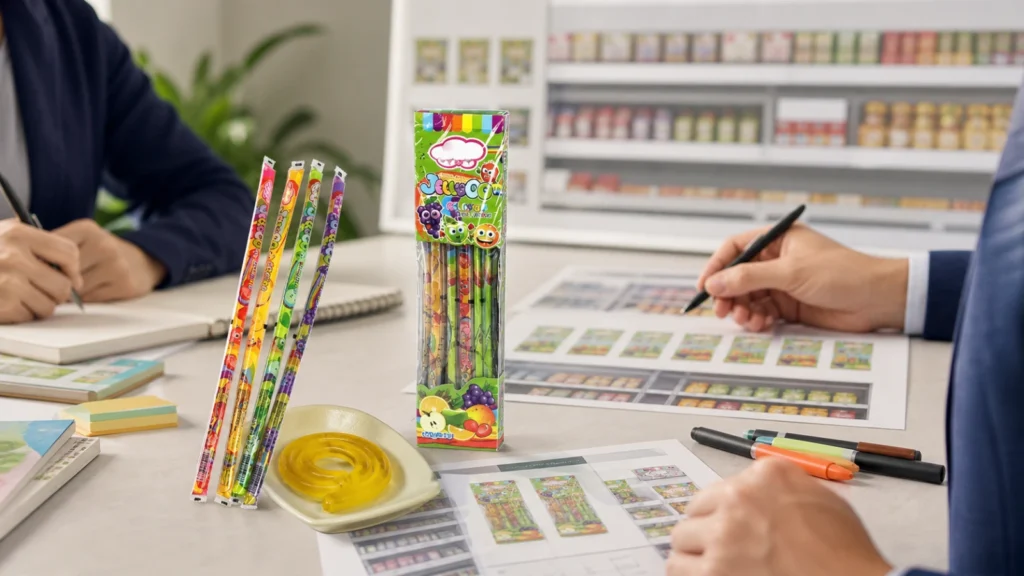
KidStar SKU YMX-140 is a Pudding Jelly line packed as 60 g × 30 sticks × 12 boxes, which means buyers do not only review flavor and packaging. They also need to decide what retail route the product is meant for. That question matters more in England now because official restrictions on less healthy food promotion and advertising have moved in stages: location restrictions took effect on October 1, 2022, volume-price promotion restrictions followed on October 1, 2025, and new UK-wide advertising restrictions started on January 5, 2026.
Those rules do not automatically block a jelly-stick import program. They do change the launch brief. Importers, distributors, wholesalers, and private-label buyers should stop treating a retail-ready confectionery brief as only a packaging and price conversation. For England-facing retail plans, the buyer also needs to clarify where the product will be placed, how it will be promoted, and whether the route is meant for grocery retail, specialist trade, or wholesale distribution.
Understand which official rule changes now shape the brief
The official UK picture is now layered, not singular.
- Since October 1, 2022, England has restricted the placement of in-scope less healthy products in prominent locations such as store entrances, aisle ends, and checkouts, with parallel online placement rules in the guidance.
- Since October 1, 2025, England has also restricted certain volume-price promotions for in-scope products, such as multi-buy style mechanics covered by the implementation guidance.
- Since January 5, 2026, a separate UK-wide advertising regime has restricted identifiable less healthy food or drink ads on TV before 9 p.m. and paid-for online advertising, subject to the scope and exemptions set out in official guidance.
For a buyer, the lesson is simple: a jelly-stick project brief should now say whether the route is standard wholesale distribution or a retail program that expects checkout placement, promotional mechanics, or paid consumer advertising support. If those assumptions stay hidden, the supplier may receive a product question while the buyer is actually carrying a placement-and-promotion question.
Do not assume the same jelly route works for every UK channel
YMX-140 may still work well in a UK-facing plan, but not every commercial route carries the same exposure to these rules. Buyers should separate at least four possibilities:
| Launch route | How HFSS-related rules may affect the brief | What the buyer should define early | Risk if left vague |
|---|---|---|---|
| England grocery retail | Prominent placement and promotion assumptions may need extra screening | Intended shelf zone, promotional plan, and whether the buyer expects a checkout or aisle-end role | The supplier prepares a retail-facing route around promotional assumptions that may not be usable |
| Specialist confectionery or exemption-sensitive route | The buyer may need to check whether the retailer model changes how the rules apply | Retail format, store type, and who owns compliance screening | The team overbuilds or underbuilds the launch brief |
| General wholesale / distributor supply | The supplier still needs target-channel clarity, but the route may not depend on the same retail execution claims | End-customer profile and whether the buyer is asking for retail support or only supply | The line is described like a retail campaign when it is actually a distribution product |
| Private-label development for UK retail | Artwork, claims, promotion, and channel use need to stay aligned much earlier | Branding stage, retailer target, and whether the project needs a UK-specific commercial route | Packaging work starts before the channel rules are mapped |
The practical point is not to turn a sourcing article into legal advice. It is to make the buyer brief honest about the channel context.
Translate the rule changes into supplier-ready questions
When a buyer contacts a supplier about YMX-140, the first brief should now answer more than “please quote for the UK.” It should try to cover:
- whether the target route is England retail, wider UK wholesale, or another export market entirely
- whether the buyer expects prominent in-store placement as part of the launch logic
- whether the commercial plan depends on volume-price style promotions
- whether paid consumer advertising is part of the route, or whether the product is simply being supplied to trade buyers
- whether the current phase is a stock-route trial or a fuller private-label retail program
This is why the product page, packaging customization, and contact page should work together. The product page fixes the exact SKU. The packaging page helps define the commercial route. The contact brief should then describe the market and channel conditions clearly enough that the supplier does not have to infer them.
Separate product approval from retail-mechanics approval
One of the biggest workflow mistakes is assuming that liking the product format means the launch route is already approved. Those are different approvals.
For YMX-140, a buyer might conclude:
- the jelly-stick format is commercially interesting
- the current packaging route is acceptable for samples or trade review
- the product should move into one UK route but not another
- the retail plan needs more screening before a promotion-heavy brief is used
That is still progress. The buyer does not need every downstream answer before the first conversation. The buyer does need to label which parts of the route are approved and which are still under review. This becomes especially important for teams that want to move quickly from sample review into artwork or retailer discussion.
Build a cleaner UK-facing brief before pricing hardens
A stronger YMX-140 brief for this environment usually includes:
- exact SKU and pack route
- target market and whether England retail is in scope
- outlet type or buyer type
- whether the route is wholesale-first, retail-first, or private-label retail
- whether stock packaging is acceptable for phase one
- whether prominent placement or price-promotion mechanics are part of the business case
- one next action, such as sample review, stock-route quotation, or channel-screening hold
The MOQ and lead time page matters here because buyers should not ask for the same quote shape when one route is a simple trade trial and another is a retail plan with more channel assumptions attached.
Know when to pause instead of forcing a retail-ready answer
It is better to hold the quotation briefly when:
- the buyer has not decided whether the route is wholesale or England retail
- the launch concept depends on checkout, aisle-end, or promotional mechanics that still need internal review
- the private-label path is being discussed before the target retail route is clear
- the same project is being described as “general UK” and “England grocery” without separating the two
That kind of pause is not delay for its own sake. It reduces rework. It also helps the supplier respond with a route that matches the true commercial question instead of a broad jelly offer that later proves too generic.
If you want KidStar to review whether YMX-140 should stay a general trade item or move into a UK retail-specific launch brief, send the target market, outlet type, promotion assumptions, and branding stage through the contact page. That makes it easier to map the right next-step route without overclaiming what the first quote can solve.
UK jelly-stick launch checklist
- Tie the brief to exact SKU YMX-140.
- State whether the route is England retail, broader UK wholesale, or another export market.
- Record whether prominent placement or volume-price promotion assumptions are part of the launch logic.
- Keep sample approval separate from retail-mechanics approval.
- Do not move into detailed private-label work until the target route is clearer.
- Use one next action: quote now, sample first, or hold for channel screening.
Sources reviewed
- Restricting promotions of products high in fat, sugar or salt by location and by volume price: implementation guidance
- Restricting advertising of less healthy food or drink on TV and online: products in scope
- Less healthy food and drink advertising restrictions to come into force in January
- The Food (Promotion and Placement) (England) Regulations 2021
- KidStar SKU YMX-140 product record
- KidStar packaging customization page
- KidStar MOQ and lead time page