Importers, distributors, wholesalers, and private-label buyers often ask a marshmallow supplier for "a few good options" before they know what kind of first program they actually want. That usually sounds flexible, but it slows the first commercial decision. A single-SKU start can be cleaner when the buyer needs one fast sample route, one display-box comparison, and one easy yes-or-no answer from the market.
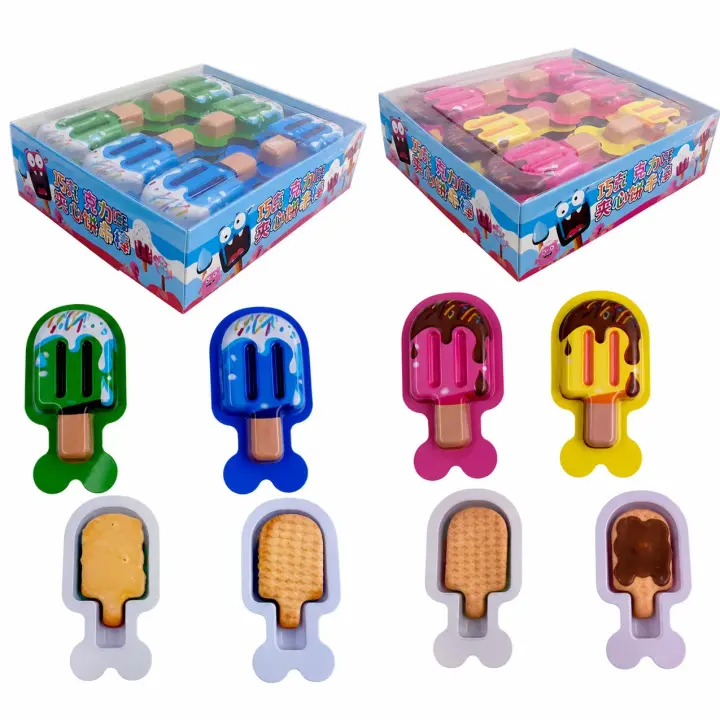
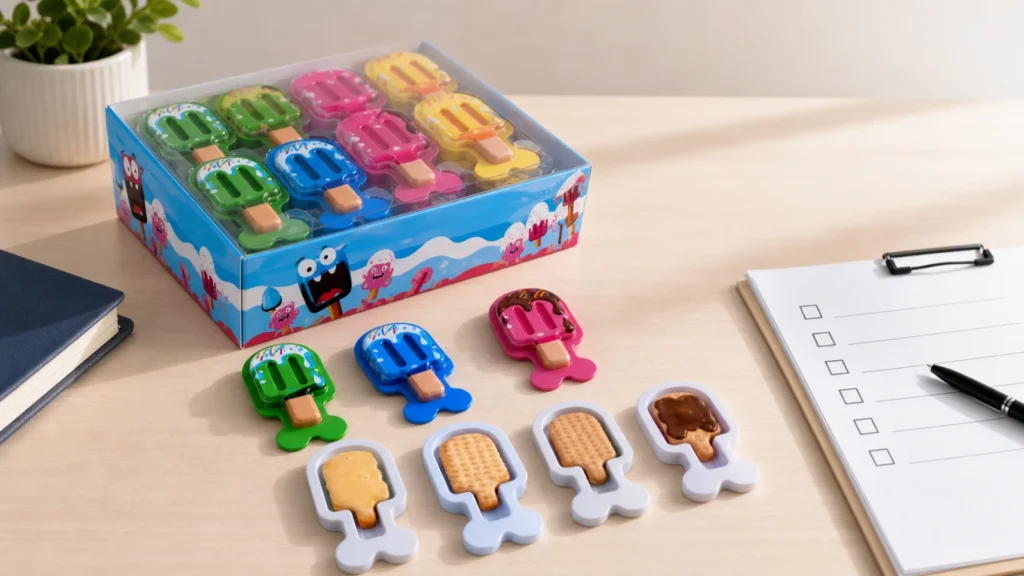
KidStar SKU YMX-146 is a practical case. It is an Ice Cream Marshmallow line packed as 10 g x 30 pcs x 20 boxes/carton. That means the buyer is not only judging a marshmallow flavor or novelty shape. The buyer is judging whether one exact display-box route can serve as the first commercial test for a marshmallow lane.
The better question is therefore not "Is this marshmallow good?" The better question is whether one exact SKU can carry the buyer’s first learning round without creating a wider shortlist too early.
Start with one buying question, not a general category request
One display-box SKU works best when the buyer’s first question is narrow:
- Can this marshmallow format work in our target outlet?
- Does this unit price position belong in a value, impulse, or support line?
- Can the carton route fit a first pilot without extra packaging development?
- Will the buyer learn enough from one sample and one quote to decide the next step?
If those are the real questions, a broad marshmallow request is usually wasteful. It creates too many variables at once: different shapes, different pack routes, different carton counts, and different merchandising roles. A tighter first step is to use one real SKU and one real product page, then ask whether that route earns a second-stage comparison.
That is why the exact YMX-146 product page matters. It keeps the conversation tied to one marshmallow format instead of drifting into generic "ice cream candy" or "kids novelty" language.
When one display-box SKU is cleaner than a wider marshmallow shortlist
Buyers do not always need a full category review on day one. Sometimes they only need one disciplined starting point.
| Buyer situation | Start with YMX-146 only? | Why | Best next move |
|---|---|---|---|
| Buyer wants one low-friction marshmallow test for general trade or cash-and-carry | Yes | One SKU gives faster sample and quote alignment | Ask for one sample route and one stock quote |
| Buyer is comparing whether marshmallow belongs in a mixed novelty lane | Yes, often | One SKU can test shelf role before a wider assortment discussion | Judge the display-box role first, then compare companion SKUs |
| Buyer already knows it needs a broad marshmallow family for chain retail | Not yet | A chain program usually needs more than one commercial comparison | Request a short structured shortlist after the first route is defined |
| Buyer wants private-label development immediately | Usually no | One stock SKU may not answer branding, artwork, and channel questions early enough | Clarify packaging customization scope before using a single-SKU route |
| Buyer is unsure whether marshmallow belongs in the first container at all | Yes | One exact test is cleaner than broad browsing | Use YMX-146 to decide whether the category deserves more room |
This is the real value of a one-SKU start. It is not about limiting choice forever. It is about making the first decision usable.
Use the sample round to test route fit, not only product appeal
Many buyers make the same mistake with marshmallows: the sample looks fun, the team likes the shape, and the next email immediately asks for price. That skips the more important commercial question. Does this exact route belong in the buyer’s first working range?
For YMX-146, the sample review should try to answer:
- whether the 10 g unit feels right for the target outlet
- whether the 30 pcs display-box route matches the intended shelf job
- whether the buyer wants a standalone marshmallow offer or a support line inside a broader range
- whether phase one is a trial, a quote comparison, or an early repeat-minded line
That is where samples and MOQ and lead time should work together. A sample opinion without a route opinion does not help much. The supplier still does not know whether the buyer wants one pilot order, a mixed-carton support line, or the beginning of a larger marshmallow lane.
Know the signals that mean one SKU is no longer enough
A single display-box SKU is a strong first filter, but it stops being enough when the buying question becomes broader than the stock route itself.
YMX-146 is no longer sufficient on its own when:
- the buyer is already comparing multiple marshmallow forms or price bands
- the team needs a retailer-facing range, not a simple first-market test
- artwork, label language, or pack changes are part of the first decision
- the buyer wants to compare marshmallow against other novelty or gummy formats in one unified range brief
- the commercial goal depends on how several SKUs work together, not whether one stock line is viable
At that point, the better move is not to keep stretching one SKU beyond its job. The better move is to use the wider product catalog and build a short comparison set with a defined commercial reason for each line.
Keep the first quote tied to one route and one next action
The first quote becomes useful only when the buyer names the role of the SKU. For YMX-146, that role might be:
- a first marshmallow test for value-driven wholesale
- a support SKU in a mixed novelty container
- a low-risk sample route before a larger marshmallow review
- a fast stock item to prove whether the category deserves more budget
Once that role is clear, the supplier can answer more cleanly. If the role is still vague, even a detailed quote is likely to be rewritten.
The strongest first message on YMX-146 usually includes:
- exact SKU and product link
- target market
- outlet type
- whether the route is pilot-only or meant to repeat
- whether stock packaging is acceptable for phase one
- one next action through the contact page
That keeps the first commercial round disciplined. It also makes it much easier to decide whether YMX-146 should remain a single-SKU test or expand into a broader marshmallow range discussion.
One-display-box marshmallow start checklist
- Tie the request to exact SKU YMX-146 and its 10 g x 30 pcs x 20 boxes route.
- State whether the first decision is about category entry, shelf role, or quote viability.
- Use the sample to test route fit, not only flavor acceptance.
- Do not widen the brief into a full marshmallow shortlist unless the first question truly requires it.
- Move to packaging customization only when the stock route is no longer the real buying question.
- Use Contact to send the target market, outlet type, quantity band, and next-step request.
If you want KidStar to check whether YMX-146 should stay a one-SKU pilot or expand into a wider marshmallow range review, send the market, outlet type, and first-order goal through the contact page. That gives the team enough context to answer with a cleaner next-step route instead of a broad marshmallow catalog reply.