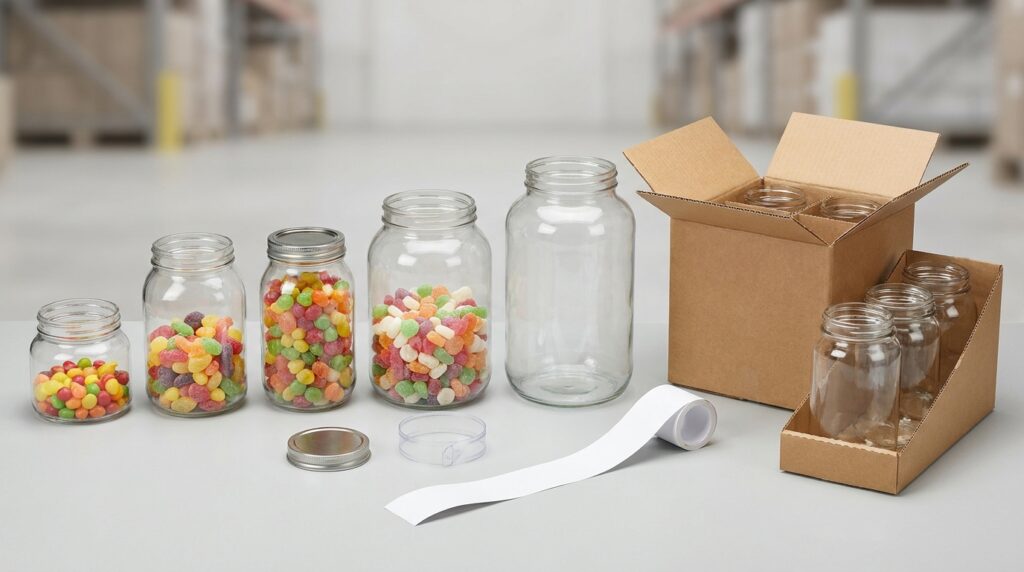
For importers, distributors, wholesalers, and private-label buyers, jar packaging is usually chosen because the product needs stronger shelf visibility, a premium look, or better reclose convenience. But jar programs become slow and expensive when buyers start with artwork ideas before deciding jar size, fill weight, cap style, and carton logic.
This guide helps B2B buyers structure a candy jar project before samples and pricing discussions begin.
Latest market insight
- Prioritize vegan/pectin-based gummies in jar programs for 24%+ new SKU growth and halal compliance appeal.
- Opt for sustainable/recyclable jar packaging (e.g., recycled plastic) to meet 2026 buyer demands for premium private-label differentiation.
- Evaluate suppliers on halal certification and private-label customization early, as retailers expand these programs amid rising demand.
Decide the role of the jar before the size of the jar
The first decision is not 250 ml versus 500 ml. It is whether the jar is meant for checkout impulse, family-share shelf display, club-store value, or gift-style presentation. Each route changes the acceptable jar diameter, fill level, and label area.
If the buyer can state the intended retail role, the supplier can narrow the right jar family quickly instead of proposing several unrelated options.
Fill weight has to match candy shape and headspace expectations
Jar packaging can improve visibility and perceived value, but it also affects shipping space, label design, and carton protection. Buyers should compare jar routes only after quantity and channel expectations are reasonably clear.
Hard candy, pressed candy, gummies, and lollipops do not settle the same way inside a jar. A jar that looks full with one candy shape may look underfilled with another. Buyers should therefore give both target net weight and candy category when asking for a jar recommendation.
Headspace matters too. Some retailers prefer a visibly full jar; others accept more headspace if the landed cost fits the price point.
Cap color, tamper seal, and label panel should be frozen early
Jar programs often slow down because the buyer sends label references before confirming the usable panel size, tamper-seal method, and cap color. Those details affect sampling, MOQ, and approval timing more than many buyers expect.
If a market requires multilingual labels, promotional stickers, or halal marks, the buyer should mention that before artwork starts. This prevents an attractive but unworkable label layout.
Do not skip outer-carton and shelf replenishment questions
Jar packaging looks simple on shelf, but it is heavier, more fragile, and more space-sensitive than pouch formats. The buyer should ask how many jars go in one carton, what dividers are needed, and whether the jar can move straight into a display tray or shelf-ready case.
This is where many price revisions begin, so it is better to ask early.
Decision table for candy jar programs
| Decision area | What to confirm first | Why it matters |
|---|---|---|
| Retail role | Impulse, family-share, gift, club-store, or wholesale | Defines jar size range and presentation logic |
| Candy type | Hard candy, gummies, lollipops, or mixed confectionery | Changes jar fill look and count-per-jar planning |
| Fill target | Net weight plus preferred visual fullness | Helps the supplier recommend jar volume with less rework |
| Closure and seal | Cap color, tamper seal, induction seal, shrink band | Affects approval, compliance, and MOQ |
| Label area | Front label, wrap label, neck label, sticker strategy | Prevents artwork mismatch later |
| Carton plan | Jars per carton, protective insert, pallet preference | Reveals freight and breakage risk before quoting |
What a supplier needs in the first jar inquiry
The best first inquiry includes market, retail channel, candy type, target jar size or reference, fill weight, label language, and expected order volume. If the buyer already knows whether the jar should feel premium or value-led, that should be stated too.
A short, practical brief makes it easier to receive a focused jar recommendation instead of a generic packaging deck.
Related KidStar pages
- Review product families on Product Catalog.
- Compare custom pack routes on Packaging Customization.
- Check MOQ and timing basics on MOQ and Lead Time.
- For documentation questions, visit Certifications and Compliance.
Send a jar brief that avoids later quote revisions
If you are preparing a candy jar inquiry, send KidStar your channel, candy type, target jar format, fill weight, label requirements, carton expectations, and timing. The team can then suggest better jar options, sample routes, and a more stable quote path.