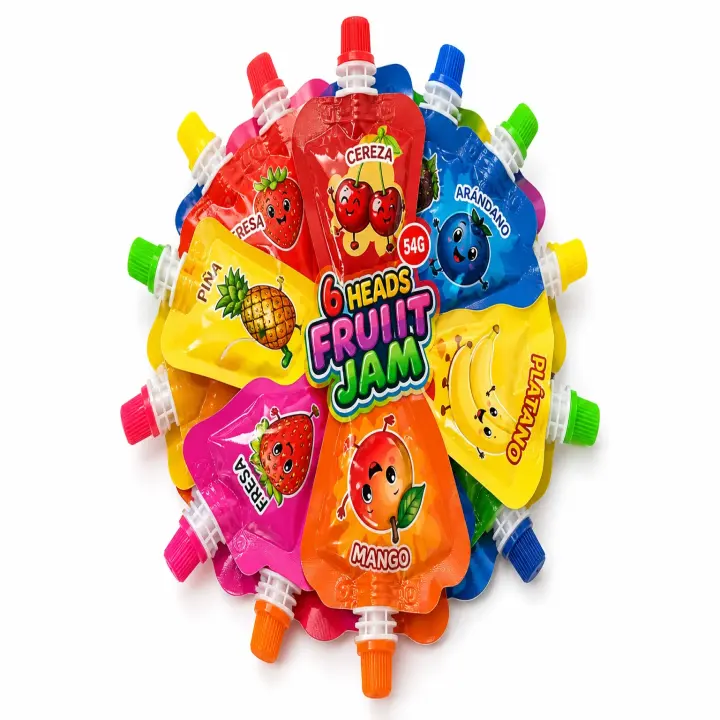
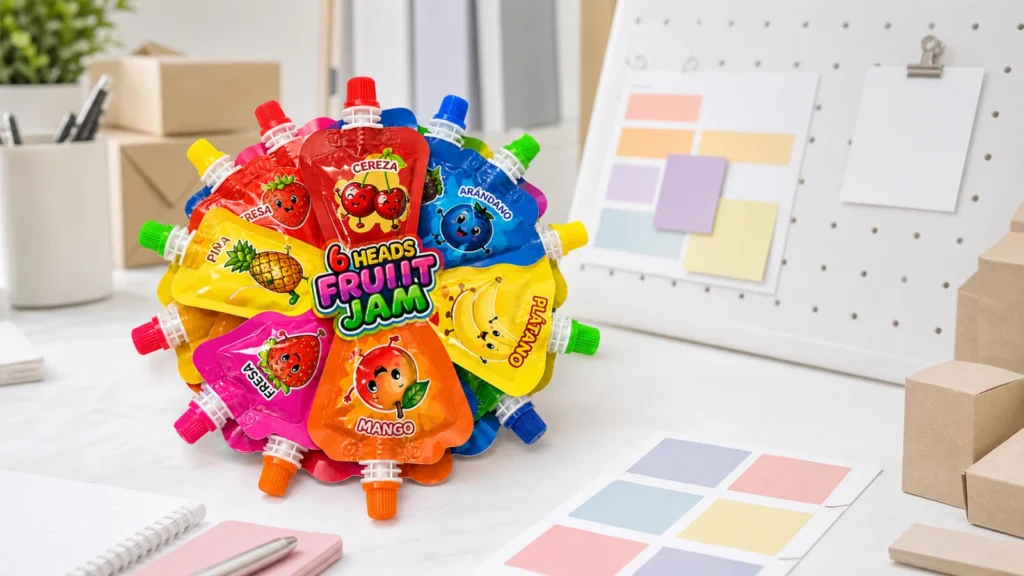
Novelty assortments usually fail for a simple reason: the buyer adds eye-catching items before deciding what commercial job each item should do. KidStar SKU YMX-127 is a useful example because it is not just another fruit candy. It is a 54 g fruit jam dip candy set packed as 12 bags × 12 display boxes/carton, which means the buyer is evaluating an interactive novelty line, a retail unit, and an export case route at the same time.
That is why the sourcing question is not only whether YMX-127 looks fun. The stronger question is when a dip candy set deserves space in a novelty mix that still has to ship cleanly, land at the right shelf price, and justify repeat orders. Importers, distributors, wholesalers, and private-label buyers should decide that before the first mixed-carton quote is treated as final.
Start with the role YMX-127 should play in the assortment
A novelty mix works best when every SKU has a clear role. Some items are there to win attention. Some are there to hold margin. Some are there to make the display look broader without forcing the buyer into a full custom program.
YMX-127 usually belongs in one of those roles:
- an attention item for a kids’ novelty section
- a short-run trial item inside a mixed wholesale carton
- a seasonal or promotional add-on for distributors who already move core gummies, lollipops, or hard candy
If the buyer cannot explain which of those jobs applies, the item is probably entering the mix too early. The product catalog can help compare YMX-127 against plainer lines, but the comparison should stay commercial. A dip candy set should earn its place by what it does for the program, not only by how colorful it looks in one sample photo.
Use a channel table before adding YMX-127 to a mixed program
The fastest way to avoid a weak novelty mix is to decide where YMX-127 fits better than a simpler SKU.
| Channel or route | When YMX-127 is a strong fit | Why it can work | What to confirm first |
|---|---|---|---|
| Convenience and impulse retail | When the buyer needs a playful line that attracts quick attention | The interactive dipping format gives the shelf a clearer novelty story | Confirm the target shelf price, unit visibility, and whether the display box goes directly to shelf |
| Wholesale mixed carton | When the buyer wants one standout item among more standard candy lines | It adds variety without forcing the whole carton to become a novelty-only offer | Confirm how many cartons should carry YMX-127 versus faster-moving core items |
| Seasonal promotion or back-to-school program | When the launch has a time-bound retail hook | The format is easier to position as a special program than as a permanent everyday SKU | Confirm timing, sample approval pace, and whether standard packaging is acceptable |
| Private-label idea stage | When the buyer is testing the category, not yet the final packaging route | The stock route can show whether the concept works before artwork spend begins | Confirm whether the first order is a concept test or a true private-label build |
| Pure price-led wholesale request | Usually a weak fit | The novelty format adds merchandising and handling questions that do not belong in a lowest-price request | Hold the item until the buyer is ready to discuss format, display, and channel role |
This table matters because YMX-127 is not a neutral filler item. It creates a stronger assortment only when the buyer already knows how the mix will sell.
Check whether the novelty mix still stays operationally simple
Buyers often build a mixed candy brief as if the only question were flavor variety. In practice, a mixed novelty carton becomes difficult when one item changes the review burden for everyone else. YMX-127 should therefore be checked against the rest of the shortlist on three operational points:
- whether the selling unit is easy for the local team to explain and place
- whether the display-box route fits the same outbound logic as the rest of the mix
- whether the item needs extra approval steps that the other SKUs do not need
That does not mean YMX-127 is a bad item. It means the buyer should be honest about what the item adds. If the novelty mix already contains several fragile, unusual, or high-explanation products, a dip candy set may overload the pilot. If the rest of the carton is too plain, YMX-127 may be the one line that makes the offer more memorable.
The samples page is useful at this point because a novelty item should be tested as a market decision, not only as a flavor decision. A sample should answer whether the concept is worth a slot in the assortment, not just whether the candy is acceptable.
Separate concept approval from mix approval
One of the most common mistakes is to approve YMX-127 as a sample and then assume it automatically belongs in the first mixed order. Those are different approvals.
Use this distinction:
- Concept approved means the buyer likes the interactive dipping idea.
- Retail approved means the buyer believes the selling unit can work in the intended outlet.
- Mix approved means the buyer believes YMX-127 belongs alongside the other chosen SKUs in the same carton plan.
The third step is the one that most mixed programs skip. A dip candy set can be a strong single item but still be the wrong fit for a first mixed load if the buyer is trying to keep the program simple, low-risk, or price-focused.
This is where MOQ and lead time becomes relevant. If the first order is a small pilot, the buyer should say so clearly and decide whether YMX-127 is one of the items worth testing now. If the project is already moving toward a repeatable route, the buyer should evaluate whether the dip format will still make sense after the first launch excitement is gone.
Decide whether stock presentation is enough or a custom route is already needed
YMX-127 can play two very different commercial roles. It can be a stock-style novelty line that helps a buyer test the category quickly, or it can be the reference point for a later custom program. Problems start when those two roles are mixed in one early quote request.
Ask these questions before adding it to the mix:
- Is the current packaging route good enough for the first market test?
- Does the local market need custom language, importer details, or a different front-panel hierarchy immediately?
- Is the buyer trying to prove demand first, or already preparing a branded novelty range?
If demand proof comes first, the standard route may be enough. If the buyer already needs a differentiated shelf story, packaging customization should be part of the decision before YMX-127 is treated as a locked novelty item. That keeps the first mixed-carton quote from becoming a disguised packaging-development discussion.
Put YMX-127 into the novelty mix only when the next step is clear
The best novelty mixes are not the widest. They are the clearest. YMX-127 belongs in a mixed program when the buyer can state the outlet type, the role of the SKU, the reason it beats a simpler alternative, and whether the first order is a pilot or a repeatable route.
That is what turns a fun-looking dip candy set into a commercial line instead of a speculative add-on. If YMX-127 has no defined job yet, hold it as a promising sample and keep the mix cleaner. If the job is clear, it can become the item that gives the whole assortment more energy and better shelf interest.
If you want KidStar to review whether YMX-127 should enter a mixed novelty brief now or stay in the sample stage, send the target market, outlet type, planned companion SKUs, and pilot quantity through the contact page. That makes it easier to answer with a shortlist decision instead of a generic novelty quote.