For importers, distributors, wholesalers, and private-label buyers, sour candy sourcing is not only a flavor question. It is a sourcing workflow question that affects format choice, acid profile, shelf stability, packaging, and how useful the first sample round will be.
This guide is designed to help buyers prepare format, coating, and packaging details before sour-candy sampling. It is written for B2B teams that want to ask sharper questions before a supplier prepares samples or a quotation.
Latest market insight
- Halal and vegan sour gummies are gaining attention as buyers push for cleaner private-label options that travel across more retail markets.
- Buyers are asking for shorter ingredient lists, natural acid systems, and clearer traceability before they approve a sour-candy sample set.
- Retailers are expanding sour formats with shelf-stable pouch and jar routes, so packaging suitability now affects sampling decisions earlier.
Define the sour format before you ask for samples
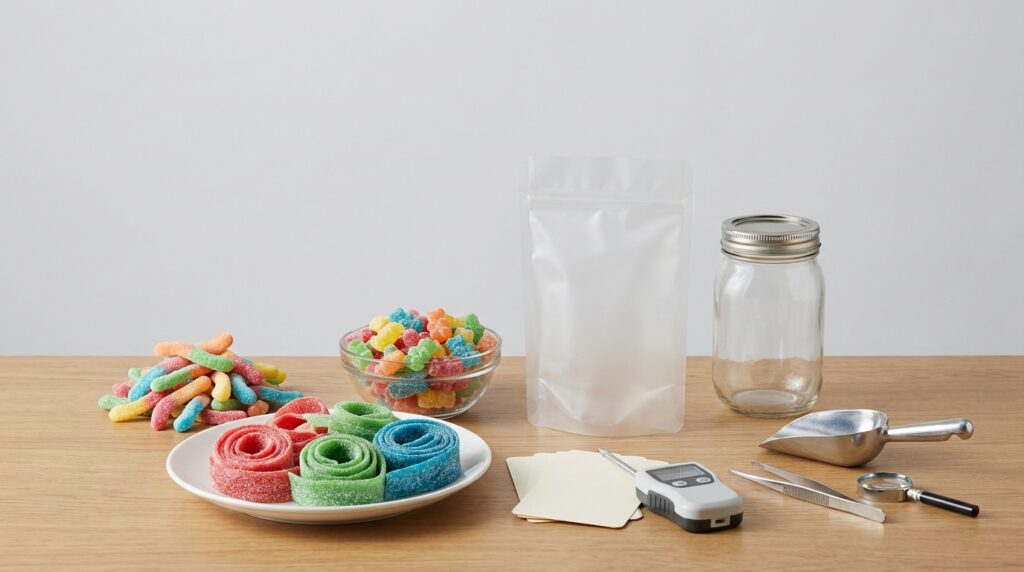
Sour candy can mean very different commercial routes: sour belts, sanded gummies, filled gummies, compressed candy, or hard candy with acid coating. Buyers should decide which format family matches their market before asking a supplier for "sour candy samples." Otherwise, the factory may send products that taste acceptable but do not match the retail route.
A short buyer brief with format, target price band, and preferred pack style usually produces a more useful first sample set.
Confirm acid level, coating behavior, and climate risk
Sour projects fail when buyers approve the taste but ignore how the coating behaves in storage and transit. The buyer should ask whether the acid level is mild, medium, or aggressive, whether sugar sanding or coating will stay stable, and whether the product is suitable for hot or humid markets.
That question matters even more for long export routes, mixed containers, and markets where shelf presentation must stay neat after handling.
Match ingredient and claim requirements to the destination market
Before sampling, buyers should tell the supplier whether the market requires halal positioning, gelatin-free recipes, cleaner labels, reduced-artificial-color expectations, or specific language on the label. These requirements can change the formula and also affect which sample is relevant.
A sample that tastes right but cannot support the claim set is not a real sample approval. It is only an early flavor check.
Ask for a sample set that mirrors the real commercial decision
The most useful sample request compares two or three controlled options, not an open-ended assortment. For example, buyers can ask for one standard sour gummy, one stronger-acid version, and one pack-format variation that reflects the intended retail route. That makes supplier feedback and internal review more practical.
This is also the right stage to ask about MOQ by flavor, private-label flexibility, pouch or jar options, and what documents will be needed later if the project moves toward a PI or artwork review.
Quick checklist before you ask for a quote
| Area | What to confirm before sampling | Why it matters |
|---|---|---|
| Format | Belt, sanded gummy, filled gummy, hard candy, or another sour route | Stops the supplier from sending the wrong product family |
| Sour profile | Mild, medium, or strong acid level and preferred coating style | Taste alone does not show whether the shelf product is commercially viable |
| Claims | Halal, vegan, gelatin-free, clean-label, or language requirements | Formula and packaging approvals may change before quote stage |
| Packaging | Pouch, jar, display box, or bulk route for the intended channel | Packaging affects MOQ, shelf stability, and sample relevance |
| Commercial plan | Trial quantity, target market, and launch timing | Gives the supplier enough context to quote and sample realistically |
Related KidStar pages
- Review product families on Product Catalog.
- Compare custom pack routes on Packaging Customization.
- Check MOQ and timing basics on MOQ and Lead Time.
- For documentation questions, visit Certifications and Compliance.
Send a clearer brief
If you are preparing a sour candy inquiry, send KidStar your target market, sour format, preferred pack route, quantity range, and any halal or label requirements. The team can recommend a more relevant sample path instead of sending a generic assortment.