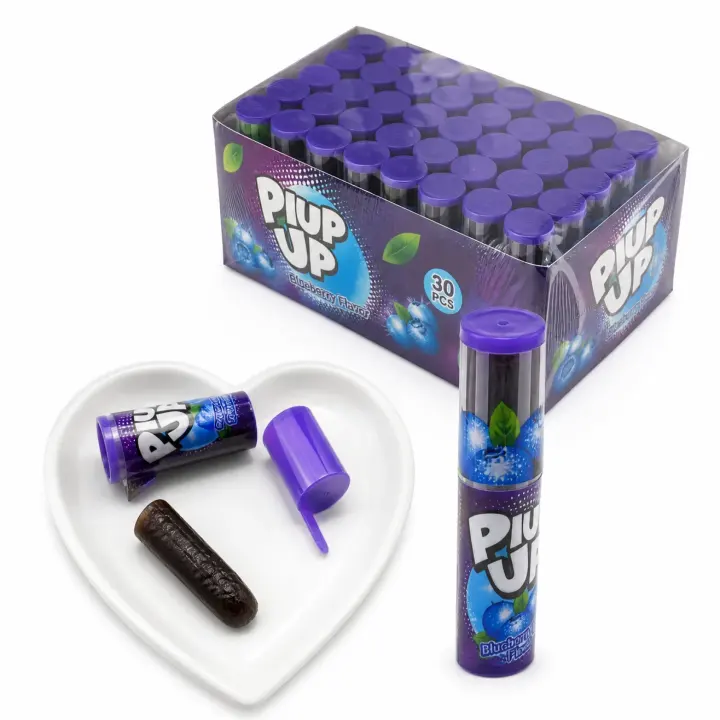
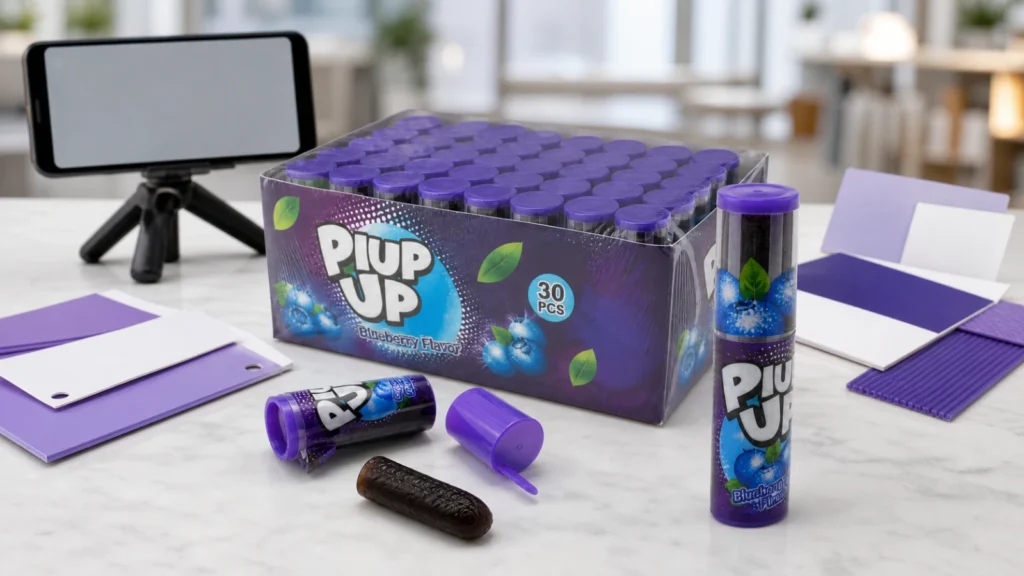
A lipstick candy retail test in 2026 should connect the product’s visual novelty to a controlled sales route, not assume that a social-friendly shape will automatically become a bestseller. KidStar SKU YMX-175 is the exact case: a 10 g novelty candy packed as 30 sticks × 20 boxes per carton. The buyer should test whether that unit, display presentation, and content story work together for one market and outlet.
The direct answer is to approve YMX-175 only after defining three things: where shoppers will discover it, what the first visual proof will show, and how the 30-stick display will be measured in store or online. Current 2026 confectionery evidence supports discovery-led testing, but it does not prove demand for this SKU. Importers, distributors, wholesalers, and private-label buyers still need a small, documented test with clear pass-or-hold criteria.
What the 2026 discovery signal actually says
The National Confectioners Association’s State of Treating 2026 reports that discovery happens both online and in store: 48% of Gen Z respondents found something new through TikTok, while 58% of Boomers found something new in store. The same public summary says financially pressured shoppers often stay with favorites, so novelty still has to justify its place rather than relying on surprise alone.
NACS reporting from the May 2026 Sweets & Snacks Expo adds a useful retail lens. It describes younger shoppers as visually driven, notes that packaging and flavor cues matter, and reports that novelty candy can support disruptive displays. TikTok Shop’s May 2026 Philippines summit, meanwhile, framed short-form video, LIVE commerce, and creator-led content as a shorter path between discovery and purchase.
Together, those sources suggest a buyer test with two connected surfaces:
- a content surface where the product can be understood quickly in motion or close-up
- a retail surface where the same unit is easy to recognize and buy
They do not show that every novelty format will sell, and they do not replace local compliance, pricing, or consumer testing.
Use YMX-175 as a testable route, not a trend claim
The YMX-175 product page gives the importer a concrete baseline:
- exact SKU: YMX-175
- category: Novelty Candy
- listed unit weight: 10 g
- display count: 30 sticks
- export route: 20 boxes per carton
That is enough to design a test. It is not enough to say the item is viral, trending in a specific country, or certain to work at checkout. The buyer must choose the hypothesis.
For example: “A visually distinctive 10 g novelty item can earn a place in a youth-oriented convenience display when shoppers see the use and format clearly before purchase.” That is measurable. “Lipstick candy is hot” is not.
The product should also remain separate from the existing generic display-box content on the KidStar site. The useful question here is not how display boxes work in general. It is whether one visually distinctive SKU can move from discovery content into one controlled retail test.
Decision table: choose the first discovery route
| Buyer route | Why YMX-175 may fit | Minimum test asset | Pass signal | Hold signal |
|---|---|---|---|---|
| Convenience or checkout display | Visual novelty can be understood quickly | Open and closed display photos plus one-unit demonstration | Repeat sell-through across several outlets | Interest without repeat purchase or poor display handling |
| Distributor social sell-in | A short visual demonstration can help explain the item to retailers | 10-20 second product-use clip and exact carton sheet | Retailer requests tied to named outlets | Views or likes without qualified retailer interest |
| TikTok Shop or creator-assisted test | Discovery and purchase can happen in the same content journey | Compliant listing, truthful close-up video, and clear unit count | Orders with acceptable cancellation and return behavior | Traffic with weak conversion or misleading product expectations |
| Mixed novelty assortment | YMX-175 can add a distinct shape to a broader offer | Side-by-side assortment sheet with each SKU’s job | Retailers can explain why this SKU is included | The item duplicates another SKU’s role |
| Full private-label launch from day one | Possible later, but too many variables for a first signal | Approved stock-route sample before custom scope | Stock route proves channel fit | Artwork work begins before the product job is validated |
The buyer should choose one row, one market, and one measurement window. Combining every route in the first order makes it impossible to learn why the result was good or bad.
Build content that explains the product truthfully
Discovery-led commerce rewards clarity. A useful YMX-175 asset should show the actual unit, how it opens or is consumed, and what the buyer receives. It should not add fictional certifications, exaggerated size, invented functions, or packaging claims that are not present in the approved product file.
Before creating sell-in or creator content, request:
- a current product and display-box sample
- front, side, open-display, and single-unit images
- the current ingredient and label file for the target market review
- the exact unit count and carton route
- any handling instruction that is genuinely required
- confirmation of which packaging shown in content matches the quoted route
The samples page is useful because the buyer can test whether the visual idea survives contact with the real product. If the item only looks compelling in an edited concept image but not in the approved sample and display, the content route should be held.
Measure business evidence, not vanity metrics
A discovery test should separate attention from commercial proof. Views, likes, saves, and comments can show that the visual format attracts interest, but they do not tell an importer whether the carton route, landed price, or outlet replenishment works.
Track at least these fields:
- market and channel
- number of outlets or listing sessions
- content format used
- units or displays placed
- qualified retailer enquiries
- sell-through or order conversion during the agreed test window
- returns, complaints, or expectation gaps
- repeat request or reorder intent
Then connect the result to MOQ and lead time. A successful content signal still needs a sourcing route that the buyer can replenish. A weak signal should not be rescued by immediately expanding custom artwork, flavors, or pack variations.
Keep the first RFQ narrow enough to learn
The first YMX-175 brief should state:
- exact market and outlet type
- whether the test is in-store, social-commerce, or distributor sell-in
- confirmation that the 10 g, 30-stick display is the baseline
- first-order quantity direction
- sample and content assets required
- test duration and decision rule
- whether packaging customization is intentionally deferred
This is a stronger buying document than a request for “viral lipstick candy.” It asks the supplier to support one verifiable route and gives the buyer a clean reason to repeat, revise, or stop.
If you want KidStar to assess YMX-175 for a discovery-led retail test, send your country, outlet type, content route, carton direction, and pass criteria through the contact page. The reply can then focus on an exact sample and quotation path rather than a generic novelty-candy trend pitch.
Sources reviewed
- NCA State of Treating 2026 — U.S. confectionery trade-association research; 2026 report, reviewed 18 August 2026.
- NACS: Sweets & Snacks 2026 — How to Target Gen Z Shoppers — convenience-retail association coverage, updated 22 May 2026; reviewed 18 August 2026.
- TikTok Shop Summit Pilipinas 2026 — official platform newsroom, updated 20 May 2026; reviewed 18 August 2026.
- KidStar SKU YMX-175 product record — first-party product library; reviewed 18 August 2026.