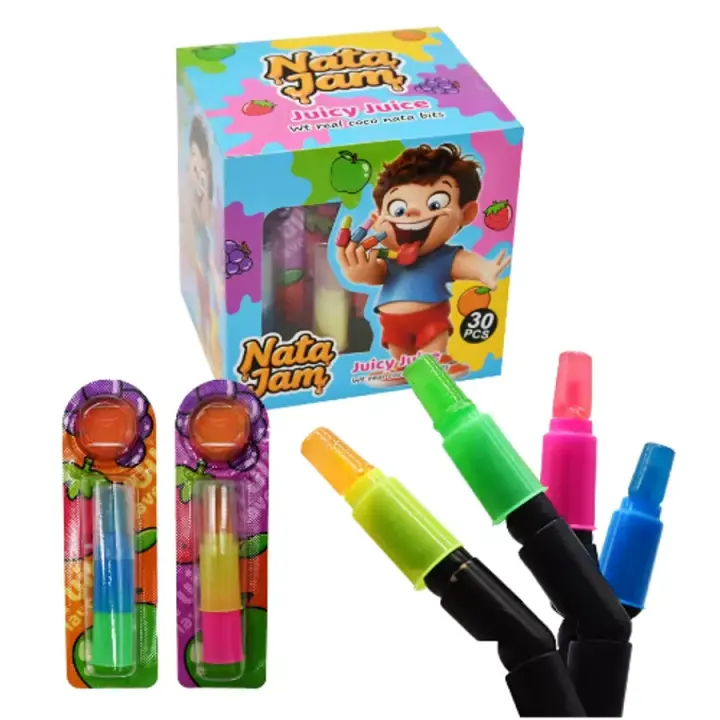
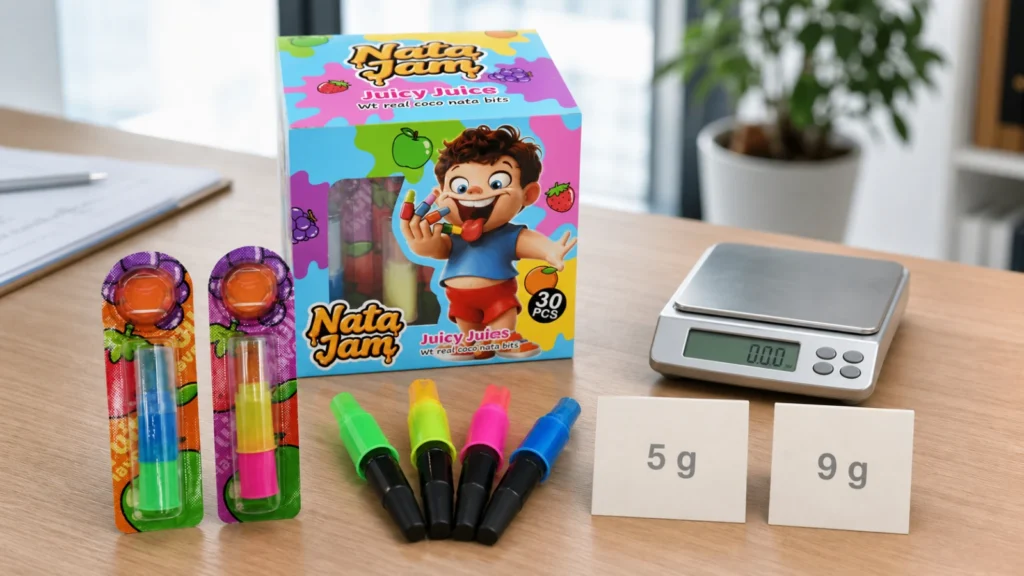
For a finger dipping candy pack size decision, do not ask for the 5 g and 9 g options as if weight were the only difference. Start with the retail price point, how long the candy should feel in use, and whether the standard display-box route fits the target outlet. KidStar SKU YMX-162 is the exact product case: the current product record lists 5 g / 9 g variants packed as 30 sticks × 20 boxes per carton.
The direct answer is that 5 g is the more natural first screen when the buyer wants a lighter trial unit or tightly controlled entry price, while 9 g deserves review when the channel needs a more substantial single unit. That is a buying hypothesis, not a promise that both variants have identical components, flavors, dimensions, availability, or pricing. Importers, distributors, wholesalers, and private-label buyers should ask KidStar to map the selected gram weight to the current sample, display box, ingredient file, and quotation before approving either route.
Treat 5 g and 9 g as two commercial briefs
The product page gives buyers a useful starting frame:
- exact SKU: YMX-162
- category: Dipping Candy
- listed unit-weight options: 5 g / 9 g
- display count: 30 sticks per box
- export packing route: 20 boxes per carton
What the record does not establish is equally important. It does not say that every component, flavor mix, outer dimension, artwork panel, or current production route is interchangeable between the two weights. A clean RFQ should therefore name one preferred weight and ask the supplier to confirm the matching current specification instead of treating “5 g / 9 g” as a free last-minute switch.
That discipline keeps the buyer’s first comparison tied to one sellable unit. Use the wider KidStar product catalog only after the YMX-162 route is clear; otherwise a specific pack decision can turn into another broad category search.
Decision table: when each weight deserves the first sample
| Buyer situation | First weight to review | Why it may fit | What must still be confirmed |
|---|---|---|---|
| Value or general-trade test with a strict entry price | 5 g | A lighter unit may support a smaller trial proposition | Current unit dimensions, components, flavor, and quote |
| Distributor testing one novelty line across many outlets | 5 g first, then compare 9 g | The buyer can screen acceptance before adding a larger unit | Whether both weights use the same display and carton logic |
| Convenience or novelty counter seeking a more substantial single unit | 9 g | A larger declared weight may better fit the intended consumer experience | Finished unit size, shelf presentation, and price point |
| Buyer has not fixed outlet or target retail price | Hold both | Weight alone cannot solve an undefined channel job | Outlet, retail unit, price architecture, and sample question |
| Private-label team already changing artwork or pack language | Choose one route first | Two weights can double approval work if treated as one project | Artwork panels, ingredient text, declarations, and MOQ path |
This table does not predict sell-through. It is a way to decide which physical sample should answer the first buyer question. If the target market needs both sizes, run them as two controlled variants with separate notes rather than approving one and assuming the other follows automatically.
Send the supplier a weight-specific sample question
A weak request says, “Please send finger dipping candy samples.” A useful request tells the supplier what the sample must prove.
For the 5 g route, the question might be: can this unit deliver the intended novelty experience at the buyer’s entry price and fit the standard 30-stick display presentation? For the 9 g route, the question might be: does the larger unit create enough extra commercial value to justify its space and price difference?
The first sample brief should include:
- exact SKU YMX-162
- preferred test weight: 5 g or 9 g
- destination market and outlet type
- target retail role, without asking the supplier to predict the retail price
- whether the standard 30 sticks × 20 boxes/carton route is the baseline
- the exact evidence needed from the sample: unit feel, opening and use, display presentation, label panel, or carton handling
- whether the buyer is reviewing a stock route or a later private-label project
The samples page is the right next step when the team needs to turn those questions into physical evidence. The MOQ and lead time guide should then be read against the selected route, not against a vague request covering both weights and several packaging ideas.
Lock the display-box baseline before discussing customization
YMX-162 is currently recorded as a 30-stick display-box line with 20 boxes per carton. That baseline matters because the unit weight and display presentation work together. A 5 g option in one display configuration should not automatically be compared with a 9 g option in a different configuration as if only grams changed.
Before moving into packaging customization, buyers should ask KidStar to reconfirm:
- which unit weight the reference sample represents
- how many finished units sit in the retail display
- whether the selected version changes any display dimensions or layout
- which label language and ingredient file correspond to that version
- whether the quote is for the current route or includes custom artwork work
- which quantity and destination assumptions were used
This is especially important for private-label teams. If the buyer opens two gram weights, two artwork routes, and several flavors at once, the first quotation stops being comparable. A better sequence is one weight → one sample → one display route → one quote, followed by a deliberate second-variant comparison if the first route makes commercial sense.
Use an approval sheet that prevents silent substitutions
The final sample note should be short enough for purchasing, sales, and the supplier to read the same way. Record:
- SKU and product name
- approved gram weight
- sample reference date
- approved unit and display photos
- unit count per display and displays per carton
- ingredient and allergen document version received
- target market and required label-language review
- quote version and quantity assumption
- any open point that must be answered before artwork or deposit
Do not write “YMX-162 approved” if the team only approved a 5 g sample. Write “YMX-162, 5 g route approved for quotation subject to the listed documents.” That one line prevents a later 9 g option, different presentation, or revised artwork from being treated as already accepted.
Checklist before comparing 5 g and 9 g offers
- Anchor every request to YMX-162.
- Choose the first weight from the channel job, not from grams alone.
- Ask which current specification, flavor, components, and display match that weight.
- Keep the 30 sticks × 20 boxes/carton route as the comparison baseline until reconfirmed.
- Use samples to answer one weight-specific question.
- Read MOQ and lead time against the chosen route.
- Separate a stock-route test from later packaging customization.
- Record the approved weight in the RFQ, sample note, and quotation.
If you want KidStar to map the 5 g or 9 g YMX-162 option to your market, outlet, sample goal, and carton plan, send those inputs through the contact page. The team can then answer around one exact route instead of returning a generic dipping-candy price.
Sources reviewed
- KidStar SKU YMX-162 product record — first-party product library; reviewed 18 August 2026.
- KidStar candy carton data guide — first-party packing reference; reviewed 18 August 2026.
- KidStar samples — first-party buyer workflow; reviewed 18 August 2026.
- KidStar packaging customization — first-party buyer workflow; reviewed 18 August 2026.