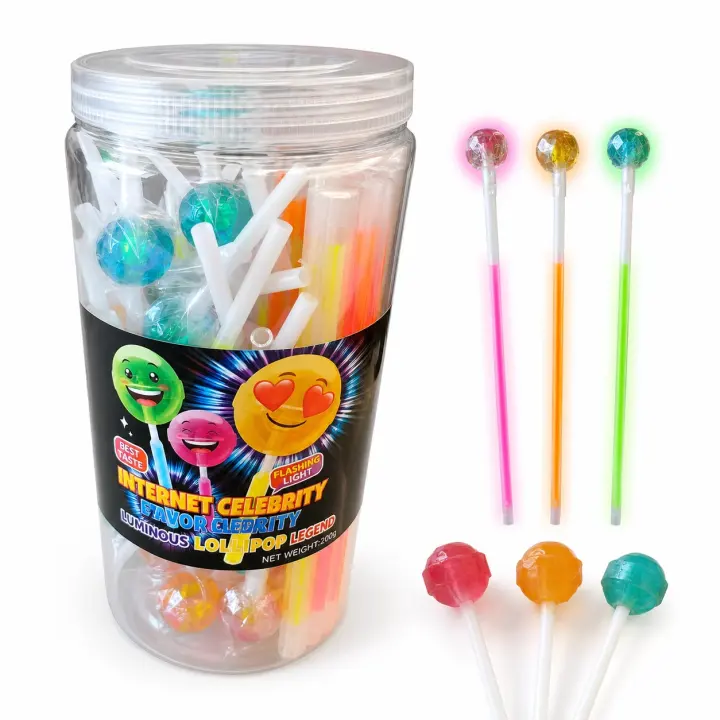
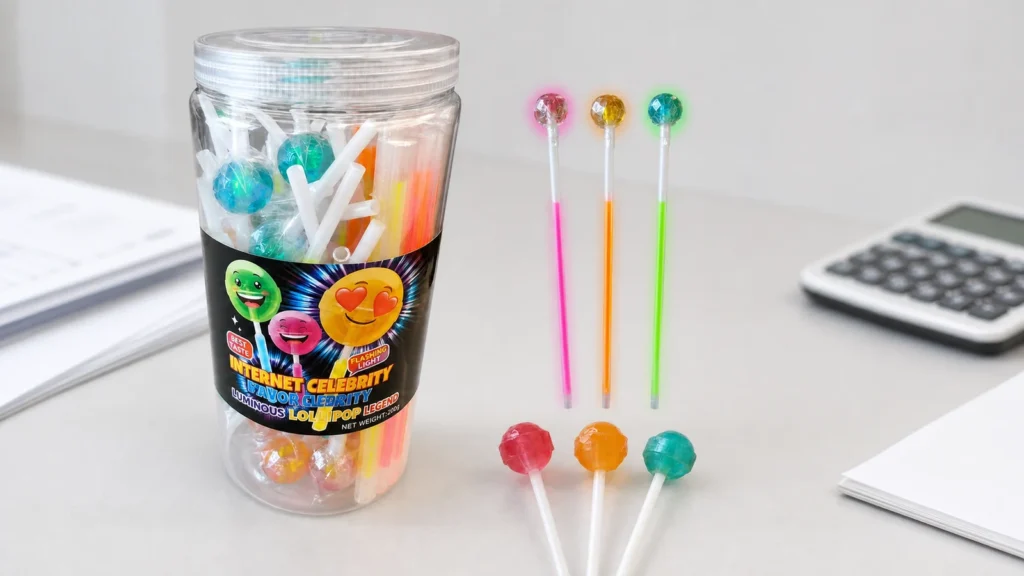
The FAO Sugar Price Index rose 5.6% from June to July 2026, so a lollipop buyer should recheck the assumptions behind an open quotation. The index is a market benchmark, not a KidStar factory-price list, and it does not prove that a finished candy quote should rise or fall by the same percentage.
For YMX-197 Assorted Lollipop, the practical response is to confirm the quote date, exact 10 g × 60 pieces × 12 jars version, quantity, currency, Incoterm and named place, validity period, artwork scope, and change log. That produces a usable commercial comparison without turning a commodity headline into an unsupported finished-product claim.
Read the July 2026 signal accurately
FAO reported its Food Price Index at 131.1 points in July 2026, up 0.6% from June. Within that release, the Sugar Price Index rose 5.6% month on month. FAO associated the increase with hot and dry conditions in parts of the European Union, concerns about possible El Niño effects on Asian production, and support from higher crude-oil prices for Brazilian ethanol demand; improved harvest prospects in Brazil’s Centre-South region partly limited the increase.
Those are official observations for an international commodity indicator. They are not a supplier-specific statement about YMX-197, a forecast of the next month, or a measure of the complete cost of candy.
| The FAO release can support | It cannot establish |
|---|---|
| A dated sugar-market benchmark moved upward | KidStar’s actual sugar purchasing cost |
| Buyers have a reason to refresh old assumptions | A 5.6% change in a lollipop quote |
| Market inputs should be discussed with dates | The cost of packaging, labor, freight, finance, or artwork |
| A quote comparison should use the same denominator | Which supplier offers the best total landed outcome |
The disciplined conclusion is “recheck,” not “automatically increase” and not “automatically demand a reduction.”
Rebuild the YMX-197 quote denominator
KidStar lists YMX-197 as Assorted Lollipop with a 10 g × 60 pieces × 12 jars route. That reference gives buyers a starting hierarchy, but the current inquiry still needs a matched commercial version.
Ask every compared quotation to state:
- exact SKU and sample or artwork revision
- whether 10 g is the agreed unit basis
- whether 60 pieces load into each jar
- whether 12 jars form the carton route
- requested quantity and quantity unit
- currency and price unit
- Incoterm version, rule, and named place
- inclusions and exclusions
- quote issue date and validity period
- payment route and any condition that changes the offer
If one quotation is per piece, another per jar, and a third per carton, convert them to the same approved pack hierarchy before drawing a conclusion. If the assortment, jar, label, or artwork differs, the offers are not yet like-for-like.
Separate the candy from the complete landed decision
Sugar is one possible input into the product conversation. A wholesale decision may also depend on the finished formulation, individual wrapping, stick, printed materials, jar, display or carton, inspection plan, inland movement, freight, insurance, duty, tax, banking cost, and inventory risk. The responsible importer must determine which costs apply to the actual route.
Use a landed-decision table rather than a single quoted number:
| Decision layer | Input to confirm | Owner |
|---|---|---|
| Product | Exact YMX-197 version and assortment | Buyer and supplier |
| Pack | Unit, jar, carton, artwork, and markings | Buyer and supplier |
| Trade term | Incoterm rule and named place | Commercial teams |
| Border route | Classification and destination charges | Importer and broker |
| Logistics | Current mode, route, and quotation date | Buyer or forwarder |
| Risk | Validity, currency, inspection, and contingency | Buyer |
The candy container loading guide can help structure carton and space questions. It should not be used to invent a loading result without current carton measurements and a confirmed shipment plan.
Use category demand as a separate signal
The US National Confectioners Association reported that 2025 confectionery sales reached $55 billion and that non-chocolate products represented 40.9% of dollar sales. That industry release can help a buyer understand category scale, but it does not prove demand for one lollipop, one jar size, one country, or one retailer.
Keep the two signals separate:
- the FAO release is an input-market benchmark dated July 2026
- the NCA release is a US confectionery category report for 2025
- the buyer’s sell-through, margin, and replenishment evidence belongs to the selected channel
- the YMX-197 quotation belongs to one defined product and commercial version
This separation prevents broad market figures from being used as substitute proof for a specific purchase decision.
Refresh quotes with a change log
When an older quote is reopened, do not ask only for “best price.” Send the previous version and request a controlled refresh. The supplier should be able to identify what stayed the same, what changed, and which open inputs still prevent a final comparison.
Use this checklist:
1. Attach the previous dated quotation. 2. State the exact YMX-197 reference and sample revision. 3. Confirm the 10 g × 60 × 12 denominator. 4. Restate the quantity and destination. 5. Restate the currency and Incoterm named place. 6. Identify any artwork, jar, label, or carton change. 7. Request a new validity date. 8. Ask for changed assumptions to be listed, not hidden. 9. Recalculate the buyer’s landed view with current third-party inputs. 10. Record the decision owner and next review date.
For buyers comparing several products in one load, the mixed-confectionery container questions can help isolate product-level and container-level decisions.
Choose a buyer action, not a market prediction
| Situation | Buyer action |
|---|---|
| Quote is current and every input matches | Continue the commercial review |
| Quote is old but the product version is unchanged | Request a dated refresh |
| Pack, artwork, quantity, or trade term changed | Request a new matched quotation |
| Commodity headline is the only reason offered | Ask for supplier-specific changed assumptions |
| Landed inputs are incomplete | Hold the comparison until the responsible parties update them |
This framework does not forecast sugar prices or establish future quotation stability. It creates a defensible purchasing record for the conditions known at the time.
Send a quote-ready YMX-197 refresh brief
Send KidStar the destination, channel, YMX-197 sample version, 10 g × 60 × 12 reference, quantity, currency, Incoterm and named place, artwork scope, previous quote date, and requested validity period through the contact page.
KidStar can then review one complete lollipop inquiry. The buyer can compare the resulting offer with current freight, border, and channel inputs instead of treating the FAO index as a finished-candy price formula.
Sources reviewed
- FAO: Food Price Index edges up amid weather, energy and geopolitical concerns, published August 7, 2026 and reviewed August 31, 2026.
- National Confectioners Association: Confectionery Sales Climb to $55 Billion in 2025, published March 9, 2026 and reviewed August 31, 2026.
- KidStar YMX-197 Assorted Lollipop product record, reviewed August 31, 2026.