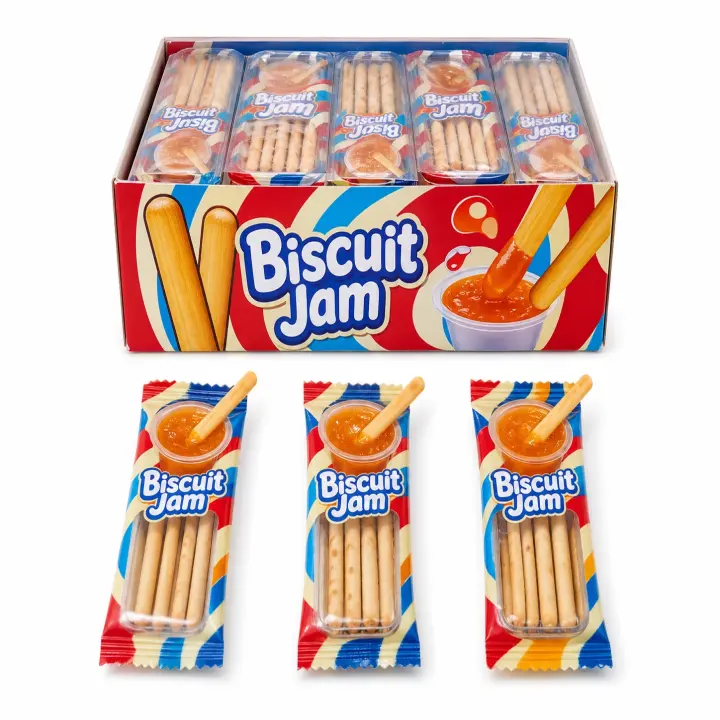
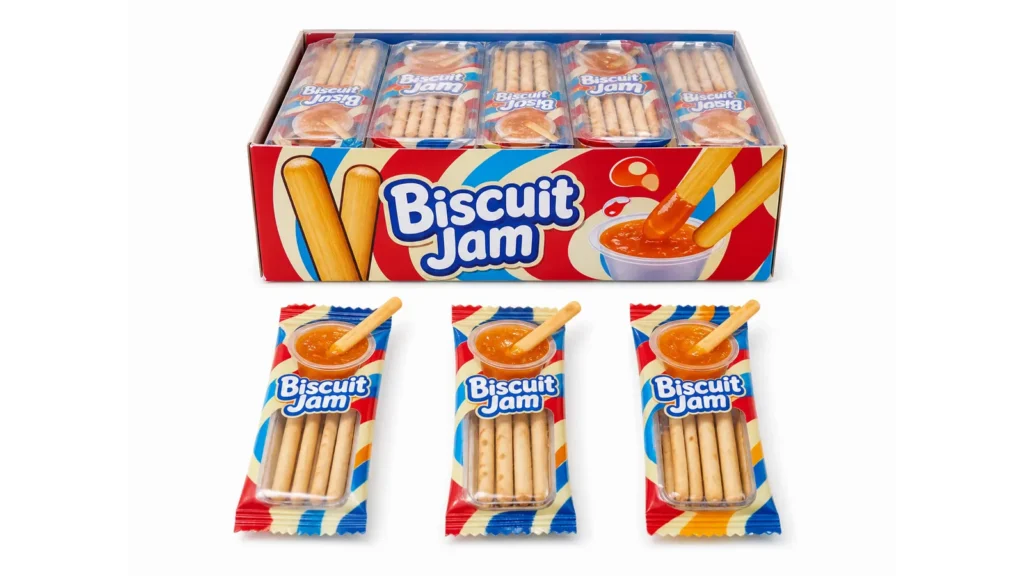
The direct answer for a biscuit sticks with jam dip import program is that approval starts with the jam-dip stability test, not with the price. KidStar SKU YMX-039 is the practical case: biscuit sticks with fruit jam dip packed as 23.5 g × 30 pieces per display box, 20 display boxes per carton, which means importers, distributors, wholesalers, and private-label buyers are approving a two-component food line, a retail display unit, and an export case route at the same time.
A biscuit-plus-jam product behaves differently from a single-texture candy. The biscuit needs to stay crisp enough to dip, the jam needs to stay stable across transit temperatures, and the display box has to arrive with the sauce component intact. That is why the approval workflow should be locked before the first quote is treated as final: sample approval, heat-transit evidence, shelf-life assumptions, and the exact YMX-039 pack all belong in one brief.
Why biscuit-plus-jam needs a different approval workflow
Most candy approvals check flavor, color, and pack. A biscuit jam dip line adds three failure modes that a single-texture candy does not have:
- Texture change: if the biscuit absorbs moisture from the jam during transit, the dipping experience changes before the product reaches the shelf.
- Sauce stability: jam dip can separate, crystallize, or soften depending on temperature swings in the container.
- Component consistency: the stick count, the dip portion, and the seal of the dip cup all have to survive the same shipment.
These are not design opinions; they are shipment and shelf risks that only show up in a real sample and transit test. The product page anchors the discussion, and the product catalog lets the buyer compare YMX-039 against simpler biscuit or candy lines that carry less approval burden.
What the YMX-039 pack record means for the route
| Pack level | Record fact for YMX-039 | What the buyer should lock |
|---|---|---|
| Candy unit | 23.5 g biscuit sticks with fruit jam dip | Whether the full set is the sellable unit |
| Display box | 30 pieces per display box | Whether the box is the retail unit the channel receives intact |
| Carton | 20 display boxes per carton | Carton count, pallet math, and reorder logic |
| Components | Biscuit sticks plus jam dip | Texture, sauce stability, and seal evidence per shipment |
The two-component format also changes cost logic. The biscuit and the jam may come from different production steps, so the buyer should confirm whether the quote covers the combined unit, the display box, and the export packaging, or only the components. Confirm quantity and timing assumptions on the MOQ and lead time page before anything is quoted.
Six facts to lock in the approval brief
Before approving YMX-039 for an import program, confirm these six facts in writing:
- The target shelf price for the 23.5 g display-box unit after freight, duty, and margin.
- The biscuit texture spec, including how the stick should feel at the point of sale, not only at the factory.
- The jam-dip stability requirement, including temperature range, separation, and shelf-life evidence.
- The transit test plan, because heat and humidity behavior only shows up in a real shipment test.
- The display-box and export carton packing, starting with 30 pieces per box and 20 boxes per carton.
- The approval timeline, so the sample pass, shelf-life review, and first production slot fit the launch window.
Use the samples page to run the combined pass: biscuit texture, jam dip, display box, and transit behavior together. A sample review that only tastes the components misses the two failure modes that actually stop a container.
Decision table: channel fit for the jam dip route
| Buyer route | Strong fit? | Why | What to confirm first |
|---|---|---|---|
| Kids’ novelty and lunchbox retail | Yes | The interactive dip format has a clear novelty story | Shelf price, piece count, and dip-cup seal |
| Convenience impulse display | Usually yes | The display-box route fits counter placement | Whether the box goes to shelf intact |
| Wholesale mixed carton | Usually yes | It adds variety without forcing a novelty-only carton | How many cartons carry YMX-039 vs core items |
| Long-transit or hot-climate market | Case by case | Heat can change jam and biscuit texture | Transit test evidence for the exact route |
| Private-label first program | Case by case | The concept can work, but component specs need scoping early | Whether stock route or custom route comes first |
Turn the approval workflow into a buying brief
The final step is writing the brief in one file: exact SKU YMX-039, the 23.5 g × 30-piece display-box format, the jam-dip stability and texture requirements, the named channel and resale unit, and the transit test plan. That file is what makes supplier answers comparable and turns a biscuit jam dip idea into a real import program decision.
Start a Buying Brief with the channel, pack route, stability requirements, quantity direction, and timing, and the KidStar team can review YMX-039 against the approval workflow you actually plan to run. If the program later moves toward custom packaging or a private-label biscuit line, that belongs in a separate conversation with the packaging customization team once the stock route has proved itself.