
You approved the samples, the factory booked production, and then customs asked for a document nobody prepared. That is the most common first-order delay in candy importing — and it is almost always avoidable.
This guide maps the export documents you should request before shipment, when each one matters, and how long the whole production-to-delivery chain typically takes.

The document set: one document, one purpose
Each document exists to answer one question for customs, the carrier, or the retailer. Asking for them all at once with the shipment is easier, but each has an ideal moment.
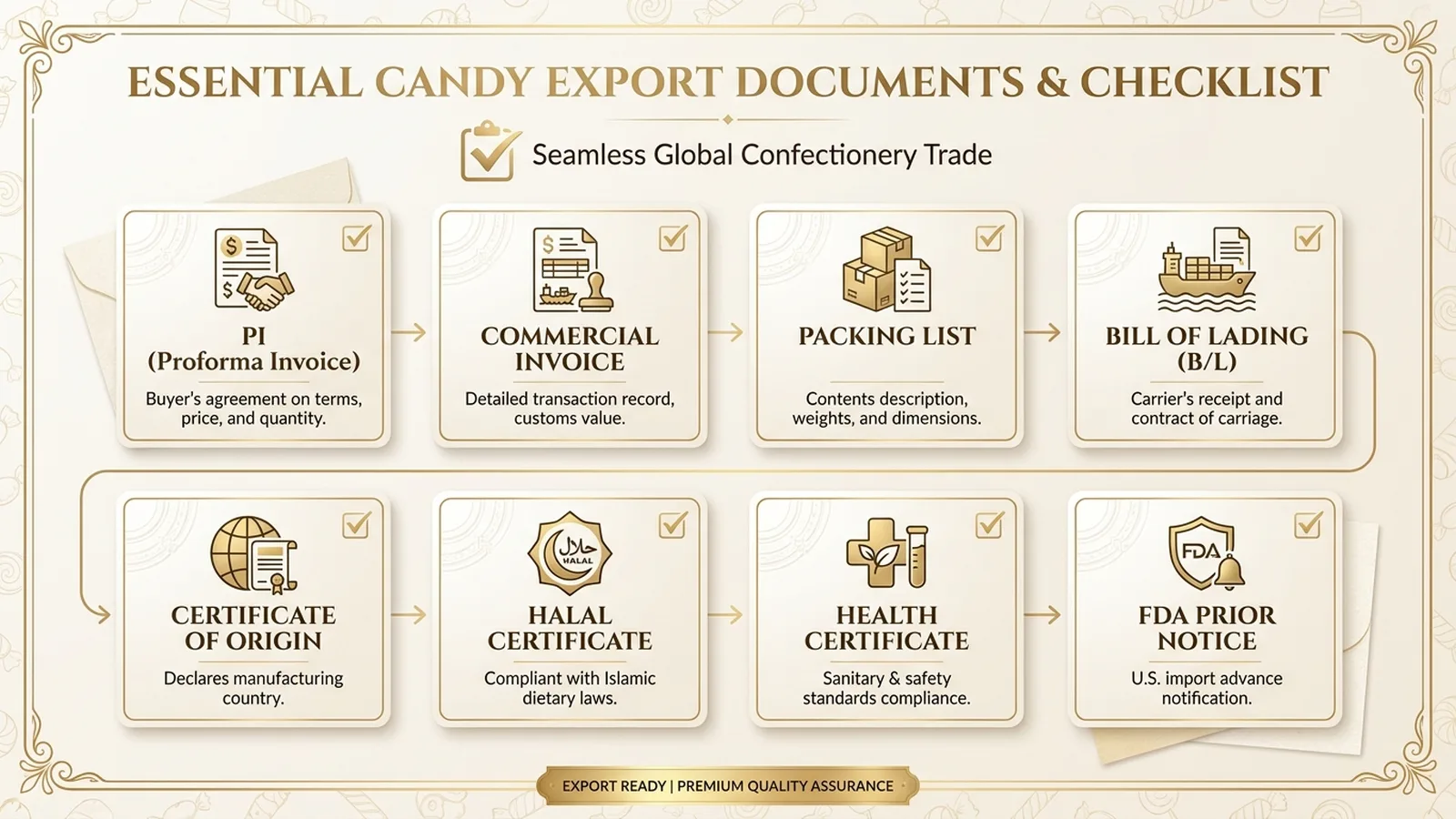
Two documents deserve extra attention because they are the ones first-order importers usually miss:
- Certificate of Origin — if your country has a trade agreement with the origin country, this is what unlocks the preferential duty rate. Ask whether the factory can provide one and how long it takes to issue.
- FDA Prior Notice (US) — for US-bound candy, the importer files prior notice through the FDA system at least 24 hours before arrival. It is a filing, not a physical certificate, but the supplier’s data (packing list, carrier, arrival details) has to be correct for it to work.
Why the packing list and bill of lading matter more than the invoice
The commercial invoice sets the value, but the packing list drives the logistics: carton count, gross and net weight, and dimensions decide whether your container is full or half-empty. The bill of lading is your proof of cargo ownership and the document you need to release the goods at the destination port. Check three fields before you accept either: your company name exactly as registered, the port of discharge, and the number of cartons.
The typical candy export timeline
From production booking to final delivery, a candy order usually runs 6-9 weeks. Knowing where the time goes makes it easier to plan a ship window and avoid last-minute premium freight.
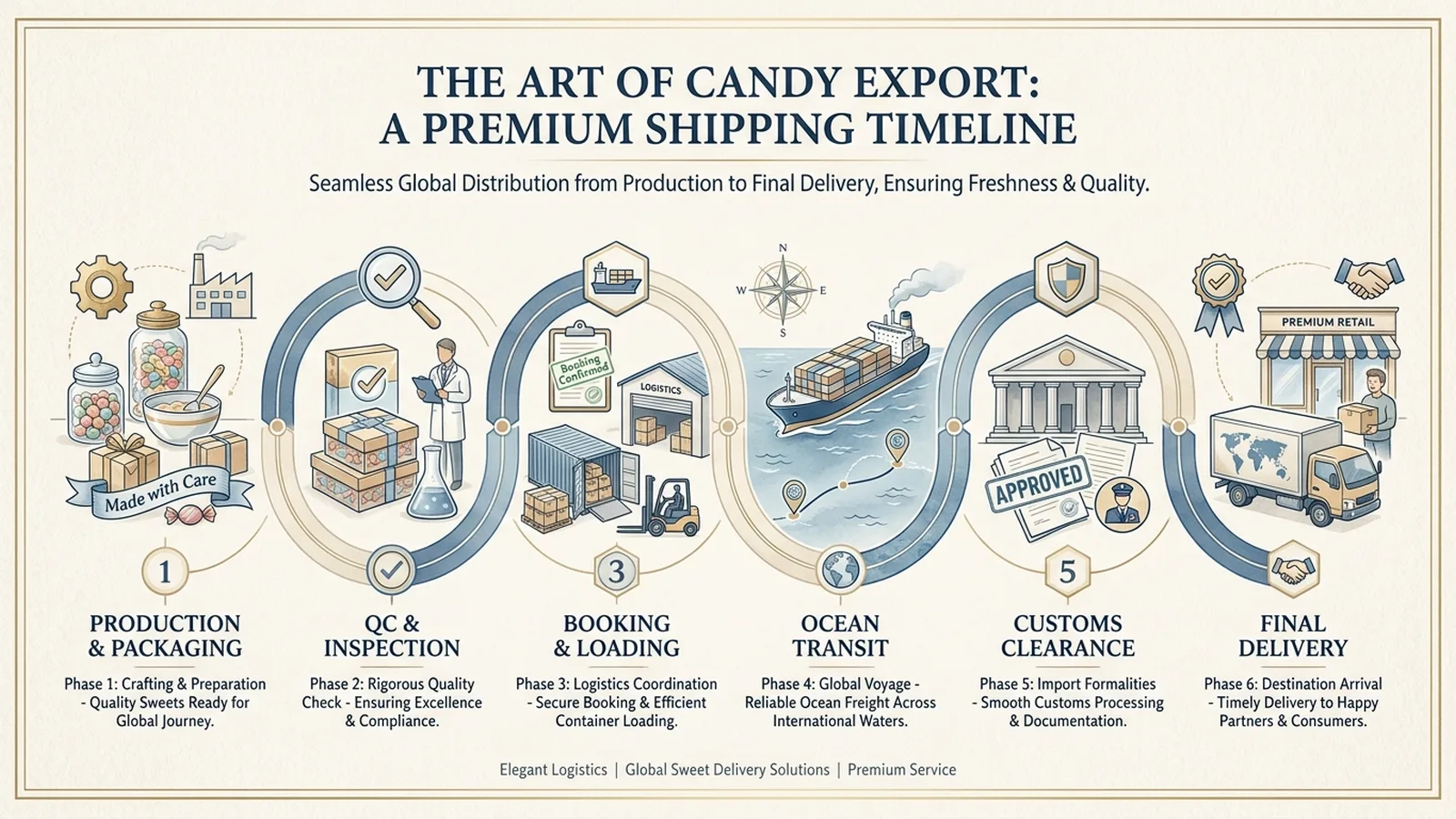
The ocean leg is the largest variable. Asia-to-US or Asia-to-EU transit can stretch from three to six weeks depending on the port pair and the season, so the ship window matters more than the production date when you negotiate delivery.
If you are still comparing suppliers, our candy sourcing guide walks through the product families and pack routes that pair with each document set.
Incoterms: decide before you quote, not after
Freight, insurance, and customs responsibility are decided by the Incoterm you choose. If this is decided after the quote, both sides carry risk they did not price.
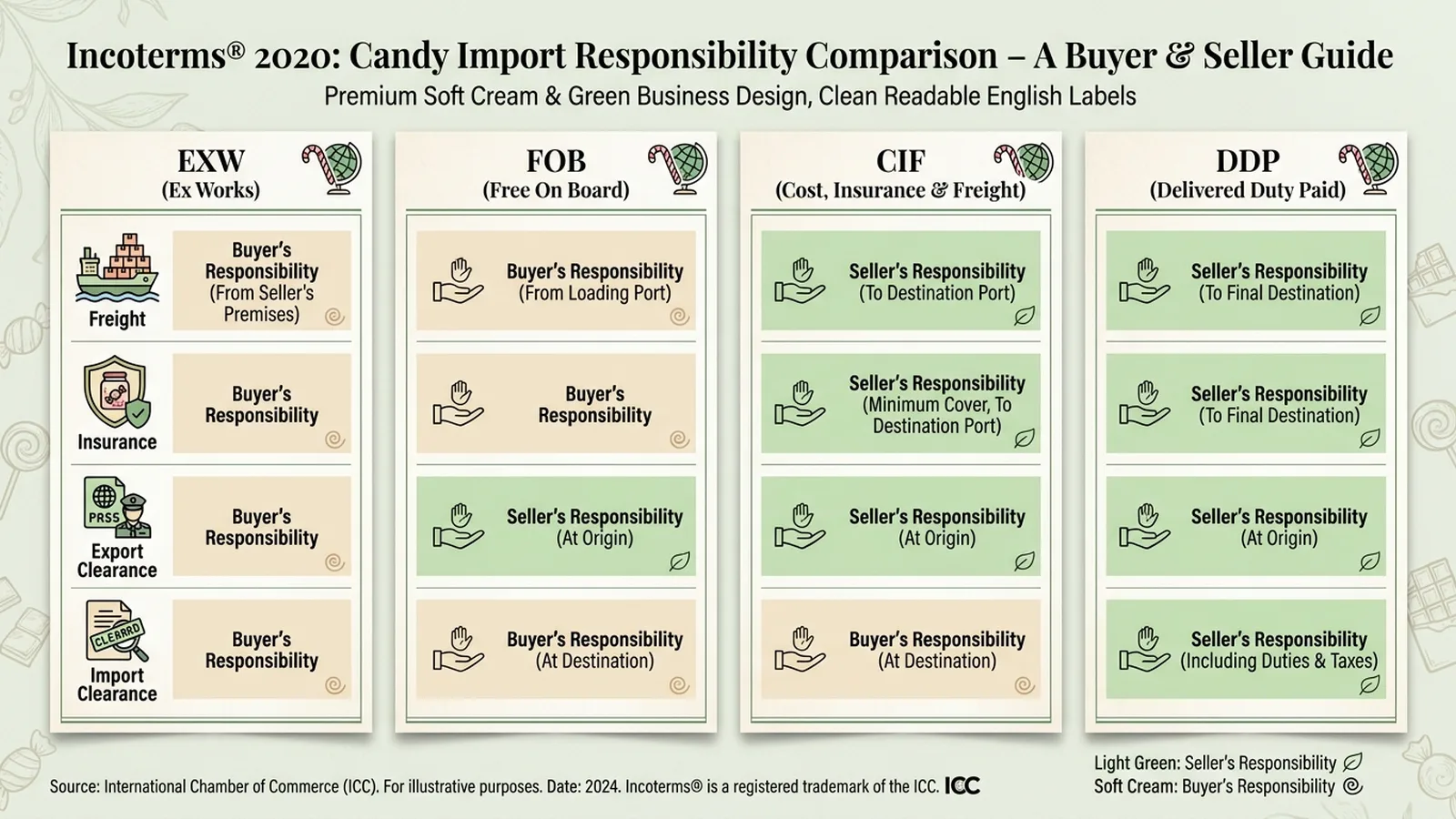
For most candy imports, FOB is the working default: the supplier clears export and loads the goods, and the buyer controls freight and insurance. First-time importers often prefer DDP because the supplier handles more — but the price includes that service, so compare both on the same product before choosing.
What to put in the first inquiry so the documents arrive on time
You cannot request a certificate that was never planned. Add these three lines to your first inquiry and the document package stops being an afterthought:
1. Destination market and import requirements — e.g., US FDA prior notice, EU labeling, halal markets, or country-of-origin claims. 2. Required certificates — ask which of these the factory can provide: halal, health/sanitary, certificate of origin, and allergen declarations. 3. Ship window and Incoterm — state the intended delivery month and the Incoterm you want quoted, so freight assumptions are priced correctly.
Bottom line
A complete document package is part of the product. If a supplier can confirm the document set at the inquiry stage — not after production — the first order clears customs on schedule and the buyer avoids demurrage, re-filing, and rushed premium freight.
Send KidStar your market, product direction, and ship window. We will confirm which export documents your customs and retail teams will need before you book production. Start a Buying Brief or browse the product catalog to build the first inquiry.