
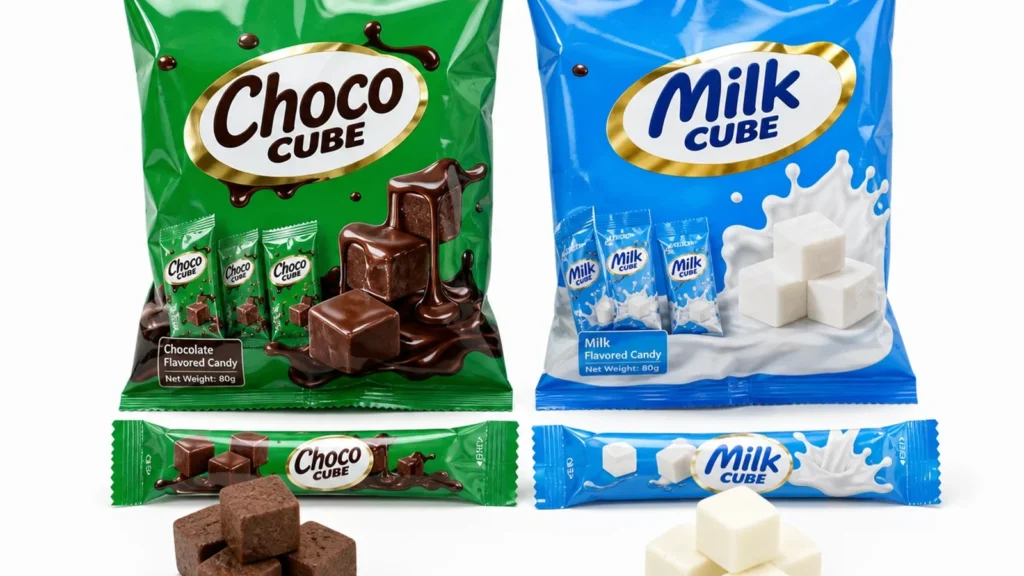
The direct answer: a candy order from China has three time buckets — sampling, production, and shipping — and the total is usually 6–12 weeks for a standard route, with more time for custom packaging or private label. KidStar’s public planning guidance points to roughly 15–20 days for standard OEM execution and 30–45 days for more developed ODM work, before ocean shipping adds transit time. The reliable way to plan is to work backwards from the launch date, not forwards from the order date.
This guide is for importers, distributors, and private-label buyers who need a realistic candy lead time plan before they commit to a launch window.
Latest market insight
- Low-MOQ, fast-delivery candy sourcing (7–15 day production windows) is a growing B2B pattern, but fast delivery usually means stock-style product without custom artwork or formula work.
- Global gummy sourcing comparisons between China, Southeast Asia, and Turkey show that factory location changes both the production window and the shipping route, so "lead time" is really two numbers: factory time plus transit time.
- Custom candy programs are typically quoted with longer windows than stock routes, because artwork, tooling, and approval rounds happen inside the production schedule.
Sources reviewed: Litai Candy — Lead Time for Custom Candy and Shipping, Alibaba Seller Blog — Low MOQ Candy Sourcing, Lechao Candy — Global Gummy Supply Chain.
The three time buckets every candy order has
| Bucket | What happens | Planning range |
|---|---|---|
| Sampling | Sample production, courier transit, buyer review, approval | 1–3 weeks depending on courier and review speed |
| Production | Material purchase, manufacturing, packing, QC, loading | 2–6 weeks depending on route and order size |
| Shipping | Ocean transit, customs, delivery to warehouse | 3–7 weeks depending on destination |
The total for a stock-style repeat order can be as short as 5–6 weeks. A private-label or custom-pack first order usually needs 10–14 weeks because sampling, artwork, and approvals run before production starts.
Real planning numbers: OEM vs ODM routes
KidStar’s public MOQ and lead time guidance distinguishes two execution routes:
- OEM (standard execution): public planning guidance is roughly 15–20 days for standard OEM execution — existing product families, stock or adapted packaging, minimal formula change.
- ODM (more developed work): public planning guidance is roughly 30–45 days — formula development, custom packaging, approval work, and more complex programs.
Those are factory-execution windows, not delivery promises. Ocean shipping, customs, and inland delivery add transit time on top: typically 25–40 days to North America and 30–45 days to Europe, depending on the route and port.
What moves the lead time
- Customization depth: artwork-only changes are faster than formula development; full ODM work takes the longest.
- Pack format: pouch, jar, and display-box programs have different tooling and material purchase cycles.
- Assortment complexity: a mixed container with several SKUs needs more production scheduling than one SKU.
- Compliance and labels: halal, FDA, EU, or destination-specific label reviews add rounds inside the production window.
- Peak season: Chinese New Year and pre-Christmas seasons compress factory capacity; plan around them.
- Sample approval speed: every extra approval round adds days, and slow buyer review is the most common hidden delay.
Plan backwards from the launch date
1. Fix the launch date and the sell-in deadline (when retailers or distributors need the product). 2. Subtract shipping + customs: at least 5–7 weeks for ocean freight to most markets. 3. Subtract production: use 15–20 days for OEM, 30–45 days for ODM. 4. Subtract sampling and approval: add 2–3 weeks for the first order. 5. Add buffer: 2 weeks for delays, inspections, or approval rounds.
If the calculation lands before today, the program needs a stock-style route or a later launch window. The import guide shows the full sequence, and the container loading guide helps with the shipping-side planning.
Lead time checklist before you confirm an order
| Item | What to confirm | Why it matters |
|---|---|---|
| Route | OEM or ODM, and the exact scope of work | Sets the realistic production window |
| Sample plan | When samples ship and how long review takes | First orders always include this bucket |
| Production window | Factory estimate in writing | Planning range, not a promise |
| Shipping route | FCL/LCL, port pair, and transit estimate | Ocean transit is weeks, not days |
| Peak season | Factory capacity at order time | A quiet month differs from CNY season |
| Buffer | Two weeks of contingency | Approvals and inspections always take longer |
| Launch date | The date you actually need stock | Work backwards, not forwards |
Related KidStar pages
- Full import sequence: How to Import Candy from China
- MOQ and timing guidance: MOQ and Lead Time
- Container and freight planning: Candy Container Loading Guide
- Why quotes change with timing details: Why Candy Quotes Change or Stall
- OEM project timeline: OEM Candy Project Timeline
Get a realistic timeline with your quote
If you are planning a candy order and need a realistic timeline, send KidStar your target market, product direction, pack route, quantity, and launch window. The team can confirm which route fits your date — stock-style, OEM, or ODM — before you commit to a schedule.