
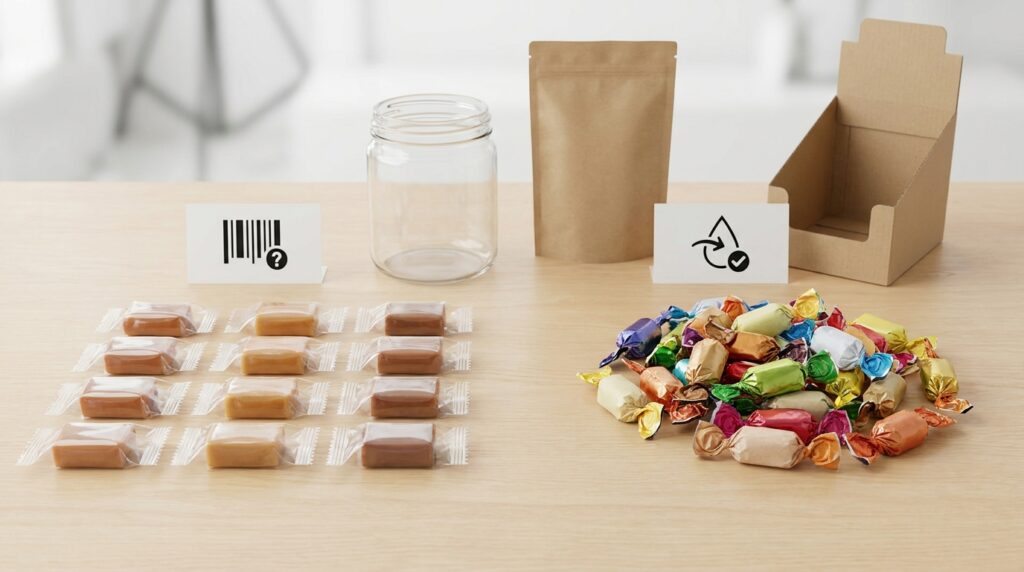
For import buyers comparing flow-wrap vs twist-wrap candy packaging, the decision affects product protection, shelf presentation, pack count, carton logic, and how clearly a supplier can quote the project.
This guide helps B2B buyers compare the two wrapped-candy routes before requesting samples and pricing, with attention to barrier, presentation, label space, and commercial fit.
Latest market insight
- Import buyers are asking earlier about recyclable flow films because mono-material packaging pressure is now affecting retail acceptance and artwork planning.
- Wrapper choice is becoming a freight and shelf-life question, not only a visual one, especially for humid markets and multi-country distributor programs.
- Private-label buyers still use twist-wrap for classic hard-candy presentation, but many switch to flow-wrap when speed, seal control, and barcode space matter more.
Start with the candy format and the selling channel
Flow-wrap and twist-wrap are not interchangeable for every candy type. Flow-wrap is often easier to justify when the buyer needs a stronger seal, a flatter barcode area, or a faster route for individually wrapped gummies, chews, and smaller hard-candy pieces. Twist-wrap is often easier to justify when the product is a classic hard candy and the selling point includes a more traditional unwrapping experience.
The right question is not "which one looks better?" The better question is "which one fits the product, the shelf set, and the packing line we actually need?"
Ask how wrapper choice changes moisture, breakage, and count-per-pack
Flow-wrap usually gives buyers a cleaner seal story. That can matter for candy programs going into humid markets, long transit routes, or e-commerce replenishment. Twist-wrap can still work well for classic hard candy, but buyers should ask earlier about wrapper tightness, piece movement, and whether the finished pack still looks clean after handling.
This is also where count-per-pack and secondary packaging become more practical. A wrapper that looks acceptable in a loose sample bag may behave differently once it moves into jars, display boxes, or mixed export cartons.
Confirm the artwork and labeling zones before samples are approved
Import buyers should ask where barcode, date code, ingredient panel, and market-language elements will sit once the wrap style is fixed. Flow-wrap usually gives a more predictable print zone. Twist-wrap can create a more classic shelf look, but the printable area and readability can be less forgiving if the buyer still needs multiple languages, distributor stickers, or retailer codes.
If the project may move into private label, this step should happen before the supplier prepares a polished sample set. Otherwise, buyers end up approving a candy that still has no practical label route.
Use the sample round to compare handling, not only taste
The sample round should answer a few practical questions. Does the wrapper stay neat after shipping? Is the piece easy to count and display? Does the wrap type support the jar, pouch, or display-box route the buyer actually wants? Can the product be quoted without hiding tooling or MOQ changes?
When buyers test only flavor, they often miss the packaging problem until the quotation stage. When they test flavor plus wrapper behavior, they get a better read on whether the product is ready for a wholesale or private-label program.
Quick checklist before you ask for a quote
| Question | Flow-wrap often fits when | Twist-wrap often fits when | Why buyers should ask early |
|---|---|---|---|
| Product type | The candy needs a cleaner seal, tighter wrap, or flatter print area | The candy is a classic hard-candy piece with a traditional shelf look | It keeps the supplier from quoting the wrong wrapper family |
| Sales channel | The buyer needs higher packing speed, e-commerce resilience, or retailer barcode clarity | The buyer wants a giftable or traditional individually wrapped presentation | Shelf logic affects packaging cost and final pack route |
| Label needs | Multiple languages, barcode space, and date-code readability matter | Label demand is lighter and the shelf look carries more weight | Artwork feasibility should be checked before sample approval |
| Secondary pack | Pouches, display boxes, and dense mixed cartons are likely | Jars or premium mixed presentations are more likely | Wrap choice changes count-per-pack and carton handling |
| Quote risk | The buyer wants fewer assumptions around sealing, MOQ, and tooling | The buyer accepts a more presentation-led route with earlier sample review | It reduces quote changes after packaging decisions surface |
Related KidStar pages
- Review product families on Product Catalog.
- Compare custom pack routes on Packaging Customization.
- Check MOQ and timing basics on MOQ and Lead Time.
- For documentation questions, visit Certifications and Compliance.
Send a clearer brief
If you are deciding between flow-wrap and twist-wrap, send KidStar your candy type, target market, preferred shelf route, approximate quantity, and timing. The team can suggest the more practical wrap route before samples and quotation move too far.