
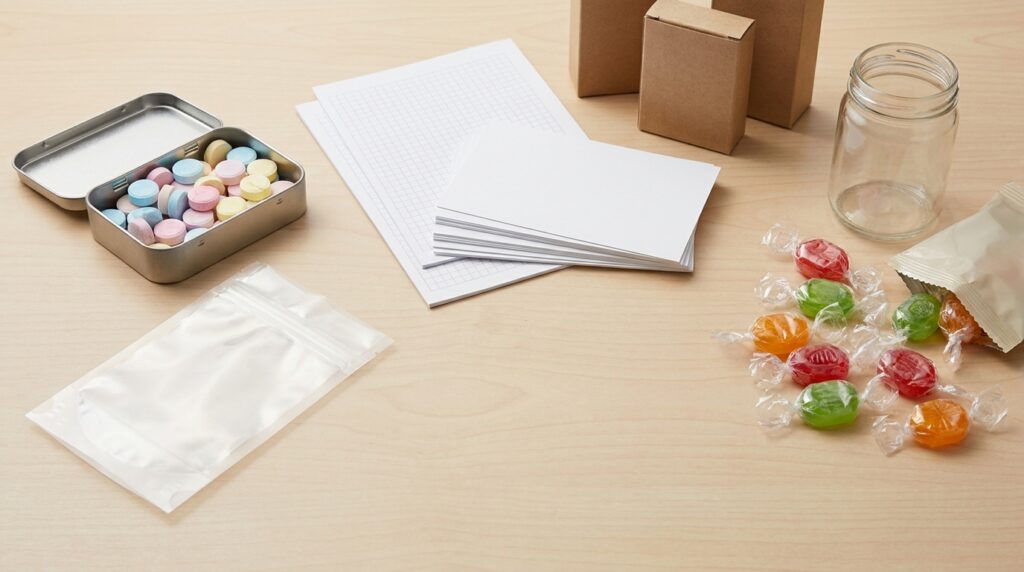
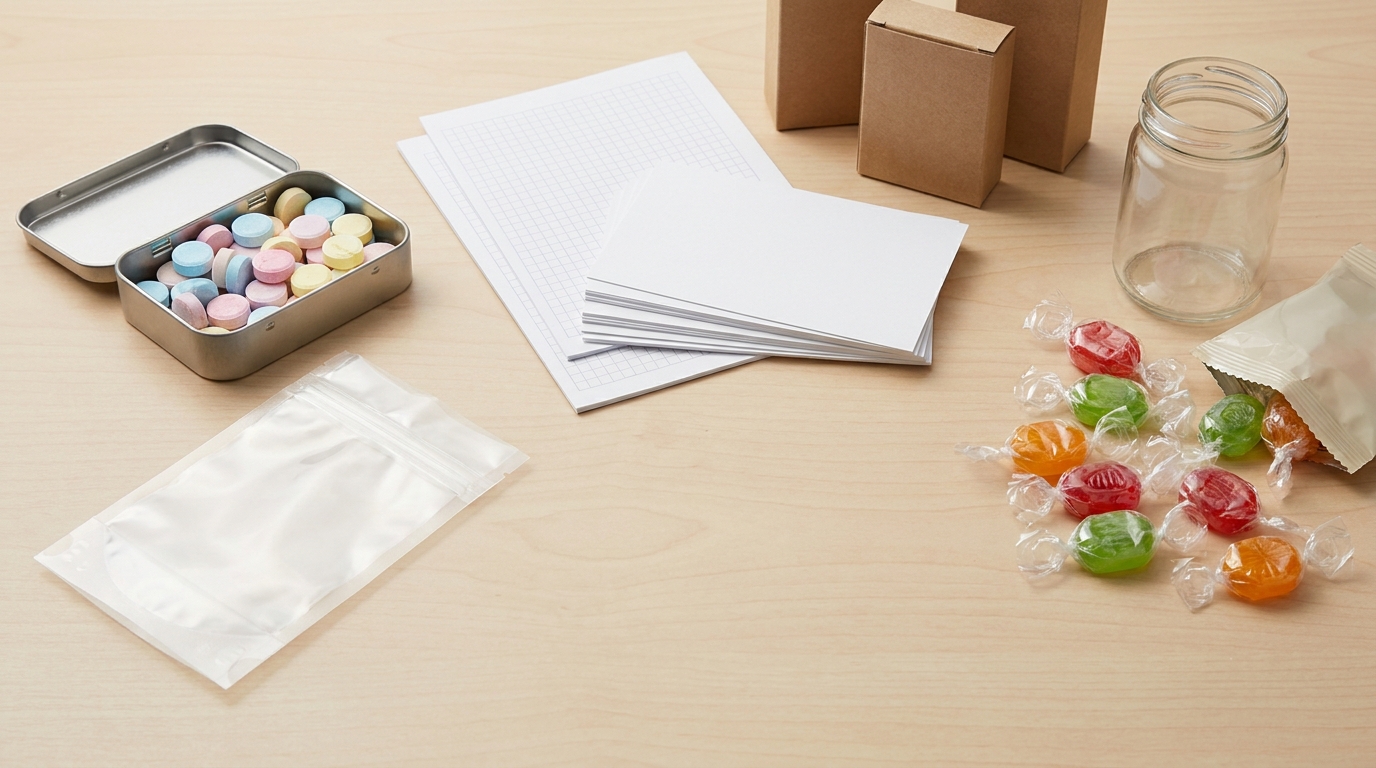
For importers, distributors, wholesalers, and private-label buyers, a pressed candy versus hard candy comparison is not only a product question. It is a sourcing workflow question. The buyer needs enough information to compare options, request samples, and receive a quote that will not be rewritten after packaging, quantity, or market details become clearer.
This guide is designed to help buyers choose a candy format based on sales channel, packaging, samples, and launch complexity. It is written for B2B teams that want a practical route before starting a detailed quotation discussion.
Compare real pressed-candy and hard-candy routes
Start with two live KidStar references instead of an abstract format comparison. YMX-165 Pressed Candy is listed as 12 g per jar, 30 pieces per display box, and 20 display boxes per carton. YMX-017 Watermelon Triangle Hard Candy is listed as 10 g, 30 pieces per tub, and 20 tubs per carton. These are different pack hierarchies, not interchangeable price units.
| Buyer decision | YMX-165 pressed candy | YMX-017 hard candy |
|---|---|---|
| Quote basis to request | Confirm the 12 g jar, 30-piece display, and 20-display carton. | Confirm the 10 g unit, 30-piece tub, and 20-tub carton. |
| Sample review | Check the pressed-piece condition and whether the jar/display presentation fits the intended shelf. | Check the hard-candy condition and whether the tub presentation fits the intended shelf. |
| Before comparing price | Ask for the exact SKU, carton quantity, market, and requested order volume. | Ask for the same fields; do not compare a tub price directly with a jar or display price. |
Use the two product pages to choose a starting route, then send the preferred SKU, destination market, pack format, and estimated quantity through the existing buyer brief. MOQ, lead time, and final pack approval must be confirmed for the actual order rather than inferred from this comparison.
Latest market insight
- Food & Wine’s June 23, 2026 Sweets & Snacks Expo recap highlighted caffeine-led and high-texture candy launches, so format choice now needs to follow channel novelty expectations, not only cost.
- Food Business News reported on June 16, 2026 that sweet-heat remained a major flavor trend at the 2026 show, which raises the value of formats that can clearly separate bold flavor cues on shelf.
- The White House suspended duty-free de minimis treatment for all countries on July 30, 2025, so buyers should compare sample fragility, carton density, and replenishment cost before picking a format.
Sources reviewed: Food & Wine, Food Business News, The White House.
Start with the channel and consumption style
Pressed candy and hard candy solve different shelf jobs. Pressed candy often works when the buyer wants a compact piece, quick flavor signal, and a more functional or novelty angle. Hard candy often works better when the project needs longer sucking time, clearer individually wrapped presentation, or a more traditional jar or pillow-pack route.
A short channel brief is usually enough to stop the supplier from quoting the wrong format family.
Compare the packaging and freight behavior early
Pressed candy and hard candy can share some pack routes, but they do not always behave the same in transit or shelf presentation. Piece shape, dusting, brittleness, wrapper choice, and count-per-pack all affect carton logic, display format, and how the product looks after handling.
The goal is not to over-engineer the first brief. It is to make the next supplier reply specific enough to judge pack route, MOQ, and sample plan.
Use samples to test flavor release and shelf readability
Samples should be used to compare flavor strength, texture stability, wrap quality, date-code readability, and how clearly the product differentiates itself on shelf. Buyers who only test taste can miss the commercial differences that matter later in a chain review or distributor pitch.
When these checks are done early, quote revisions and line changes become easier to control.
Ask suppliers for format-specific MOQ and tooling logic
The buyer should ask whether MOQ, mold assumptions, wrapper route, and sample timing are different for pressed candy versus hard candy. A useful supplier will explain the trade-off instead of giving one blended unit price that hides the real launch constraints.
This is also the point where buyers can separate a real format decision from a vague catalog comparison.
Quick checklist before you ask for a quote
| Question | Pressed candy | Hard candy |
|---|---|---|
| Best fit | Novelty, compact pieces, quick flavor signal, or functional angle | Traditional individually wrapped route, jars, pillows, and classic hard-candy shelf sets |
| Sample focus | Texture stability, flavor burst, dusting, and count consistency | Wrapper quality, cracking, clarity, sucking time, and pack presentation |
| Packaging impact | Blister, roll, pouch, or novelty tray options may matter more | Pillow pack, jar, display box, or mixed assortment routes are often easier to stage |
| Quote inputs | Piece weight, count-per-pack, flavor intensity, and tooling assumptions | Wrapper type, pack count, jar or pouch route, and carton logic |
| Risk to flag | Novelty concept can outrun practical MOQ or shelf discipline | Traditional route can feel generic if flavor or presentation is too weak |
Related KidStar pages
- Review product families on Product Catalog.
- Compare custom pack routes on Packaging Customization.
- Check MOQ and timing basics on MOQ and Lead Time.
- For documentation questions, visit Certifications and Compliance.
Send a clearer brief
If you are comparing pressed candy and hard-candy routes, send KidStar your channel, flavor direction, preferred pack style, estimated quantity, and timing. The team can respond with a more focused format recommendation instead of a generic catalog reply.