
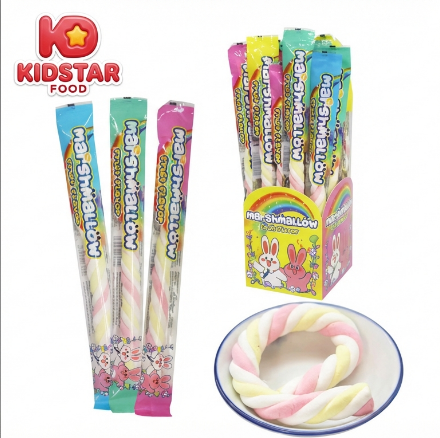
For importers and distributors, a mixed confectionery container needs more than a list of favorite candies. Each SKU must fit the target channel, carton plan, production MOQ, and available container space. Without that loading logic, a low unit price can turn into a revised quote or an under-filled shipment.
This checklist turns a mixed-candy idea into a clearer buyer brief before samples, carton calculations, and a formal quotation.
Latest market insight
- Verify halal certification and import compliance timelines, especially for Indonesia (mandatory Oct 2026) and GCC markets, to avoid delays in mixed loads.
- Demand sustainable mono-material or recyclable packaging options, as confectionery packaging shifts toward validated eco-materials amid 2025-2026 regulations.
- Assess private-label flexibility for gummies/sugar confectionery mixes, noting rising demand for functional/plant-based variants and distributor preference for customizable assortments.
Build a mixed-container loading sheet
Start with one working sheet that lets the supplier compare products on the same commercial basis. The numbers below are planning inputs, not a final shipping confirmation; the supplier should confirm carton dimensions, CBM, MOQ, and loading feasibility before the buyer approves the order.
| SKU or category | Pack format | Units per carton | Cartons planned | Estimated CBM | Target channel |
|---|---|---|---|---|---|
| Gummy candy | Pouch, jar, or display box | Confirm with supplier | Planned mix | Confirm with supplier | Grocery, wholesaler, or e-commerce |
| Hard candy | Individual wrap or bulk pack | Confirm with supplier | Planned mix | Confirm with supplier | Convenience, distributor, or seasonal |
| Novelty candy | Character, dip, or shaped format | Confirm with supplier | Planned mix | Confirm with supplier | Gift, kids, or impulse channel |
The useful first question is not “how many products can fit?” It is “which SKU mix gives the buyer a sellable assortment with a clear carton and replenishment plan?”
Pick SKUs that share the same channel and carton logic
A mixed container works when the SKUs fit the same buyer and shelf, not when the loading sheet is only about volume. A grocery or wholesaler mix built from a Traffic Light Gummy, a Milk Tablet Candy, and a hard-candy or Lollipop line gives a distributor a replenishable assortment across three price points.
When shortlisting, keep one decision per SKU:
- which pack format the channel actually needs (pouch, jar, display box, or bulk)
- the minimum carton quantity each SKU requires
- whether the mix should be stock-style, private-label, or a combination
Separate the loading sheet from the compliance review
Mixed loads carry more than one compliance profile. A gummy line may need gelatin-source or halal documentation, a milk tablet may need dairy and labeling checks, and a novelty item may need toy-safety review. Confirm which documents each SKU requires before the supplier builds the container plan, so the quote does not get revised after the loading sheet is already approved.
Quick checklist before you ask for a quote
| Area | What to prepare | Why it matters |
|---|---|---|
| Market | Destination country, sales channel, and target buyer type | Helps the supplier judge pack route, label needs, and quote assumptions |
| Product | Candy category, flavor direction, size, and assortment idea | Avoids a generic catalog reply when the project needs matched options |
| Packaging | Pouch, jar, display box, individual wrap, or bulk route | Changes MOQ, artwork, carton logic, and sample preparation |
| Quantity | Trial order, repeat order target, or container plan | Makes pricing and production planning more realistic |
| Timing | Sample deadline, launch window, and required documents | Prevents quote changes after the buyer reveals urgent constraints |
Related KidStar pages
- Review product families on Product Catalog.
- For private-label supplier selection, read Private Label Candy Checklist for Importers.
- For wrapper decisions, read Flow-Wrap vs Twist-Wrap Candy Packaging.
- Compare custom pack routes on Packaging Customization.
- Check MOQ and timing basics on MOQ and Lead Time.
- For documentation questions, visit Certifications and Compliance.
Send a clearer brief
If you are preparing a mixed-container inquiry, send KidStar your market, product direction, packaging route, quantity range, and timing. The team can respond with a more focused product recommendation or quote path instead of a generic catalog reply.