
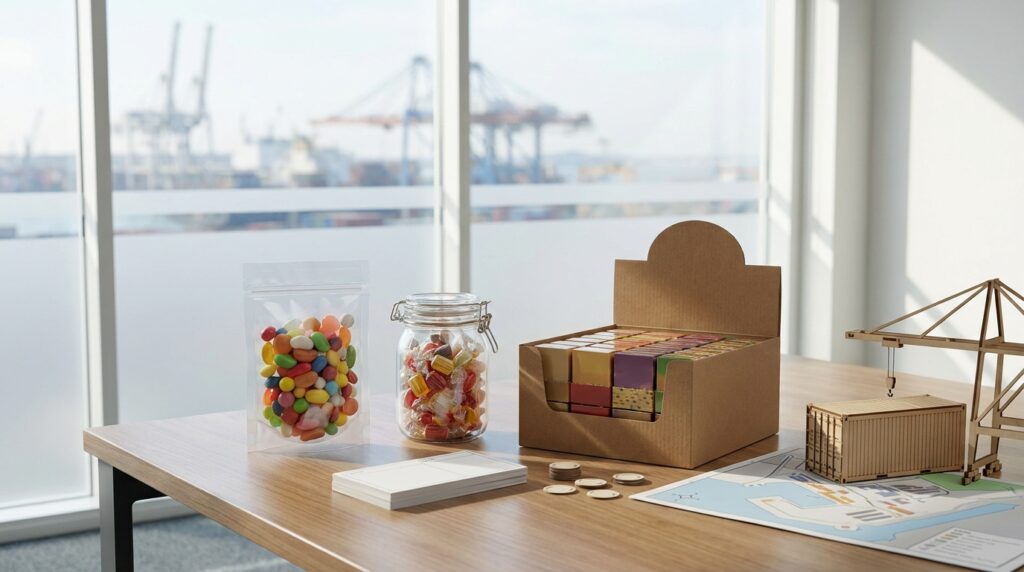
FOB and freight numbers are only comparable when the buyer and supplier are using the same shipment logic. Many candy quote threads break because the FOB price was built on one pack route, the freight estimate assumed another carton structure, and the buyer compared both numbers as if they belonged to the same order.
This guide is for importers, distributors, wholesalers, and private-label buyers who want to compare candy offers without discovering late that the volume, carton count, or handling assumptions were different from the start.
Latest market insight
- Tariff shifts and origin scrutiny in 2025-2026 make FOB-only comparisons less useful unless buyers also lock the landed-cost assumptions behind each route.
- Halal, vegan, and clean-label candy growth keeps pushing buyers toward pack changes that affect carton density and freight math, not only product cost.
- Recyclable and retailer-ready packaging is becoming a baseline requirement in more markets, which means pack-route decisions now change both compliance and logistics cost earlier in the inquiry.
Start by separating product cost from shipment cost
Buyers should first decide what they want compared:
- product-only FOB numbers
- carton-based freight estimates
- a combined commercial view with both
Those are not the same request. A supplier may return a competitive FOB number while still using a carton layout that makes the freight side unworkable for the buyer’s target market. When the buyer does not name the comparison frame, the reply usually looks precise but is still hard to act on.
Lock one realistic pack route before asking for freight math
Freight estimates depend on the pack route, not only the candy type. A jar program, a pouch program, and a display-box line can ship the same candy family with very different cubic volume, breakage risk, and pallet behavior. If the buyer is still choosing between pack types, the supplier should say so openly instead of pretending that one freight line covers every option.
The buyer does not need final artwork first. But they should lock:
- the target pack type
- approximate unit count or fill weight
- carton style or protection requirement
- whether the order is stock-style or private label
That is enough to stop the first freight answer from floating too far away from the real order shape.
Ask the supplier to show which assumptions belong to FOB and which belong to freight
One useful habit is to request a simple two-column comparison: what is already stable in the FOB number, and what still depends on carton, loading, or destination details. This makes it easier to see whether the supplier has actually aligned the commercial and logistics sides of the offer.
For example, the buyer can ask:
- which price lines change if the case pack changes
- whether the carton count is estimated or confirmed
- whether pallets are assumed
- what destination or port logic the freight line is based on
That single clarification often removes more confusion than another request for "best price."
Build one quote table before comparing suppliers
Buyers should avoid comparing supplier A’s FOB line to supplier B’s freight-inclusive line without an internal table that forces the same fields into view. A simple comparison table can stop false price gaps from driving the conversation.
| Comparison line | What to record | Why it matters |
|---|---|---|
| Product scope | Candy type, flavor set, and target pack | Confirms everyone is pricing the same commercial direction |
| FOB basis | Port, currency, MOQ tier, and unit-price logic | Prevents a product-only price from being treated as a landed price |
| Carton logic | Case pack, dimensions, gross weight, and pallet assumption | Drives cubic volume and freight relevance |
| Freight frame | Destination port, shipment mode, and container/load assumption | Makes logistics estimates comparable |
| Open variables | Artwork stage, label needs, breakage controls, or compliance notes | Shows what could still trigger a revision |
Give one next-step instruction after the first comparison
After the first offer round, the buyer should tell the supplier what needs to be stabilized next. That may be confirming the case pack, reworking the jar route, or recalculating freight for one target port only. Without that instruction, suppliers often keep broadening the offer instead of tightening the comparison.
The most useful next step is usually not "send another price." It is "confirm which assumptions must stay fixed before the next price update."
Checklist before comparing FOB and freight on one candy inquiry
| Area | What to prepare | Why it matters |
|---|---|---|
| Destination | Country, port, and whether the buyer wants FOB, freight, or both | Stops mixed commercial and logistics assumptions |
| Product route | Candy type, pack type, and whether the order is stock or private label | Keeps the comparison tied to one real program |
| Carton data | Unit count, case pack, breakage concerns, and pallet logic | Makes freight estimates usable instead of decorative |
| Quantity | MOQ trial, order target, or container ambition | Changes both FOB tiering and logistics math |
| Decision step | What the buyer needs next from the supplier | Turns price feedback into a cleaner comparison path |
Related KidStar pages
- Review product families on Product Catalog.
- Compare packaging routes on Packaging Customization.
- Check order-scale basics on MOQ and Lead Time.
- Use Contact when you want KidStar to review the commercial and logistics assumptions together.
Send a clearer brief
If you want KidStar to compare FOB and freight more accurately, send the destination port, candy format, pack route, carton idea, quantity band, and whether you need a product-only or shipment-ready comparison first.