For Halloween candy planning in 2026, buyers should test the product route, shelf unit, and reorder rule before the final seasonal rush. Official U.S. confectionery evidence points to a longer season and strong interest in holiday-specific treats, but it does not prove demand in every country or channel. Importers should turn the signal into a controlled local test rather than a forecast.
KidStar YMX-197 assorted lollipop provides one concrete test route: 10 g per piece, 60 pieces per jar, and 12 jars per carton. The current product is an everyday assorted lollipop jar, not confirmed Halloween packaging. Use it to test jar economics and outlet fit; treat any seasonal artwork, colors, or pack change as a separate feasibility question.
Read the 2026 seasonal signal at the right level
The U.S. National Confectioners Association reported in its 2026 State of Treating that confectionery reached $55 billion in U.S. sales in 2025, that 99.8% of U.S. households bought confectionery, and that 82% of consumers wanted more holiday-specific packaging, shapes, and flavors. It also reported that 64% would rather buy less candy than give up their favorites.
Mars added a timing signal in its July 23, 2026 Halloween release: 57% of U.S. adults said Halloween is no longer just one day, while 53% of Gen Z said they discover products on TikTok even though final purchases still happen predominantly in physical retail. Mars said its 2026 Halloween portfolio was reaching shelves from July.
These are U.S.-focused first-party industry signals, not KidStar sales results and not proof that YMX-197 will sell. The reasonable inference is narrower: seasonal evaluation may need to begin earlier, and a product discovered digitally still needs a clear physical shelf route.
Use YMX-197 to test the jar route, not a holiday claim
The live YMX-197 product page defines the commercial baseline:
- exact product reference: YMX-197 Assorted Lollipop
- unit weight: 10 g
- retail unit under review: 60 pieces per jar
- export route: 12 jars per carton
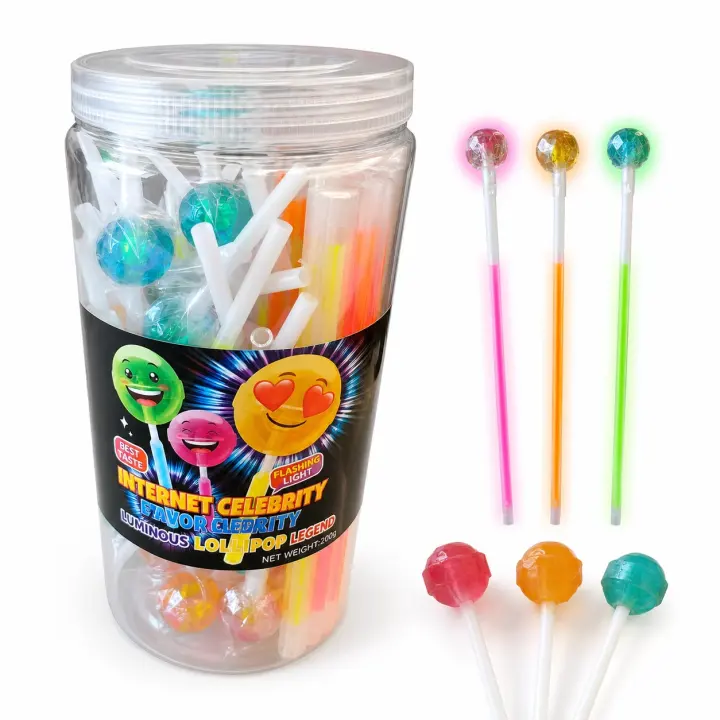
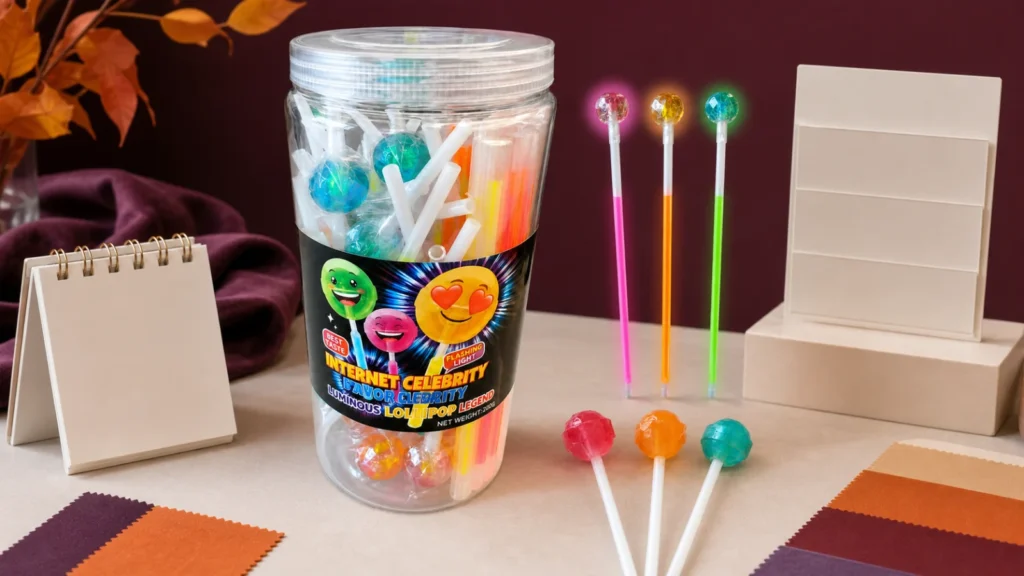
The product image shows colorful long lollipops in a transparent jar. That makes it visually relevant to an assortment conversation, but appearance alone does not establish seasonal positioning, ingredients, certification, destination eligibility, or custom-pack availability.
Start by asking whether a jar is useful in the buyer’s actual channel. The existing assorted lollipop jar buyer-fit guide helps screen that baseline. Today’s seasonal decision comes after that: can the same jar route support a timed test with a measurable result?
Choose a controlled test instead of a broad launch
An importer does not need to convert a market headline into a full-container commitment. A smaller decision framework is more useful:
| Test option | When it makes sense | What to hold constant | Evidence to collect | Decision after test |
|---|---|---|---|---|
| Everyday jar in seasonal aisle | Buyer wants to test placement without claiming a new pack | YMX-197 SKU, 60-piece jar, outlet group | Sell-through, retailer feedback, refill requests | Continue, reposition, or stop |
| Everyday jar in general confectionery | Buyer wants a non-seasonal control | Same jar and comparable outlet type | Baseline weekly movement | Compare with seasonal placement |
| Seasonal-pack feasibility review | Buyer has proven jar demand and needs a new presentation | Product route and target retail unit | Feasibility, MOQ, timing, artwork approvals | Open a separate development brief |
| No test yet | Outlet, quantity, or review date is undefined | Nothing—pause the request | Missing commercial inputs | Fix the brief before pricing |
This structure keeps the current product truthful. It also prevents the buyer from confusing a colorful product with a confirmed Halloween edition.
Set the calendar backward from shelf date
Mars’s July shelf timing illustrates why “order before Halloween” is not an operating plan. The buyer should select the required in-store date, then work backward through internal range approval, sample review, quotation, label and document review, order confirmation, production planning, freight, customs, and local distribution.
A confirmed project schedule cannot be inferred from an industry press release or a product page. Ask for a project-specific schedule after the scope is fixed. A practical buyer brief should state:
- destination country and target city or distribution region
- outlet type and number of test doors
- desired in-store date
- exact YMX-197 jar route under review
- trial quantity direction in jars or cartons
- whether the product stays in its listed route
- any proposed seasonal change, marked as unconfirmed
- sample-review deadline and approval owner
- sell-through window and reorder decision date
Use the samples page to plan what the physical review must answer. The sample should be evaluated for jar presentation, product identity, handling, and shelf role—not only taste.
Connect digital discovery with physical retail evidence
The Mars finding about Gen Z discovery is useful because it separates attention from purchase. If a buyer sees seasonal lollipop content on TikTok or another platform, record the post date, market, product type, and engagement as a discovery signal. Do not turn views into sales claims.
Then collect physical evidence from the actual test:
1. Was the jar placed where shoppers could understand it quickly? 2. Did retailers sell full jars, open jars, or individual pieces? 3. Which outlet type requested a refill? 4. What happened after the seasonal display was removed? 5. Did the product need a different presentation, or was the underlying route wrong?
The retail-ready confectionery pack guide can help teams document shelf visibility consistently across stores.
Approve a reorder rule before the first shipment
A trend test has value only when the buyer knows how the result changes the next decision. Define the review date and the minimum evidence for a repeat order before goods reach the shelf. That may be a buyer-set sell-through threshold, a number of store reorder requests, or acceptable performance versus a non-seasonal control. KidStar is not asserting a universal benchmark; the buyer should choose one that matches its channel economics.
Also record reasons for rejection. A test can fail because of timing, outlet placement, jar format, product fit, or pricing assumptions. Those causes lead to different next steps and should not be collapsed into “Halloween did not work.”
Build an evidence-led lollipop test
To review YMX-197 for a 2026 seasonal test, send the target market, outlet type, in-store date, jar role, trial quantity, standard-versus-changed pack scope, sample deadline, and reorder rule through KidStar contact. The right first response is a scoped feasibility and quotation discussion—not an unsupported promise of seasonal demand.
Sources reviewed
- National Confectioners Association, State of Treating 2026 — official U.S. industry data, published 2026 and reviewed 2026-08-25.
- Mars, 2026 Halloween trends and portfolio release — first-party press release dated 2026-07-23, reviewed 2026-08-25.
- KidStar YMX-197 product record — first-party SKU and pack reference, reviewed 2026-08-25.