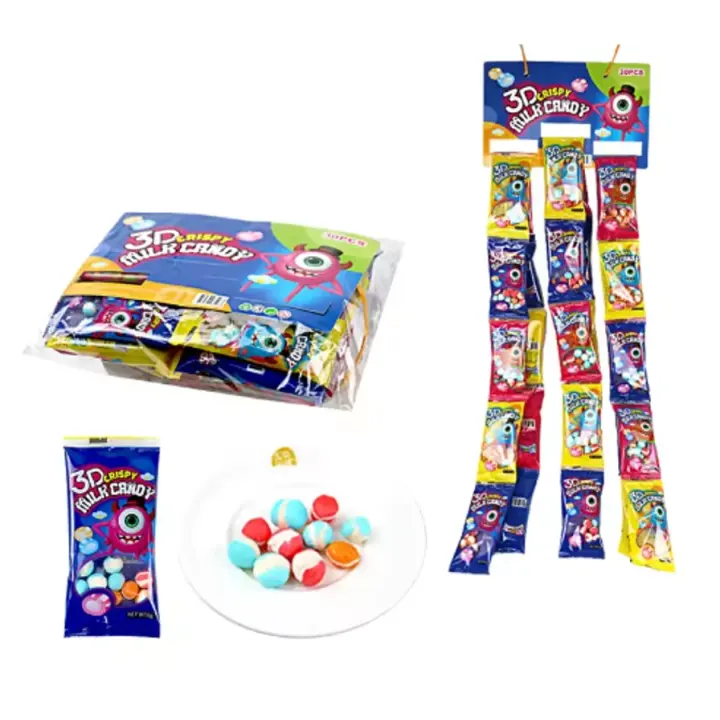
A freeze-dried milk candy wholesale trial should lock the exact product, pack hierarchy, breakage standard, seal condition, label route, storage plan, and reorder rule before the buyer compares prices. KidStar SKU YMX-226 Freeze-Dried Milk Candy is currently listed as 6 g × 30 pieces × 24 inner bags, giving importers and distributors one real reference for a controlled test.
The direct answer is to approve YMX-226 with one seven-check scorecard, not a tasting note alone. Texture can win attention, but a wholesale decision also depends on the condition of individually packed units, the amount of breakage seen in the received sample, destination labeling and import review, case handling, local price architecture, and a measurable replenishment decision.
Fix the exact YMX-226 reference first
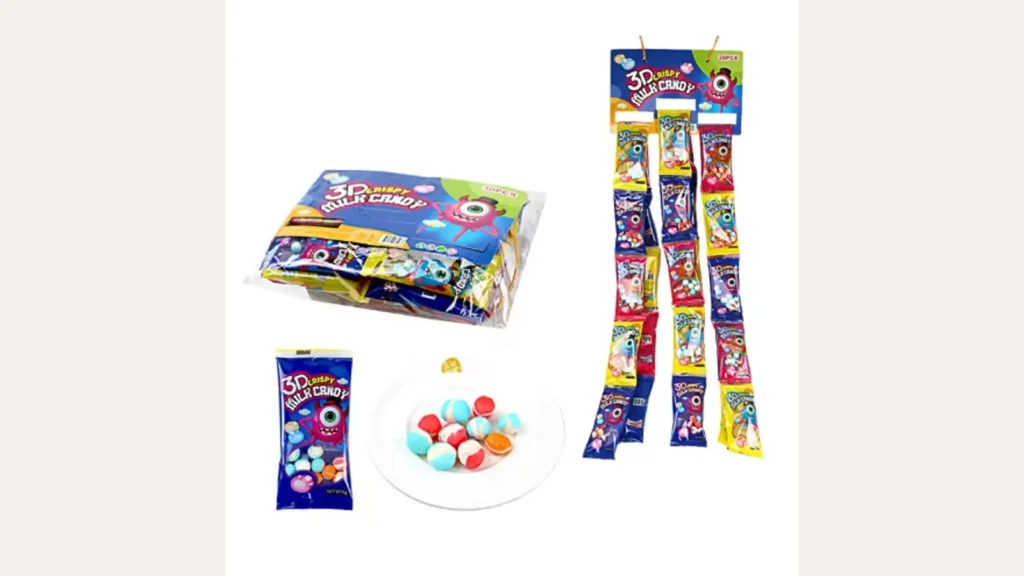
The current product-library image shows a hanging strip format, colorful individual pouches, an outer bag, and round multicolor candy pieces. Those visual details identify the reference, but they do not establish a final assortment, formulation, shelf life, certificate status, or destination approval.
Put the following facts at the top of the trial brief:
- SKU: YMX-226
- listed product: Freeze-Dried Milk Candy
- listed unit basis: 6 g
- listed pack route: 30 pieces × 24 inner bags
- destination country and sales channel
- sample version and received date
- intended consumer unit and display method
- label language and buyer-owned compliance questions
If the physical sample, quotation, or live YMX-226 product record differs from this reference, record the difference before continuing. A pack change can affect the quote denominator, shelf presentation, carton handling, and artwork scope.
Run seven checks before requesting a production offer
Use one sheet for every sample and keep observations separate from supplier documents.
| Check | What the buyer records | Evidence to keep | Decision it supports |
|---|---|---|---|
| 1. Identity | Exact pouch, candy appearance, 6 g basis, 30 × 24 pack route | Front, back, open-pack, and count photos | Same product under review |
| 2. Sensory profile | Crunch, melt, flavor balance, aftertaste, and consistency across units | Blind tasting notes with sample codes | Channel and consumer fit |
| 3. Breakage | Whole pieces, cracked pieces, powder/fines, and pouch damage in the checked sample | Count and weight notes plus photos | Handling and acceptance rule |
| 4. Seal and pack | Seal continuity, trapped product, pinholes, air loss, and pouch cleanliness | Close-up photos from several units | Pack integrity review |
| 5. Consumer file | Ingredient, milk-allergen, net-content, date/lot, storage, language, and importer fields | Full artwork proof and document list | Destination label review |
| 6. Case handling | Inner-bag count, carton arrangement, compression, and movement | Packed-carton photos and buyer test notes | Transit trial design |
| 7. Commercial test | Outlet cohort, price point, quantity, review window, and reorder trigger | Trial dashboard | Buy, revise, or stop |
Do not turn a small courier sample into a universal defect tolerance. The buyer should write its own acceptance basis, sampling method, and escalation path for the commercial order.
Treat breakage and texture as separate decisions
Freeze-dried candy is bought partly for its eating experience, but a pleasant crunch does not tell the buyer whether the pack will arrive in saleable condition. Score sensory quality and physical condition in different columns.
For the sensory column, use coded samples and compare multiple units. For the physical-condition column, count intact, cracked, and heavily fragmented pieces when the sample arrives, after local handling, and after any buyer-designed transport test. Keep the courier condition and test method with the results.
A practical buyer rule may look like this:
- sensory profile meets the channel brief
- visible breakage is recorded against an agreed sample size
- powder or fines do not interfere with presentation beyond the buyer’s written limit
- pouches remain closed and clean in the checked sample
- the supplier and buyer agree how a future shipment will be inspected
These are commercial acceptance points, not a claim that one sample predicts every production lot.
Build the label and import review around the destination
Milk is a major allergen in many markets, and import treatment can depend on the formulation, processing, origin, and destination. Buyers should not copy a label or import route from another confectionery item.
For the United States, FDA’s Foreign Supplier Verification Programs overview says covered importers must maintain an FSVP for each food unless an exemption applies, evaluate hazards and supplier performance, and use appropriate verification activities. For Great Britain, the Food Standards Agency’s confectionery import guidance explains that products containing ingredients of animal origin can require a different import route depending on their composition and processing.
Use those official pages as route-finding sources, then confirm the exact YMX-226 formula and shipment with the responsible importer, broker, laboratory, and authority. Ask for the product specification, ingredient and allergen statement, proposed artwork, lot/date coding format, storage statement, and the documents required by the destination. Do not ask a generic certificate to answer a product-specific question.
The broader candy import certification guide can organize the file request, while the labeling documentation checklist helps separate supplier inputs from importer decisions.
Design a channel test that can produce a reorder decision
A wholesale trial is useful only when the buyer knows where the item will be placed, who will evaluate it, and what result will trigger the next order. Avoid scattering a few cases across unrelated outlets with no comparison group.
Choose one clear test cell:
- a defined set of convenience, specialty, novelty, or independent grocery outlets
- one agreed consumer unit and shelf or counter position
- one planned price point or controlled price comparison
- a start date, review date, and stock-count method
- tracked units delivered, sold, damaged, returned, and remaining
- buyer margin and replenishment time recorded consistently
- a written reorder, revise, or stop threshold
The samples route is appropriate when the buyer still needs to decide sensory fit, pack integrity, or label direction. It is not a substitute for a commercial trial design.
Separate stock review from private-label changes
If the buyer wants new artwork, another flavor mix, a changed unit weight, a different pouch, or a revised carton count, create a new version rather than treating it as the approved stock sample.
| Requested change | Refresh before approval | Commercial item to reconfirm |
|---|---|---|
| Artwork or language | Full proof, barcode/lot area, allergen emphasis | MOQ, setup, and timing |
| Formula or assortment | Specification, ingredient/allergen review, new sample | Price basis and destination route |
| Unit weight or count | Pack hierarchy and label proof | Quote denominator and carton data |
| Pouch or barrier route | Material specification and seal trial | Shelf-life validation and cost |
| Carton arrangement | Packed-carton photos and handling test | Freight assumptions and inspection plan |
Use the packaging customization page only after the stock-product decision is clear enough to define the change. Never let a custom request quietly inherit approval from a different sample.
Send one quote-ready YMX-226 trial brief
YMX-226 is ready for a serious wholesale discussion when the exact 6 g item, 30 × 24 pack route, destination, outlet cohort, sample version, breakage method, artwork scope, quantity direction, and open document questions are visible in one file.
Send those inputs through the contact page. KidStar can then respond against the exact YMX-226 trial instead of a broad request for “freeze-dried candy prices.”
Sources reviewed
- KidStar YMX-226 Freeze-Dried Milk Candy product record, reviewed August 28, 2026.
- FDA: Foreign Supplier Verification Programs Final Rule at a Glance, reviewed August 28, 2026.
- UK Food Standards Agency / GOV.UK: Importing confectionery, reviewed August 28, 2026.