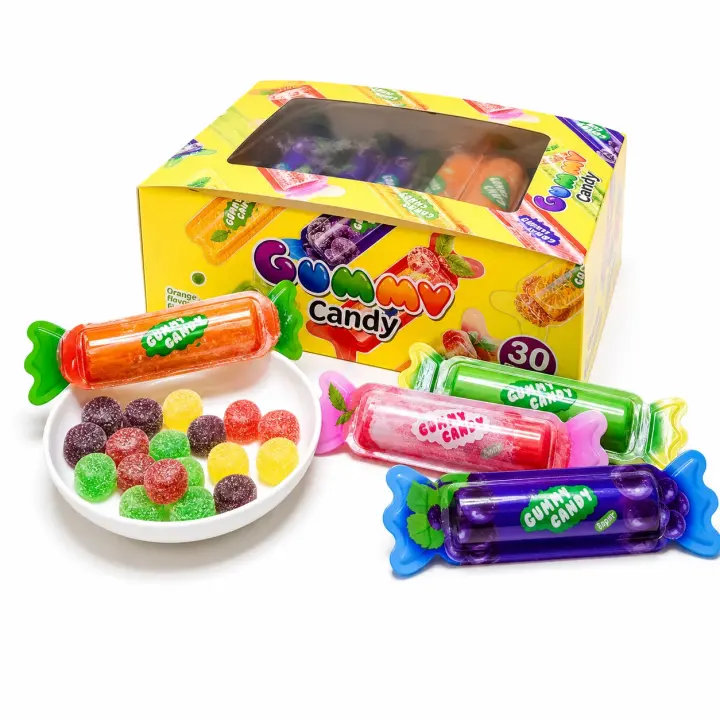
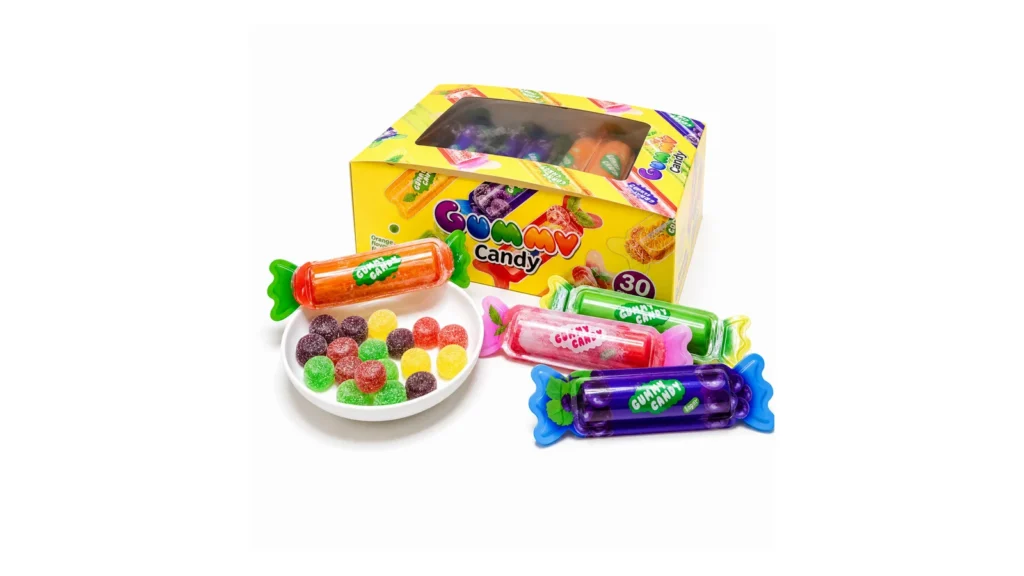
For a gummy candy wholesale shortlist, KidStar SKU YMX-128 gives buyers a concrete pack record: 10 g × 30 pieces × 24 boxes per carton. The reference image also shows a yellow 30-count box, individually presented candy-shaped tubes, and loose gummy pieces.
The direct answer is that YMX-128 is worth comparing only when the buyer gives every packaging level a defined job. Confirm the 10 g consumer unit, the exact 30-piece box presentation, the 24-box export carton, the assortment being quoted, and the sample version before asking suppliers to compete on price. The image identifies the product; it does not by itself confirm the final formula, flavor mix, label file, shelf life, or destination-market suitability.
Start with the exact product, not a generic gummy request
“Gummy candy wholesale” can return bags, jars, bulk pieces, peg packs, novelty containers, and display boxes. A supplier cannot quote a comparable route if the inquiry does not say which format the buyer intends to resell.
Use the live YMX-128 product page and SKU in the first message. Then record the current hierarchy without filling gaps from the photograph:
| Packaging level | Current YMX-128 record | Decision the buyer must lock |
|---|---|---|
| Consumer unit | 10 g | Is this the sellable unit, and which current variant is required? |
| Inner box | 30 pieces | Will it be presented as an opened retail box or handled as a closed wholesale unit? |
| Export carton | 24 boxes | Does this count fit the trial allocation and reorder route? |
| Assortment | Multiple colors appear in the reference | Which flavors, colors, and proportions are included in the quoted version? |
Do not convert a visible color into a flavor promise. Ask for the current product and label files for the exact version under review.
Give the 30-piece box a channel job
The box should solve a retail or distribution problem rather than simply occupy space in a mixed order. A buyer can screen the route before requesting a commercial offer:
| Route | Possible role for the 30-piece box | Evidence to request |
|---|---|---|
| Convenience or checkout | A countable presentation for individual units | Open-box dimensions, pack visibility, stability after units are removed |
| Value retail | A defined box-to-shelf allocation | Confirmed assortment, carton marks, and resale unit |
| Cash-and-carry | A complete box that smaller retailers can buy | Whether the closed box or the individual piece is the wholesale unit |
| Mixed confectionery shipment | A soft-candy format beside other categories | Exact carton allocation and a no-substitution SKU line |
| Private-label review | A stock reference before artwork work begins | Current customization scope, artwork inputs, and approval stages |
The retail-ready confectionery pack guide helps buyers examine presentation, but a physical box still needs to be checked in the condition in which the retailer will receive it.
Keep the commercial review separate from barcode work
KidStar already has a guide on GS1 Sunrise 2027 and gummy display-box artwork. That page addresses data and artwork readiness. This wholesale decision is earlier and narrower: is YMX-128 the right product and pack route for the buyer’s channel?
The two questions should not be merged into a vague request for “ready packaging.” First confirm the stock product, consumer unit, box count, carton count, assortment, and sample. Then list the destination data, label, barcode, and artwork requirements as separate deliverables. This makes it clear which information is confirmed now and which still needs review.
GS1’s Product Image Specification Standard is also a useful reminder to request consistent product views and identifiable packaging levels. It does not replace the buyer’s own approval of ingredients, labels, or market requirements.
Sample the sellable unit and the box together
A bowl of loose gummies cannot prove that the wholesale route works. Use the confectionery samples route to request the product in a representative selling presentation, then review:
- the SKU and sample version against the YMX-128 link
- the recorded 10 g unit and 30-piece box count
- the exact flavor and color assortment supplied
- seals, closures, visible print, and the condition of the candy pieces
- the box when full, opened, and partly depleted
- front, side, label, date-code, barcode, and carton images where available
- any differences between the stock sample and a proposed customized version
Use dated photographs and one written sample record. “Gummy approved” is not enough if the product, individual container, box, and artwork were reviewed on different versions.
Build a quote that another supplier could answer
Before comparing gummy candy wholesale offers, put these points into one line item:
1. Exact SKU and product link: YMX-128. 2. Current recorded hierarchy: 10 g × 30 pieces × 24 boxes. 3. Target country, outlet type, and resale unit. 4. Required assortment and whether substitutions are allowed. 5. Sample version, acceptance notes, and open document questions. 6. Trial quantity direction, carton allocation, and required delivery window. 7. Stock packaging first, with any packaging customization request clearly separated.
This structure does not establish quote availability or market approval. It prevents the buyer from comparing a 30-piece display route with an unrelated bulk or jar route under the same generic keyword.
Turn YMX-128 into a defined buying brief
YMX-128 can enter a wholesale shortlist when the 10 g unit, 30-piece box, 24-box carton, assortment, and sample all refer to the same version. That is the point at which price, carton allocation, artwork work, and replenishment questions become comparable.
Send KidStar a buying brief with the destination, outlet, resale unit, exact SKU, required assortment, sample deadline, quantity direction, and current document questions. The team can then respond to a specific gummy display program instead of a general request for “best gummy candy prices.”