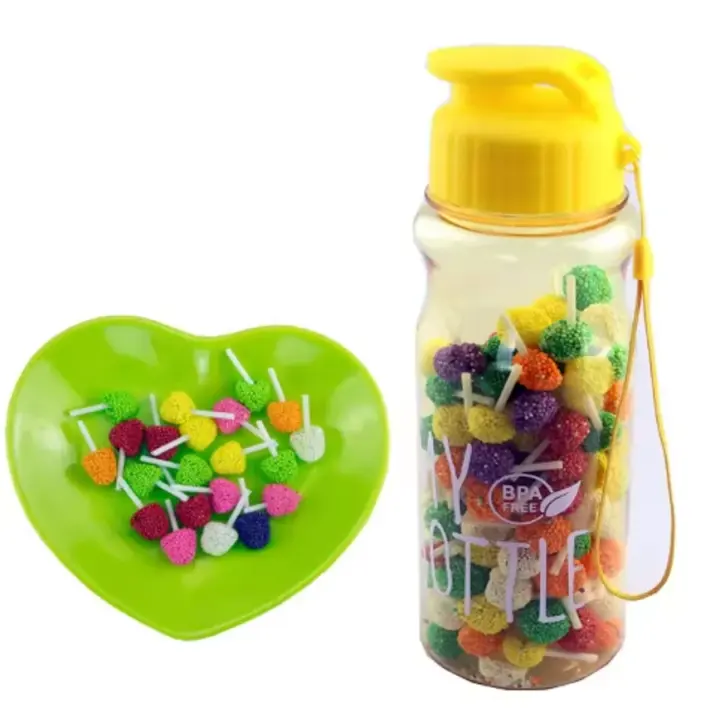
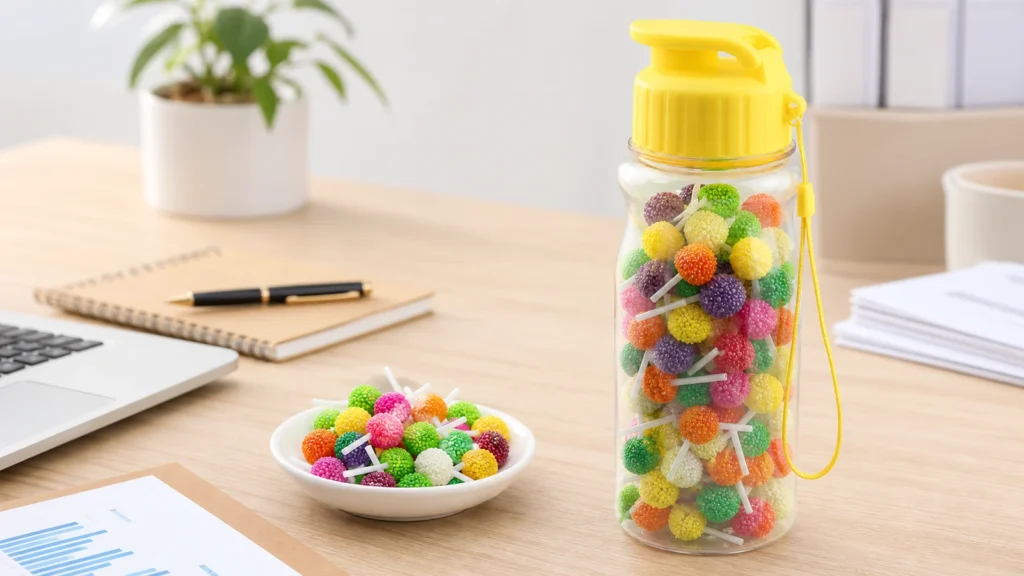
Trial orders are supposed to reduce risk. In practice, they often create a different problem: the buyer likes the sample, asks for a price, and then the project stalls because nobody has defined what a repeat order would actually require. The easiest way to avoid that stall is to use the trial stage to build one practical repeat brief. KidStar SKU YMX-156 is a good example because it is an exact Bayberry Hard Candy route packed as 1.8 g x 150 pcs x 24 jars/carton. That format is simple enough to test quickly, but it still needs clear commercial inputs before a buyer can move from "interesting sample" to "repeatable stock item."
The repeat brief does not have to be complicated. It just has to convert the first trial into decisions the supplier can actually use: what market is being served, what outlet speed is expected, whether the stock jar route is still correct, and what would trigger the next order. When those points stay vague, the supplier keeps answering the wrong question and the buyer keeps reopening the same quote.
Separate sample approval from repeat-order readiness
The first discipline is to stop treating sample approval as the same thing as repeat-order readiness. A sample can prove that the flavor profile, candy size, and jar presentation are commercially interesting. It does not automatically prove that the buyer has a repeat plan.
For YMX-156, the trial stage usually answers questions like:
- Does the flavor concept fit the target market?
- Does the jar format look acceptable for the buyer’s outlets?
- Is the item worth placing into a small first commercial test?
The repeat brief has to answer a different set of questions:
- What turnover speed would justify a second order?
- Is the buyer planning wholesale redistribution, direct store supply, or mixed-channel use?
- Is the stock jar route still the intended pack, or will packaging discussion reopen after the first test?
- Which commercial assumptions should remain fixed between the first and second conversations?
That split is healthy. Samples help prove product fit. A repeat brief helps prove commercial readiness.
Put the repeat assumptions into one decision table
When the supplier and buyer keep repeating the same questions, it is usually because the repeat logic was never written down. A short table fixes that.
| Repeat-brief field | What buyers should define for YMX-156 | Why it matters |
|---|---|---|
| Exact SKU scope | Confirm the review stays tied to SKU YMX-156 | Stops the project from drifting into a generic hard-candy discussion |
| Market and channel | State whether the item is for wholesaler stock, general trade, or mixed retail supply | Changes how fast the repeat signal may appear |
| Reorder trigger | Define what success means: sell-through, buyer feedback, or distributor demand | Gives the supplier context for the second quote conversation |
| Pack route stability | Confirm whether the 150 pcs x 24 jars stock route is still the intended next step | Prevents a repeat brief from being built on the wrong packaging assumption |
| Timing tolerance | Say whether the repeat order must move immediately or can wait for a wider range review | Helps frame MOQ and Lead Time correctly |
| Change points | List what can still change after the trial: artwork, assortment mix, quantity, or destination details | Reduces avoidable quote rewrites |
This table makes the second conversation more efficient because the supplier can tell whether the buyer wants speed, refinement, or a broader reset of the product route.
Use the first trial to answer only the commercial questions that matter
Buyers do not need to solve everything during the first trial. They do need to solve the questions that would otherwise block a repeat order. With YMX-156, that usually means keeping the first review focused on:
- whether the stock jar route works for the intended outlet type
- whether the candy belongs in a repeat-minded value line
- whether the buyer expects the same jar route on the next order
- whether the project is staying as a simple stock program or moving toward a wider pack discussion
That is why the product page for YMX-156 should stay at the center of the repeat brief. If the buyer only says "the bayberry candy sample was fine," the supplier still cannot tell what route is being confirmed. If the buyer points to the exact SKU and states what the first order was meant to prove, the next response becomes much more practical.
Know when to reopen quantity, timing, or packaging questions
Some repeat briefs fail because the buyer tries to lock everything too early. Others fail because nothing gets locked at all. The better approach is to decide which parts of the project should stay stable for the second conversation.
For YMX-156, buyers should normally keep these points stable unless there is a real reason to change them:
- exact SKU under review
- current stock jar route
- core outlet or channel logic
- first-order commercial goal
The buyer can then reopen the right secondary questions:
- MOQ and Lead Time if reorder timing is the real issue
- Packaging Customization if the stock route worked but a later presentation change is needed
- Contact if the buyer wants KidStar to review which assumptions should stay fixed before a repeat quote is updated
This keeps the project from turning into a full restart every time a buyer asks for a revised number.
Build a repeat brief around the next decision, not around more product talk
By the time the first trial is done, the buyer already knows whether the product is interesting enough to continue. The smarter next step is to tell the supplier what decision needs to happen now. For example:
- confirm whether the same jar route should be quoted for a repeat-minded order
- decide whether the line should stay a narrow wholesaler item or widen into a larger range
- review whether the reorder timing should stay fast and simple or move into a broader assortment discussion
That message gives the supplier a usable target. It also reduces the common back-and-forth where the supplier keeps resending product details while the buyer is really trying to decide how to scale the first success.
Bayberry Hard Candy YMX-156 repeat-brief checklist
- Keep the repeat review tied to exact SKU YMX-156 and its 1.8 g x 150 pcs x 24 jars/carton route.
- Separate sample approval from repeat-order readiness so the next quote answers a real commercial question.
- Define the reorder trigger before asking for an updated price or timing review.
- Use MOQ and Lead Time when the blocker is timing or quantity, not when the real issue is channel fit.
- Open Packaging Customization only if the first stock route worked and the buyer now wants a second-stage pack discussion.
- Send the market, reorder trigger, and fixed assumptions through the contact page so KidStar can answer with a repeat-ready brief.