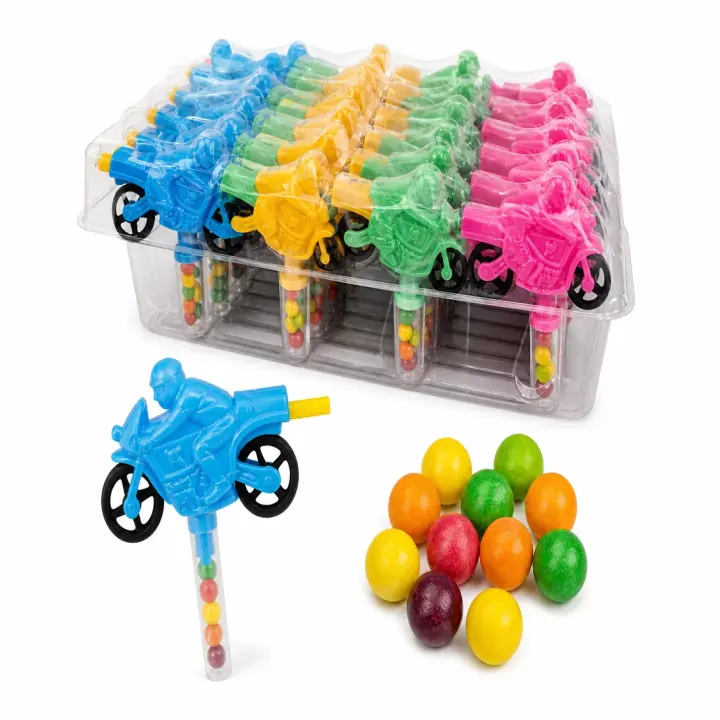
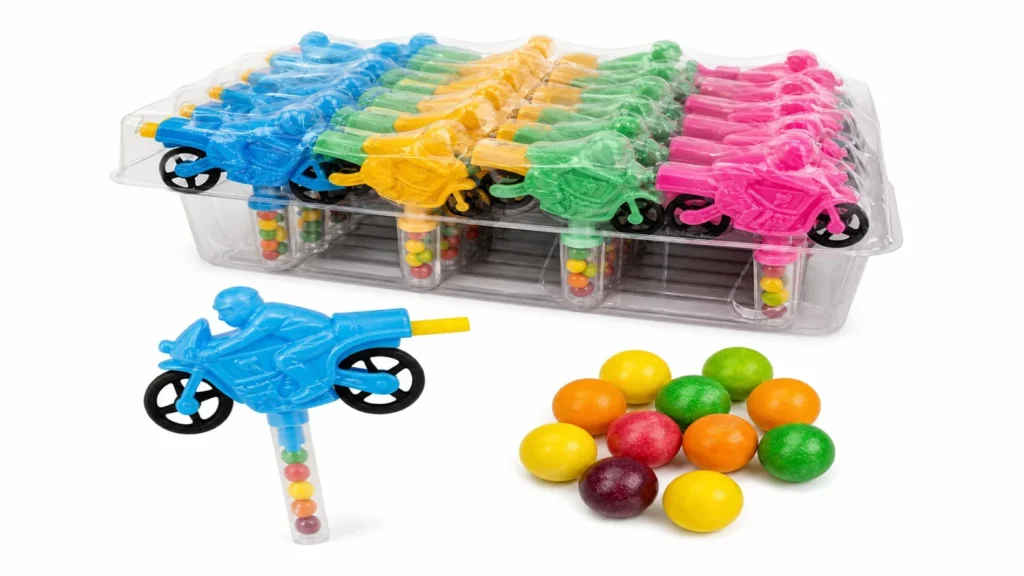
If you are preparing a carded novelty candy RFQ, the most useful first step is to lock one exact SKU, one exact card route, and one exact outlet type before you ask for price. KidStar SKU YMX-045 is the practical example because it is a motorbike novelty candy line packed as 30 pieces × 24 cards per carton, with each unit already tied to a carded presentation. That means the buyer is not only comparing a novelty concept. The buyer is comparing a card-backed retail unit, a carton route, and a shelf or counter job that needs to be defined before the quote can stay stable.
The direct answer is that a quote-ready carded novelty candy RFQ should name the exact SKU, the card format, the intended outlet, the sample purpose, and the first-order scale before price is requested. Importers, distributors, wholesalers, and private-label buyers often create avoidable rework because they ask for a novelty-candy quote while still treating the card, the channel, and the merchandising plan as vague future details.
Start with one exact carded route
YMX-045 gives the buyer a clear starting structure:
- exact SKU: YMX-045
- product type: motorbike novelty candy
- retail presentation: carded unit
- shipping route: 30 pieces × 24 cards per carton
That is already enough to build an RFQ around a real route instead of a mood board. Keep the exact YMX-045 product page in the conversation so the supplier is pricing the same item the buyer is reviewing. Then use the wider product catalog only if the buyer later wants to compare YMX-045 with other novelty or hard-candy formats.
For carded lines, the card itself is part of the route. The buyer cannot treat it as an afterthought because the card affects presentation, hanging or display logic, visible label space, and carton handling. That is why the first RFQ should already mention whether the carded unit is intended for peg display, counter display, mixed novelty assortment, or another retail job.
Split the RFQ into product, card, carton, and channel
The easiest way to keep a novelty-candy RFQ clean is to separate the decision into four layers:
| RFQ layer | What buyers should state for YMX-045 | Why it matters |
|---|---|---|
| Product | Exact SKU YMX-045 and whether the stock route is being tested | Prevents the quote from drifting into generic novelty candy |
| Card | Whether the current card format is accepted as-is or still under review | Card format affects display, visible information, and route fit |
| Carton | First-order direction in carton terms | Keeps the supplier from quoting a route that does not match trial scale |
| Channel | Outlet type and merchandising job | The same novelty line behaves differently in different retail environments |
This structure is stronger than sending one sentence that says, “Please quote your motorbike candy.” It gives the supplier a practical map of what the buyer is really trying to decide.
It also connects directly to MOQ and lead time. MOQ and timing only become commercially meaningful after the buyer can say whether the carded unit is the real retail route or only a reference before later packaging customization.
Decision table: is YMX-045 ready for RFQ now?
| Situation | Is YMX-045 RFQ-ready? | Why | Best next step |
|---|---|---|---|
| Buyer accepts the stock card route and has a named outlet | Yes | The supplier can price one real retail unit and one real carton path | Request a focused stock-route quote |
| Buyer likes the product but is still unsure about the card format | Not yet | The route is still partially undefined | Use samples to review the carded unit before final quote |
| Buyer wants a novelty line for a mixed assortment | Usually yes | YMX-045 can be quoted if its role in the assortment is named | State how many cartons belong to YMX-045 in the first load |
| Buyer is already discussing full custom visuals and new pack structure | Not as a first RFQ | The stock route and custom route are different decisions | Separate the stock-screening quote from later custom work |
| Buyer only wants “best price on novelty candy” | No | Too many variables remain open | Name the exact SKU, outlet, and route first |
The point of the table is not to make the process slow. It is to keep the first quote usable.
What to include in one carded novelty candy RFQ table
For YMX-045, a practical RFQ file should usually include:
- exact SKU YMX-045
- destination market
- outlet type
- whether the current card format is the intended route
- expected quantity range or first-order carton target
- sample request and purpose
- timing window
- whether the quote is for stock route only
That file should sit beside the samples page and the product page. The sample is not only checking the candy. It is checking whether the carded route works in the channel the buyer actually serves.
This is also where many buyers improve internal alignment. Sales may like the novelty story, purchasing may focus on cartons, and logistics may worry about the display route. One RFQ table helps all three teams review the same unit of decision.
Signs the carded line is still under-briefed
YMX-045 should stay in review when:
- the buyer has not named the outlet type
- the team is still debating whether the carded unit is acceptable
- the first-order quantity is still too vague to translate into cartons
- the sample request has no stated purpose beyond “send one”
- the project keeps mixing stock-route screening with later custom ambitions
Under-briefed does not mean the product is weak. It means the RFQ is not yet giving the supplier a stable route to price.
The strongest next move is to keep the first RFQ narrow: exact SKU, exact carded route, named outlet, first-order direction, and one clear sample question. That creates a cleaner commercial file and avoids the common problem where the second quote is really just a correction to the first one.
Quick checklist before you send the RFQ
- Keep the exact SKU fixed: YMX-045.
- State whether the current carded format is accepted as the first route.
- Name the outlet and merchandising job.
- Put the first-order direction into carton terms.
- Use samples to confirm the card route, not only the candy.
- Bring in packaging customization only after the stock route is understood.
If you want KidStar to review whether YMX-045 is ready for a clean carded novelty candy RFQ, send the market, outlet type, card-format question, sample purpose, and quantity direction through the contact page. That helps the team answer with a quote-ready route instead of a generic novelty-candy offer.