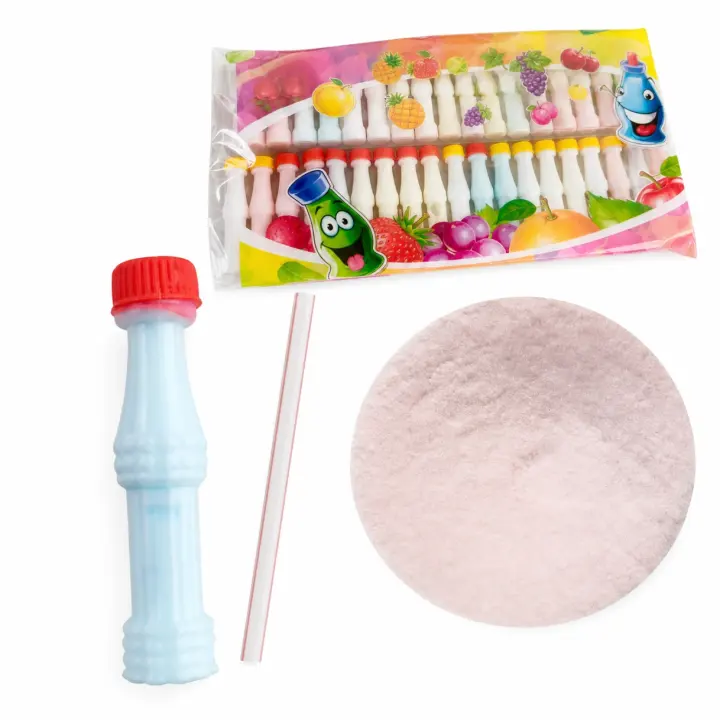
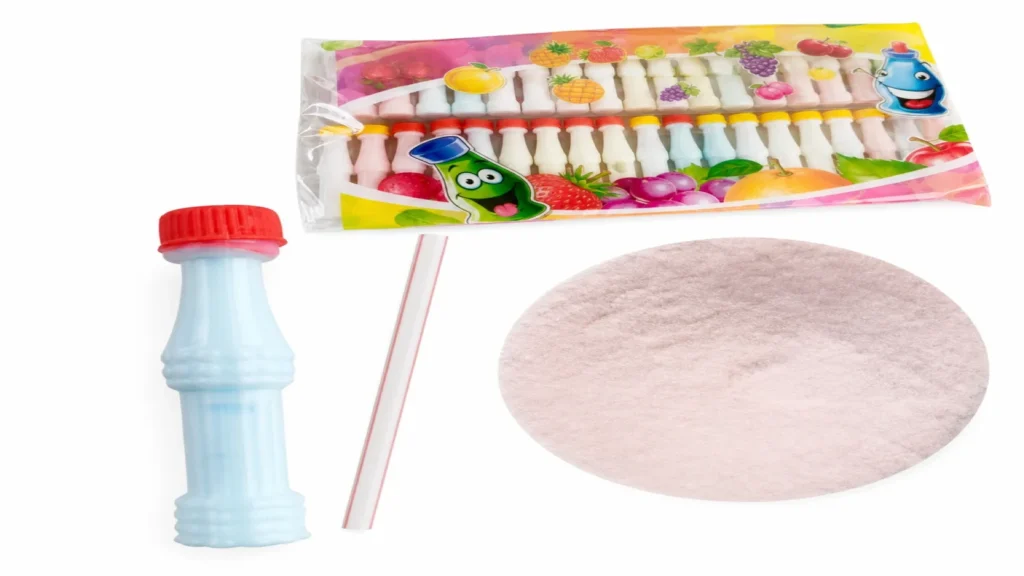
If you are reviewing sour powder candy packaging trends in 2026, the practical move is to translate trend signals into one exact trial route before you request a quote. KidStar SKU AF-002 is a useful working example because it is a 3.5 g mini cola sour powder line packed as 64 pieces per inner bag and 30 inner bags per carton. That means the buyer is not only choosing a flavor or a candy type. The buyer is also choosing whether the trial should be judged at the single-pouch level, the inner-bag level, or the export-carton level.
The direct answer is that current 2026 packaging and shopper signals point buyers toward compact trial formats, clearer pack hierarchy, and stronger shelf explanation. For AF-002, that means locking the job of the single pouch, the 64-piece inner bag, and the 30-bag carton before treating the pack as quote-ready. Importers, distributors, wholesalers, and private-label buyers who skip that step often mistake a trend headline for a buying brief.
What current 2026 market signals actually say
The useful market story is not “trends are changing.” It is how shopper behavior changes the packaging brief.
The National Confectioners Association’s State of Treating 2026 says confectionery reached $55 billion in retail sales in 2025, that discovery happens both in store and online, and that 82% of shoppers want holiday-specific items with special packaging, shapes, and flavors. Euromonitor’s public snack-trends summary for 2025-2026 points to a category still shaped by cautious spending and changing consumption occasions. Put together, those signals suggest that buyers need packs that are easy to explain, easy to test, and easy to place in the right selling moment.
That is especially relevant for sour powder lines. A powder product is not only bought on taste. It is bought on trial appeal, unit visibility, and whether the format feels right for the channel. A buyer using AF-002 for a first conversation should therefore ask: is the test about the single impulse pouch, the inner-bag resale route, or the carton economics behind the line?
Why AF-002’s pack hierarchy matters more in 2026
AF-002 is a strong example because the pack hierarchy is already visible in the product record:
| Pack level | Record fact for AF-002 | Buyer question to answer |
|---|---|---|
| Candy unit | 3.5 g mini cola sour powder pouch | Is the single pouch the real consumer trial unit? |
| Inner bag | 64 pieces per inner bag | Will the market buy through the inner bag as a trade unit? |
| Carton | 30 inner bags per carton | Does the first order make sense in carton and pallet terms? |
| Category role | Sour powder / value line | Is the project impulse-led, wholesale-led, or seasonal? |
This matters because 2026 packaging trends reward clarity. Shoppers are discovering products online, but they still meet the product physically at the shelf, the checkout, or the counter. Buyers therefore need a pack route that can explain itself quickly. AF-002 can do that well when the buyer chooses the correct level of trial:
- single pouch for fast impulse testing
- inner bag for trade-unit comparison
- carton for first-order economics and mixed-load planning
Without that hierarchy, a supplier may answer with a price, but the buyer still will not know whether the route fits the intended channel.
Decision table: which 2026 packaging signal matters most
| Buyer situation | Trend signal that matters most | How it changes the AF-002 brief | Best next step |
|---|---|---|---|
| Convenience or checkout trial | Compact, easy-to-explain pack wins | Focus on the single pouch and visible sell-through job | Request sample and shelf-facing photos for the pouch route |
| Value wholesale program | Right-sized trade unit matters more than novelty | Clarify whether the 64-piece inner bag is the practical resale unit | Ask for carton math and inner-bag logic in the first quote |
| Seasonal or event-led order | Packaging needs stronger thematic visibility | Keep AF-002 stock route separate from later themed customization | Test the stock route first, then discuss custom work if needed |
| Mixed container with several confectionery lines | Clear hierarchy and carton logic matter most | Define how many cartons of AF-002 belong in the first load | Put carton share into the buying brief before price comparison |
| Buyer only reacting to trend headlines | Market signals are not yet a route | The commercial job of the pack is still missing | Hold the RFQ until the selling unit is named |
The point is not to overcomplicate the pack. The point is to keep the commercial decision visible.
Turn trend language into one working packaging brief
A useful AF-002 packaging brief usually includes:
- exact SKU AF-002
- target market and sales channel
- whether the test is built around the single pouch, inner bag, or carton
- expected quantity range
- sample timing
- whether the first phase is stock-route only
- whether future packaging customization is a separate decision
This is the right moment to connect the trend discussion to the real product catalog and to the MOQ and lead time page. MOQ, lead time, and freight all behave differently depending on whether the buyer is thinking in consumer units, inner bags, or cartons.
The samples page matters here too. A sample of AF-002 should not only answer “do we like the flavor?” It should also answer “does this pack level match the trial route we actually plan to run?”
When trends should not override channel math
Trend-led language can still mislead buyers if it replaces basic route discipline.
Buyers should slow down when:
- the pack looks fashionable but the resale unit is still unclear
- the project is already discussing custom visuals before the stock route is proven
- the quantity direction is too vague to evaluate the 30-bag carton
- the team wants a sour powder item but has not named the channel or shelf role
- the supplier is being asked for a final quote before the buyer can say whether the single pouch or inner bag is the true test unit
Those are not trend problems. They are workflow problems.
The stronger move is to use current market signals as a filter, not as a shortcut. If 2026 favors more distinctive and better-structured packs, then the buyer should build a more disciplined packaging brief—not a vaguer one.
Packaging checklist for a 2026 sour powder trial
- Fix the exact SKU: AF-002.
- Name the trial level: single pouch, inner bag, or full carton.
- Pair trend language with the real market and channel.
- Keep MOQ and lead time tied to the chosen pack level.
- Use samples to confirm both flavor and pack-route fit.
- Hold packaging customization for later unless the stock route already proved itself.
If you want KidStar to review how AF-002 fits your 2026 sour powder packaging plan, send the market, channel, trial level, carton target, and timing through the contact page. That gives the team enough context to respond with a practical pack route instead of a generic trend-based suggestion.