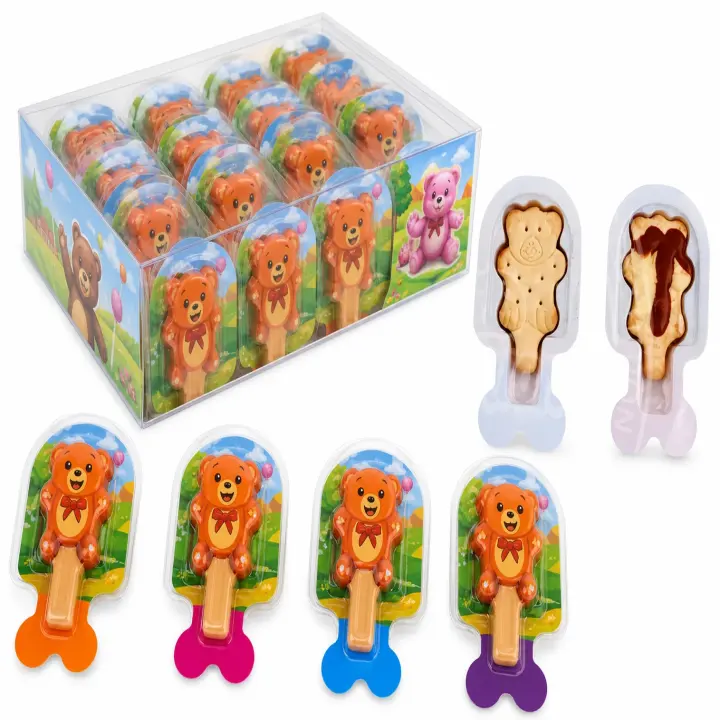
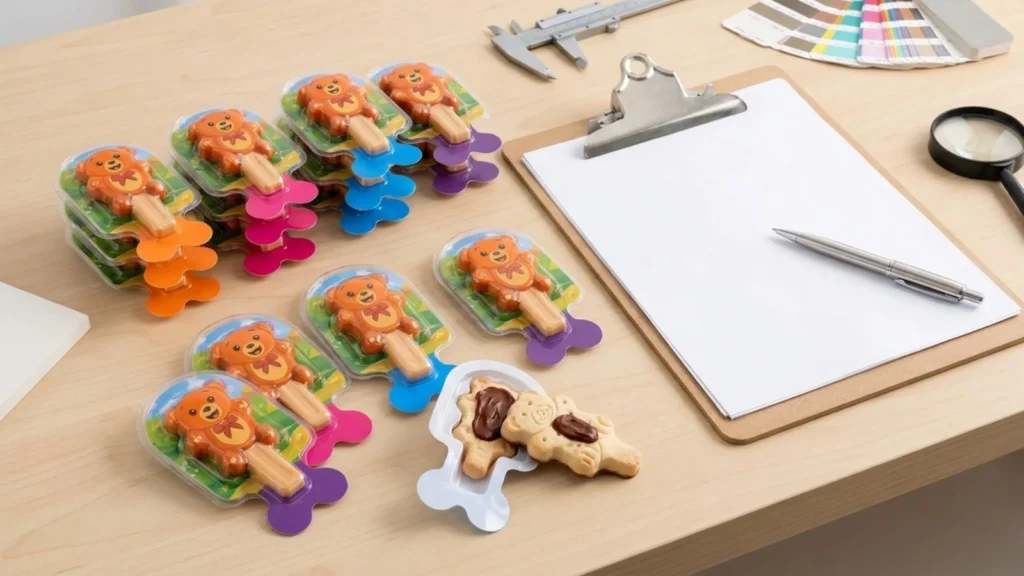
If you are comparing a bear marshmallow supplier, start by checking whether the exact SKU, display-box route, and buying stage are already named clearly enough to survive a real quote review. KidStar SKU YMX-143 is a practical benchmark because it is a 10 g bear marshmallow packed as 30 pcs x 20 boxes/carton, which means the supplier is not only offering a novelty marshmallow piece. The supplier is offering a retail-facing stock route, carton logic, and an approval workflow that needs to stay coherent from sample to first order.
The useful question is therefore not "Who can make marshmallow candy?" The better question is "Which supplier route is strong enough for this exact YMX-143 display-box program?" Importers, distributors, wholesalers, and private-label buyers usually make this decision too late. They compare prices before confirming whether the supplier is solving a stock test, a repeat-ready novelty line, or the first bridge toward private label. That is why a supplier review should begin with one exact SKU and one exact commercial purpose.
Start with the SKU and pack route, not the catalog promise
A marshmallow supplier can look strong on a broad catalog and still be weak on the route you actually need. YMX-143 is useful because it forces the buyer to review one novelty display-box item instead of discussing an abstract marshmallow range.
For YMX-143, the first supplier review should confirm:
- exact SKU under discussion: YMX-143
- unit format: 10 g
- pack configuration: 30 pcs x 20 boxes/carton
- whether the buyer wants a stock-route test, a distributor line, or a later private-label bridge
- whether the supplier is answering for this exact pack route instead of a similar but different marshmallow or novelty item
The exact YMX-143 product page should anchor that review. The wider product catalog is still helpful for comparing related marshmallow or novelty options, but the buying decision should not start there. Buyers lose control when one thread is discussing a display-box stock item while another thread quietly assumes a broader assortment or a future branded program.
Use a supplier review table before you compare quotes
Price only becomes useful after the buyer knows what kind of supplier answer is actually needed.
| Supplier review route | What the buyer is really checking | Why it matters for YMX-143 | Best next action |
|---|---|---|---|
| Fast stock screening | Whether the standard display-box route fits the market well enough for a quick sample or trial | Good when the buyer still needs proof of fit before asking for customization | Keep the request narrow and ask the supplier to stay on the standard YMX-143 route |
| Distributor line review | Whether the display-box and carton logic support repeat resale rather than only a one-off test | A distributor usually needs more file discipline than a casual sample round | Ask for the exact YMX-143 pack route, target channel, and quote assumptions in one file |
| Range-building review | Whether YMX-143 can play a clear role beside other novelty or marshmallow products | A supplier may offer too many alternatives before one hero line is defined | Confirm the role of YMX-143 before expanding into a mixed shortlist |
| Private-label bridge review | Whether the buyer is still testing a stock route or already drifting into custom packaging work | This is where supplier conversations often get mixed and rewritten | Separate stock-route evaluation from later packaging customization decisions |
This table keeps the supplier review honest. A buyer does not need to solve every downstream scenario in the first email, but the supplier should know whether YMX-143 is being tested as a simple stock product or as the beginning of a more structured program.
Check whether the supplier answer matches the real buying stage
One weak point in many candy RFQs is that the buyer asks for "price and samples" without saying what decision those samples should unlock. That leaves the supplier guessing.
For YMX-143, the supplier answer is stronger when the buyer has already named:
- target market
- outlet or distribution type
- whether the line is intended for checkout, general trade, value retail, or mixed wholesale
- approximate quantity direction, even if the final volume is not fixed yet
- whether the buyer expects only stock-route confirmation or a later packaging-development step
This is where samples and MOQ and lead time should work together. Samples should answer whether the product and display-box route belong in the market. MOQ and lead-time discussion should answer whether the project is still a low-risk test or already moving toward a repeatable buying path. If the supplier does not know which stage you are in, the reply may look complete while still solving the wrong problem.
Review the display-box route as a commercial workflow
YMX-143 is not just a novelty marshmallow shape. It is a display-box workflow. That means the supplier review should test whether the answer covers the product, the pack, and the shelf route together.
The buyer should ask:
- Does the supplier clearly answer using the YMX-143 display-box configuration instead of a generic marshmallow description?
- Does the answer keep the stock route simple, or does it introduce private-label assumptions too early?
- Is the display-box route being reviewed in the context of the target market and outlet type?
- Does the supplier answer create a clean next step, such as sample review, carton confirmation, or a quote-ready brief?
The packaging customization page matters here, but only at the right time. It should help once the buyer already knows that the stock route is commercially useful and that extra pack work is worth the effort. It should not turn an early supplier review into an oversized packaging project before YMX-143 has earned that complexity.
Know when a supplier comparison is still too early
Sometimes the right decision is not "choose supplier A or B." Sometimes the right decision is to stop and fix the brief first.
The buyer should pause the comparison when:
- the exact SKU is still not locked
- the target outlet type is still vague
- the request mixes stock-route evaluation with private-label ambitions
- the supplier is answering with broad range language instead of exact YMX-143 details
- the buyer still cannot say whether the next step is samples, a quote revision, or a distributor sell-in test
Those signals do not mean YMX-143 is weak. They mean the review is still under-briefed. A supplier comparison is only useful when both sides are talking about the same commercial stage.
End the supplier review with one next action
The strongest YMX-143 supplier review ends with one precise next move:
1. confirm that YMX-143 is the exact SKU under review 2. name the market and outlet route 3. say whether the current stage is stock screening, distributor review, or a later private-label bridge 4. request samples or quote updates only for that named route 5. move to contact once the buyer brief is clear enough for a focused reply
That is what makes a bear marshmallow supplier comparison useful. The goal is not to collect more novelty options than the team can evaluate. The goal is to decide whether one exact route can move forward without being rewritten in the next round.
If you want KidStar to review whether YMX-143 fits your stock-route test, distributor line, or first private-label bridge, send the market, channel, quantity direction, and next-step question through the contact page. That helps the team answer with a cleaner supplier route instead of a generic marshmallow quotation.
YMX-143 supplier review checklist
- Anchor the review to exact SKU YMX-143.
- Keep the 30 pcs x 20 boxes/carton route visible in every supplier discussion.
- State whether the project is stock screening, distributor review, or a private-label bridge.
- Use samples to answer a defined product question, not a vague curiosity check.
- Use MOQ and lead time only after the commercial stage is named.
- Move to packaging customization only when the stock route already proved useful.