A bubble lollipop wholesale review should confirm the exact candy, blister card, assortment, display count, carton route, destination file, and trial acceptance rule before price comparison. KidStar SKU YMX-135 Bubble Lollipop is currently listed as 8.5 g candy × 30 pieces × 24 display boxes, giving importers and distributors a concrete reference for this seven-part audit.
The direct answer is to approve YMX-135 as one controlled display-pack system—not as a loose lollipop alone. The clear blister, stick, candy pieces, printed card, display box, and shipping carton all affect saleability, so buyers should record which exact version was sampled and what evidence will trigger buy, revise, or stop.
Identify the exact YMX-135 selling unit
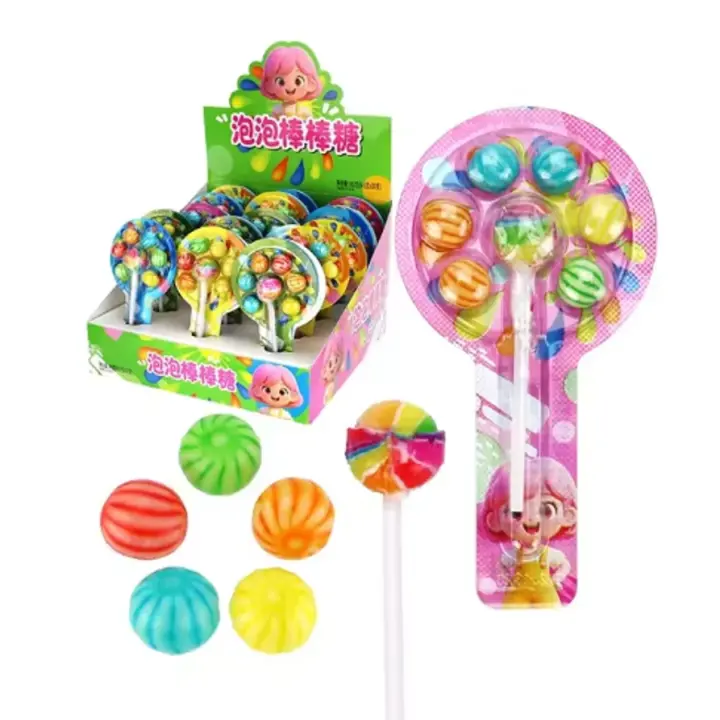
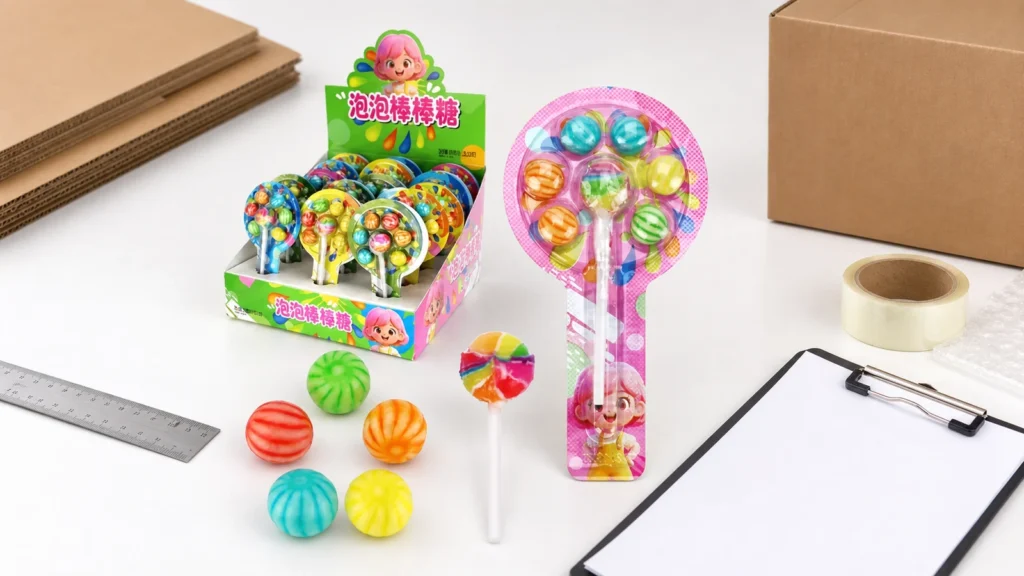
The current product image shows a round bubble-lollipop presentation on a printed blister card, a multi-piece counter display, separate candy balls, and a lollipop stick. Those visual cues help identify the reference, but they do not prove a final flavor ratio, artwork license, ingredient file, shelf life, certification, or destination approval.
Put these facts at the top of the buyer brief:
- SKU: YMX-135
- listed product: Bubble Lollipop
- listed unit basis: 8.5 g candy
- listed pack route: 30 pieces × 24 display boxes
- exact blister-card and display-box version received
- destination, channel, and intended counter position
- requested assortment and language route
- buyer-owned acceptance method and review date
If the quotation, sample, artwork, or live YMX-135 product record differs, stop and assign a new version code. A different blister shape, card size, piece count, or display configuration changes the commercial item being evaluated.
Audit seven display-pack risks
Use one evidence table for the physical sample and keep observations separate from supplier documents.
| Risk | What to inspect | Evidence to retain | Buyer decision |
|---|---|---|---|
| 1. Product identity | Candy shape, stick, unit weight basis, and sampled variant | Closed-unit and opened-unit photos | Correct SKU under review |
| 2. Blister fit | Product movement, sharp contact points, trapped edges, and closure condition | Front, back, edge, and shake-test notes | Protective fit is acceptable |
| 3. Card condition | Bends, tears, delamination, hanging area, and print scuffing | Photos before and after handling | Retail presentation survives handling |
| 4. Assortment | Count by visible color or flavor code in the checked display | Count sheet tied to sample code | Mix matches the buyer brief |
| 5. Display build | Thirty-piece count, upright presentation, access, and refill logic | Loaded display photos and count | Counter route is workable |
| 6. Carton handling | Twenty-four-display arrangement, movement, compression, and moisture exposure | Packed-carton photos and test method | Transit trial can be defined |
| 7. Destination file | Ingredient/allergen data, net content, language, barcode, date/lot, and importer fields | Controlled artwork and document index | Market review can proceed |
Do not publish a universal breakage or defect tolerance from one courier sample. Define the sample size, test method, evidence owner, and escalation rule for the intended order.
Separate candy damage from packaging damage
A saleable unit can fail in more than one way. The candy may crack while the blister remains closed; the card may bend while the candy stays intact; or the display may collapse even though every consumer unit is usable. Record these outcomes separately.
For a controlled trial, count:
- intact consumer units
- cracked or visibly damaged candy pieces
- bent, torn, or scuffed cards
- open, lifted, or deformed blisters
- units that cannot hang or present correctly
- displays with movement, crushing, or incorrect count
- cartons with external damage or internal shifting
Photograph the unopened carton first, then each pack level. That sequence helps the buyer distinguish incoming carton damage from damage introduced during unpacking or local shelf handling.
Build a destination-specific import file
The product image and pack count do not answer food-import or labeling questions. For the United States, FDA’s Foreign Supplier Verification Programs overview says covered importers generally need an FSVP for each imported food unless an exemption applies, with hazard and supplier evaluation plus appropriate verification activities.
Use that official page as a route-finding source, then have the responsible importer confirm the exact YMX-135 formulation, allergen statement, facility and supplier information, proposed label, and required verification documents. The candy import document guide can organize the request, but it cannot replace a destination-specific review.
At minimum, connect the approved sample code to:
- current product specification
- ingredient and allergen statement
- proposed consumer-unit artwork
- net-content and language plan
- barcode owner and number assignment
- date/lot coding format and location
- storage and handling statement
- destination questions and responsible reviewer
Do not infer certification or regulatory status from packaging graphics.
Run one counter test with a measurable rule
A bubble lollipop can look attractive in a photograph and still fail the buyer’s real counter workflow. Use a defined test cell instead of distributing a few displays across unrelated outlets.
Choose one outlet group, one display location, one price architecture, one test window, and one replenishment method. Track displays delivered, units sold, units damaged, units removed, remaining stock, and staff comments that refer to a specific operational issue.
Write the decision before the test starts:
| Result | Buyer action |
|---|---|
| Product and pack meet the written acceptance rule; sell-through supports the range | Prepare the repeat-order brief |
| Product fits, but blister, card, display, or assortment needs revision | Open one controlled packaging change |
| Evidence is incomplete or versions cannot be matched | Hold the quote and rebuild the file |
| Trial misses the buyer’s commercial threshold | Stop or test a different SKU |
Use the samples route when the buyer still needs sensory, pack, or handling evidence. Sampling is useful only when it is tied to the same version and decision rule.
Keep custom changes outside the stock approval
Private-label artwork, a different card, another blister shape, changed flavor mix, or revised display count creates a new commercial version. Do not let it inherit approval from the stock sample.
The packaging customization page is the next route after the buyer can state the exact change. Refresh the artwork proof, physical sample, pack hierarchy, quotation denominator, and destination review for that new version.
Send one quote-ready YMX-135 brief
YMX-135 is ready for a focused wholesale discussion when the buyer names the destination, channel, sample version, 8.5 g × 30 × 24 reference, blister-card route, assortment, quantity direction, damage-check method, artwork scope, and open document questions.
Send those inputs through the contact page. KidStar can then answer against one controlled bubble-lollipop program instead of a generic request for “best lollipop price.”
Sources reviewed
- KidStar YMX-135 Bubble Lollipop product record, reviewed August 29, 2026.
- FDA: Foreign Supplier Verification Programs Final Rule at a Glance, reviewed August 29, 2026.