A candy recall checklist should connect the affected product and lot to stock on hand, shipments and recipient responses. Importers and distributors need quantities they can reconcile, not just a supplier invoice.
Start with the official notice and your responsible safety lead. The workflow below is a preparedness exercise, not a substitute for incident-specific instructions or legal advice. KidStar YMX-177 is used only to demonstrate pack-count arithmetic; the shipment, lots and customers in the exercise are fictional.
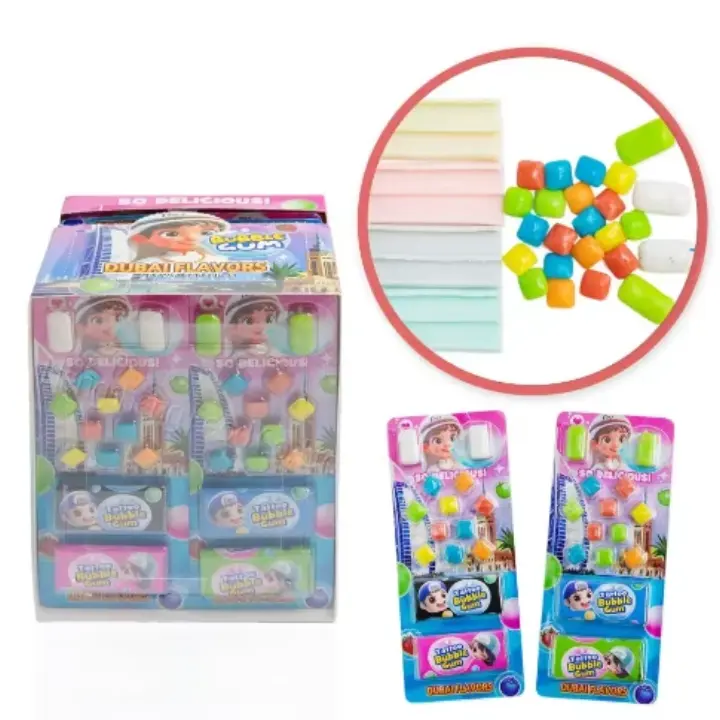
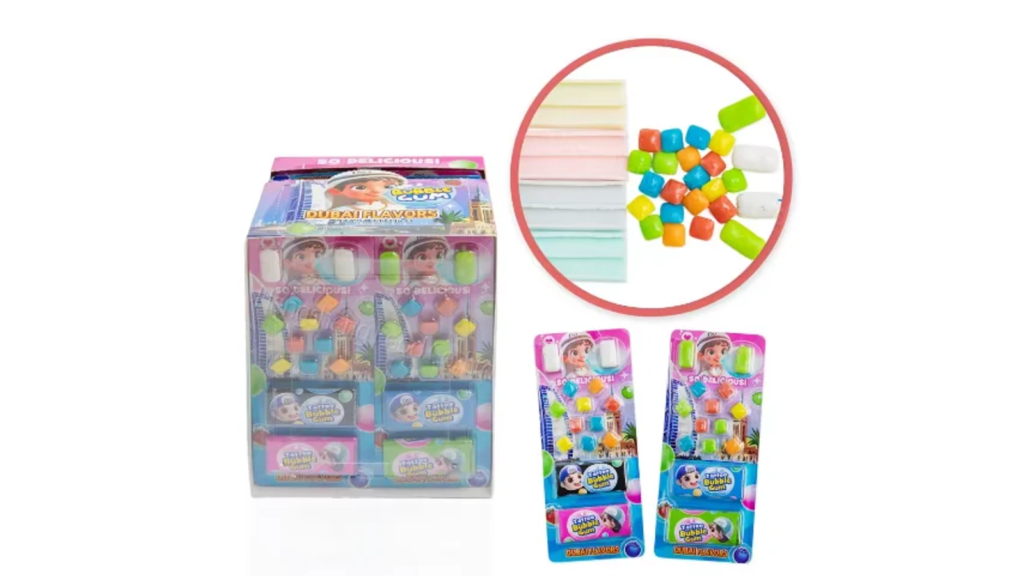
Product image: original KidStar product-library reference for the pack-count example, not an image of recalled goods.
Why a recent candy recall makes identification important
On September 10, 2026, the U.S. Consumer Product Safety Commission announced a recall of approximately 2.3 million Ricky Joy Sour Crush Rolling Liquid Candy bottles because the rolling ball could detach and create a choking hazard. The notice reported no incidents or injuries. It identifies the product, importer and consumer remedy. This is an unrelated brand’s recall, not a KidStar recall. Buyers handling that product should follow the official CPSC notice.
The procurement lesson is specific: a broad description such as “novelty candy” is not enough to decide what is affected. Record the exact identifiers given in a notice. Do not narrow its scope to a guessed lot or assume that a similar-looking item is included.
Build the file before an incident
FDA’s March 2022 voluntary-recall guidance recommends advance preparation, assigned responsibilities, suitable product coding, distribution records and communication procedures for firms handling FDA-regulated products. It also discusses mock recalls. These recommendations do not mean that every candy product has identical reporting obligations. For an actual event, your responsible lead should determine the applicable authority, reporting duties and actions. See FDA’s recall initiation guidance.
For a practice exercise, create one folder with a read-only starting snapshot and a separate working ledger. Label every page “EXERCISE.” Use invented customer names in training copies; keep real distribution records access-controlled. Choose one person to consolidate warehouse counts and another to check the arithmetic independently.
| Record | What to capture in the exercise | A useful cross-check |
|---|---|---|
| Product identity | SKU, description, pack version and applicable identifiers | Match the supplier record to the received pack |
| Lot identity | Exact printed code and a legible photograph | Distinguish a lot from a best-before date |
| Receipt | Delivery reference, date, warehouse and quantity unit | Compare receipt count with the invoice |
| Outbound movement | Lot, quantity, ship-to location and dispatch reference | Trace split orders separately |
| Current position | Warehouse balance and destination reports | Keep estimates separate from confirmed counts |
| Follow-up | Owner, response, unresolved difference and next action | Preserve the evidence behind each correction |
Separate the SKU from the production lot
A SKU describes your catalog item; it does not necessarily identify one manufacturing batch. GS1 distinguishes product-class identification by GTIN from lot-level identification using GTIN plus a batch or lot identifier. Its Global Traceability Standard explains how lot-level records help distinguish batches and their downstream locations.
For your own ledger, keep the original printed code exactly as recorded. Avoid silently replacing letters with numbers or shortening codes to fit spreadsheet cells. Store a pack photograph alongside the transcription and flag an unreadable character for review.
Before production, ask how codes on individual packs, display boxes and master cartons relate. Do not assume all three levels use the same code. The carton-mark planning guide addresses the physical label brief; this checklist addresses the movement records that must remain connected after cartons are opened.
Worked exercise: reconcile cartons, displays and pieces
The current KidStar Bubble Gum YMX-177 listing specifies 9 g units, 30 pieces per display box and 24 display boxes per carton. That gives 720 pieces per carton. Confirm the current order specification before applying these conversions to a real shipment.
Imagine a training receipt of ten cartons, all assigned the fictional exercise code TRAIN-A. The starting balance is 240 display boxes, or 7,200 pieces. This is not an actual KidStar lot, order or recall. Assume there are no samples, write-offs, transfers or returns in this first version of the exercise.
| Position in the training ledger | Carton equivalent | Display boxes | Pieces |
|---|---|---|---|
| Still in the importer’s warehouse | 3 | 72 | 2,160 |
| Dispatched to fictional Customer A | 4 | 96 | 2,880 |
| Dispatched to fictional Customer B | 3 | 72 | 2,160 |
| Total accounted for at first dispatch | 10 | 240 | 7,200 |
This table balances the importer’s receipt against warehouse stock and dispatches. It does not prove that all dispatched pieces remain available at the two customers. That requires a second reconciliation.
Suppose Customer A reports 60 unopened displays and 900 pieces sold onward. Sixty displays equal 1,800 pieces. Together, those records explain 2,700 of the 2,880 pieces received: 180 pieces remain unresolved. Do not overwrite the receipt with 2,700 to make the sheet balance. Look for six additional displays, an omitted transfer, loose stock or a counting mistake, then record the supported correction.
If the 900 pieces went to another distributor, trace that recipient separately. If sold to consumers, label them accordingly rather than describing them as stock held. When returns enter the exercise, subtract them from the sending location and add them to the receiving location once; otherwise, the same goods can appear twice.
Turn a balanced spreadsheet into an actionable response
FDA’s guidance covers communicating with affected direct accounts and giving clear response and product-disposition instructions. In a real incident, use the recalling firm’s instructions and the applicable authority’s direction; do not improvise a remedy from a training worksheet.
For your mock recall, test whether the team can answer these questions without relying on one salesperson’s memory:
- Can the warehouse find the photographed code on physical stock?
- Can order records separate TRAIN-A from another exercise lot of the same SKU?
- Does each recipient entry identify the delivery location, not only the billing company?
- Can the recipient report unopened displays and loose pieces without mixing units?
- Does an unresolved balance have a named owner and supporting documents?
- Can the team distinguish a message being delivered from a recipient confirming action?
Keep the drill separate from live commerce. Do not send fictional recall notices to customers or disable actual listings as an unannounced exercise. Review the results internally, then arrange any broader drill with the participants in advance.
Use the findings in the next purchasing brief
The useful output is a short list of record gaps: an unreadable code, an unrecorded split shipment, mixed quantity units or a missing receiving contact. Fix the specific gap and repeat the same calculation. A zero arithmetic difference is useful, but it is not proof of product safety or a completed real recall.
For a new candy program, include code visibility and packaging-level identification questions in your labeling and documentation review. Keep agreed answers with the sample and order records.
If you are evaluating YMX-177 or another KidStar item, send a buying brief with the SKU, destination market, pack format and the batch-record questions your warehouse needs answered. Request confirmation of the actual marking arrangement before approving the order; a product listing alone does not establish recall readiness.