Independent retail candy trends in 2026 support testing differentiated non-chocolate formats, but the data does not prove that any single gummy jar will sell in every market. Faire’s first-party U.S. wholesale analysis found broader confection adoption and larger non-chocolate unit orders within its fixed retailer cohort, so importers and distributors should translate the signal into a small, measured outlet test rather than a broad demand claim.
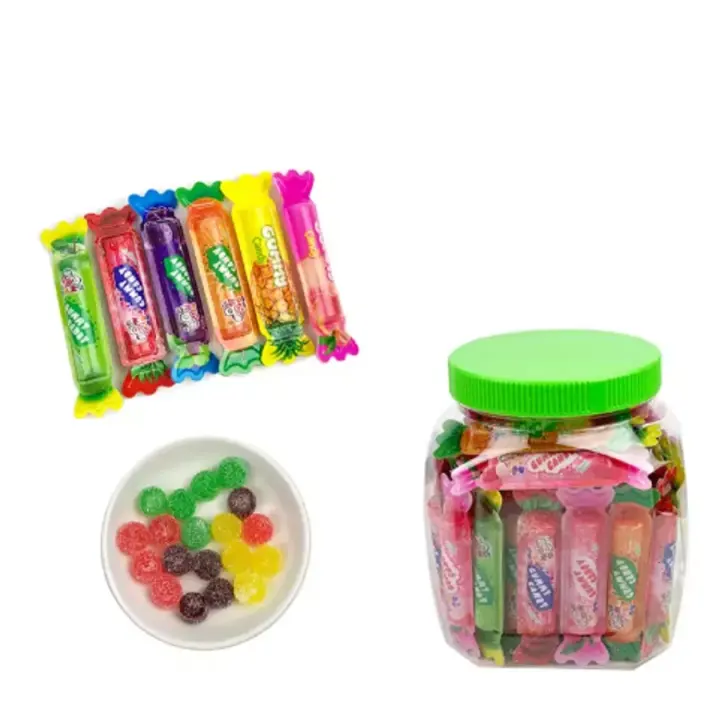
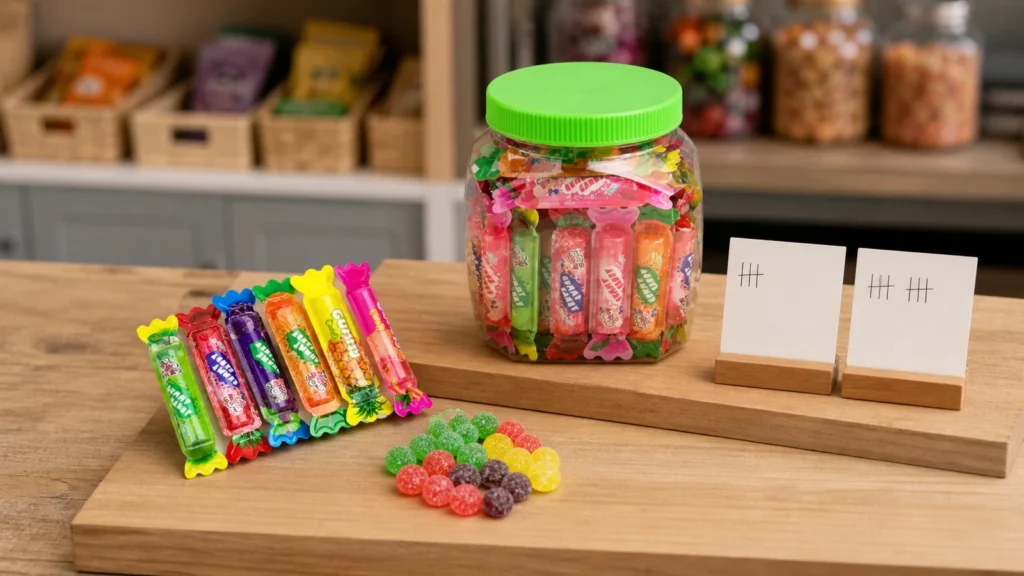
KidStar SKU YMX-129 Assorted Gummy Candy gives that test a concrete base: 10 g units packed 50 pieces per jar and 12 jars per carton. The direct answer is to fix the exact jar version, assign it to a defined independent-retail cohort, measure reorder and condition by outlet, and scale only after the buyer sees evidence from its own channel.
Read the Faire data as a channel signal
Faire reported in June 2026 that its analysis covered roughly 3.5 million aggregated records and a fixed cohort of more than 50,000 U.S. independent retailers active in both Q3 2022 and Q1 2026. Within that cohort, the share ordering non-chocolate candy increased from 11.4% to 14.1%. Average non-chocolate orders per retailer rose 37%, while average units per retailer rose 87% over the comparison period.
Those figures are useful because they describe actual wholesale orders on one platform, with a published methodology. They are not a forecast for every country, an estimate of total confectionery demand, or proof that one product format will repeat. Treat them as a directional signal: independent shops have been willing to expand candy buying and, in Faire’s dataset, non-chocolate unit growth outpaced order growth.
Faire’s July 2026 report adds a broader channel observation. In its global same-store cohort of more than 130,000 independent retailers, 59% of physical or multi-channel stores increased wholesale purchasing, and the typical physical or multi-channel store spent about 19% more year over year. That does not isolate candy, but it strengthens the case for testing a shelf-facing product in real stores rather than judging it from online interest alone.
Use YMX-129 as a controlled jar test
The current YMX-129 product baseline is:
- product: Assorted Gummy Candy
- nominal unit weight: 10 g
- jar count: 50 pieces
- export presentation: 12 jars per carton
The YMX-129 product page should anchor the test. It identifies the exact stock route; it does not establish the final flavor ratio, local label approval, shelf life for the destination, or sell-through in the buyer’s outlets.
A buyer should therefore define the test in operational terms: how many stores, what type of stores, how many jars per store, whether the jar stays closed, how pieces are sold, and what event triggers a reorder. This turns “gummies are trending” into a falsifiable buying plan.
Match the jar job to the outlet
| Outlet situation | Possible YMX-129 job | Evidence to collect | Stop or revise signal |
|---|---|---|---|
| Independent candy shop | Distinctive jar line within a wider gummy set | Jar-level sales, piece-level sales if opened, customer requests, reorder date | Jar competes with an existing line without adding a clear reason to buy |
| Tourist or gift shop | Colorful add-on or bundle component | Units per transaction, damage, seasonality, gift-bundle attachment | Product needs a story or pack format the current stock route does not provide |
| Small-town general store | Counter or family-treat test | Weekly movement, display position, refill responsibility | No staff owner for the opened-jar route |
| Cash-and-carry wholesaler | Full-jar resale to smaller retailers | Jar orders by customer, repeat interval, carton split | Buyer only tracks carton departure, not downstream repeat |
| Online specialty seller | Assorted gummy jar or controlled bundle | Pick accuracy, breakage, review themes, repeat order | Repacking changes the approved selling unit without a new brief |
The table does not predict a winning channel. It makes the buyer state what the jar is meant to do and what evidence would justify the next purchase.
Keep trend attributes separate from product facts
Faire’s candy report discusses newstalgia, clean-label Swedish candy, wellness-oriented products, and tropical or sweet-spicy gummy momentum. None of those attributes should be assigned to YMX-129 without product-specific evidence.
The safe approach is to create two columns in the buying file:
- verified YMX-129 facts: SKU, current product name, 10 g unit, 50-piece jar, 12-jar carton, and the reviewed product image
- open market hypotheses: which colors, flavors, assortment story, label route, or merchandising theme the buyer wants to test
If the buyer wants tropical, sweet-spicy, reduced-sugar, dye-specific, or private-label claims, request the formula, ingredient statement, artwork, and destination review for that exact proposed version. Do not copy a market trend into the product description.
Design the first test around reorder evidence
An independent-retail trial should create a decision, not merely place samples. Before shipping stock to outlets, prepare a small test sheet with:
1. outlet name and type 2. start date and number of jars placed 3. whether jars remain sealed or are opened for piece sales 4. shelf or counter position 5. starting piece or jar count 6. weekly remaining count 7. damage, leakage, closure, or presentation notes 8. customer request themes stated without invented demographics 9. reorder, revise, or stop decision and date
Use the samples page to confirm the physical stock route first. If the test later shows a reason to change artwork or presentation, move that work into a separate packaging-customization brief rather than changing the test item midway.
Set a scale rule before the first carton moves
Scaling should depend on the buyer’s own channel evidence. A practical rule can combine three tests: a minimum number of outlets completing the trial, a defined reorder interval, and an acceptable product-condition record. The buyer chooses the thresholds; the supplier should not invent them.
Also record what will not count as success. Social views without orders, one unusually strong store, free-sample feedback, or a distributor taking stock without downstream data may be interesting, but they do not yet establish a repeat program.
The broader product directory is useful if the buyer wants to compare a jar gummy with a display box or jelly stick. Keep each candidate tied to a different channel job so the trial does not become an unstructured mixed-candy basket.
For distributors building a wider pilot, the mixed-confectionery container questions page can organize how separate product tests eventually enter one load without pretending that a mixed shipment fixes weak outlet evidence.
Independent-retail gummy test checklist
- Cite the Faire figures as platform-specific wholesale evidence.
- Anchor the product test to exact SKU YMX-129.
- Confirm the 10 g × 50 pieces × 12 jars baseline.
- Name the outlet cohort and the jar’s shelf job.
- Record whether the jar or individual piece is the resale unit.
- Separate verified product facts from trend hypotheses.
- Track condition and reorder by outlet.
- Keep stock-pack testing separate from custom packaging.
- Define scale, revise, and stop rules before placement.
Send the market, outlet types, number of test stores, jars per store, resale unit, stock-or-custom route, measurement plan, and requested carton quantity through the contact page. KidStar can then review YMX-129 against a real independent-retail test rather than treating broad 2026 candy growth as a sales promise.
Sources reviewed
- Faire Independent Retail Pulse: Independent Retail’s Candy Aisle Held Up Through the Cocoa Squeeze — first-party wholesale-platform data; published 3 June 2026; reviewed 2 September 2026.
- Faire Independent Retail Report: Resilience, Curation, and the Rise of Small-Town Retail — first-party wholesale-platform data; published 22 July 2026; reviewed 2 September 2026.
- KidStar SKU YMX-129 Assorted Gummy Candy product record — first-party product record; reviewed 2 September 2026.