To compare chocolate candy quotes in 2026, buyers should date the cocoa-market evidence but compare finished offers only after product, component, pack, quantity, and trade-term assumptions match. The International Cocoa Organization’s May 2026 revision shows a better global balance than 2023/24, yet it also warns that the figures may be revised again.
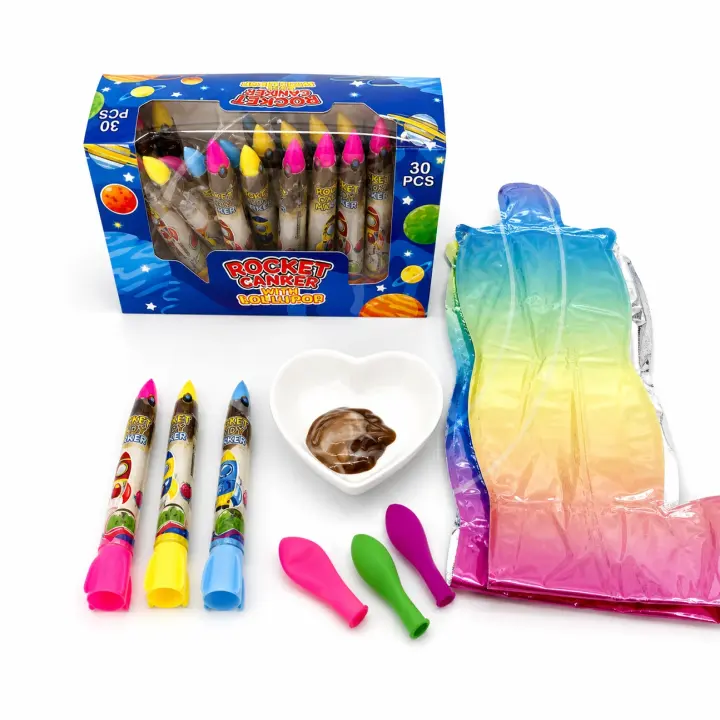
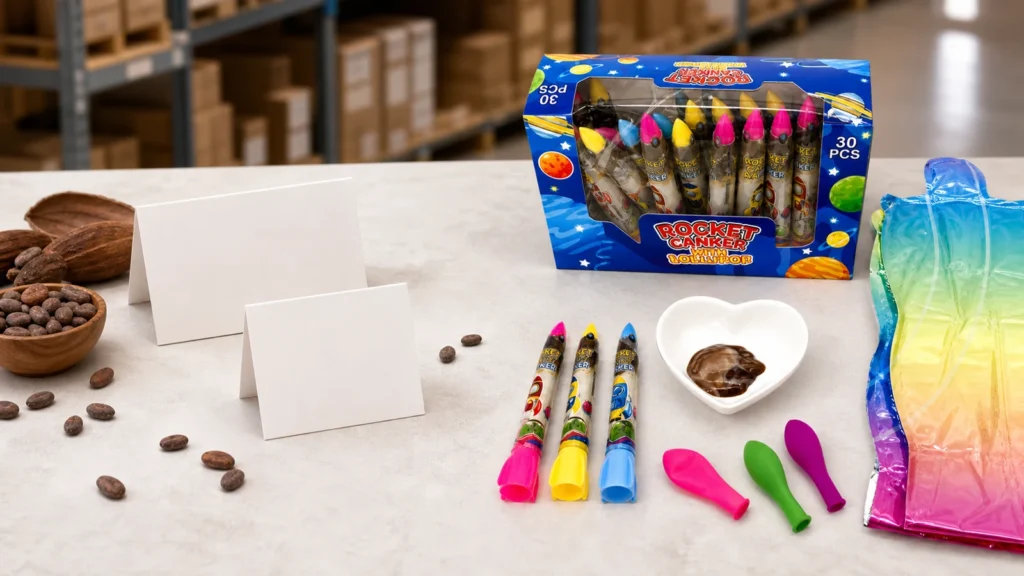
The direct answer is not to expect a cocoa surplus headline to produce an automatic finished-candy price movement. Use the market update as a reason to ask what each quotation covers. KidStar SKU YMX-232 Balloon Rocket Chocolate is a useful working example because the current record identifies a 5 g chocolate-dip component, 30 pieces per display box, and 20 display boxes per carton, while the complete presentation contains other components that must stay on the same version.
Read the May 2026 cocoa revision correctly
The ICCO May 2026 Quarterly Bulletin summary revised the 2024/25 global cocoa surplus to 48,000 tonnes. It estimated production at 4.723 million tonnes and grindings at 4.628 million tonnes. Compared with 2023/24, production was shown as 8.3% higher and grindings as 3.8% lower.
Those are global cocoa-bean estimates, not a quotation for one confectionery product. ICCO explicitly states that the figures may be revised in later bulletins and reports. Its statistics page also explains that production and grinding data are revised quarterly.
For an importer, the useful conclusion is narrow: the evidence base has changed, so the date and assumptions behind a chocolate-related offer matter. The data do not prove a particular supplier’s current input cost, recipe, inventory position, processing cost, packaging cost, or willingness to change a finished-product price.
Separate cocoa evidence from the finished SKU
A finished confectionery quotation contains more than a cocoa-market direction. It can include the formula, portion size, other edible inputs, primary packaging, display box, export carton, assembly work, artwork, testing or document work, quantity, delivery basis, and timing.
For YMX-232, keep the known record separate from the open questions:
| Review layer | Current record | What the buyer must confirm |
|---|---|---|
| Chocolate portion | 5 g chocolate dip | Current formula, declared net content, and sample version |
| Consumer presentation | Rocket-shaped unit and balloon components appear in the reference | Exact component register, assembly, instructions, and final classification review |
| Display | 30 pieces per display box | Complete sellable unit, assortment, display dimensions, and artwork |
| Export carton | 20 display boxes | Current carton dimensions, weights, marks, and order allocation |
| Commercial basis | Not established by the product image | Quantity, trade term, named place, quote date, validity, and exclusions |
This is why a buyer cannot compare one offer for only the chocolate portion with another offer for the complete presentation. The YMX-232 product page should be attached to every inquiry so the SKU stays identifiable, but the current specification and sample must define the full quoted version.
Ask for a dated assumptions sheet
When commodity conditions are moving, an assumptions sheet is more useful than asking whether the supplier has “reduced the price.” Request one short table with every quotation:
| Field | What a usable answer looks like | Why it matters |
|---|---|---|
| Quote date and validity | A dated commercial window | Prevents old and current offers from being mixed |
| Product version | SKU, formula reference, component register, sample reference | Keeps the finished item comparable |
| Pack hierarchy | Unit, display count, carton count | Shows which packaging level the price covers |
| Quantity basis | Exact quantity or clearly labeled band | Separates scale effects from market effects |
| Delivery basis | Incoterm and named place | Prevents freight and product cost from being blended |
| Included work | Stock pack, artwork, sampling, documents, or other agreed scope | Makes exclusions visible |
| Open assumptions | Items the supplier still needs the buyer to confirm | Stops a provisional number being treated as final |
Do not ask a supplier to disclose confidential purchasing arrangements. Ask for the commercial assumptions needed to compare the finished offer.
Use pass, reprice, and hold gates
Buyers can keep the review disciplined with three outcomes:
- Pass when product version, component register, pack hierarchy, quantity, delivery basis, and quote window match the approved brief.
- Reprice when a controlled buyer change affects formula, portion, component, pack count, artwork scope, quantity, or delivery basis.
- Hold when the offer cannot be traced to the same SKU and sample, or when destination-review questions for the complete presentation remain unresolved.
The earlier YMX-232 component-check guide is useful for defining the sellable presentation. This article adds a different layer: how to stop a current cocoa headline from hiding non-comparable commercial assumptions.
Keep market monitoring proportional
A buyer does not need a commodity trading desk to source one candy program. A simple monthly or quote-stage check is usually enough:
1. Record the publication date and cocoa year covered by the official source. 2. Note whether the figure is an estimate, revision, or final historical record. 3. Ask whether the new supplier offer uses the same product and pack version as the previous one. 4. Separate buyer-requested changes from supplier-originated commercial changes. 5. Recheck samples or files only where the version changed. 6. Preserve both quotations and the comparison table for internal approval.
This method helps procurement explain why two finished prices differ without pretending that a global bean balance maps directly to one 5 g component.
Sample the complete presentation after a version change
If a quote revision includes a formula, portion, component, pack, artwork, or assembly change, decide whether a new sample is required. Use the KidStar confectionery samples route to request the exact version that will anchor the next approval.
For a multi-component item such as YMX-232, inspect the chocolate portion and every accompanying component together. Record the display, the assembled presentation where relevant, the label and instruction files, and all destination questions. Do not infer certification, age positioning, safety classification, or market approval from the product photo.
Send a comparison-ready chocolate brief
The May 2026 ICCO revision is useful context, but the buying decision still lives in the finished specification. YMX-232 becomes comparable only when the 5 g chocolate dip, complete component register, 30-piece display, 20-display carton, sample version, quantity, delivery basis, and quote window are aligned.
Send KidStar a chocolate quote brief with the destination, exact SKU, full component list, sample status, pack hierarchy, quantity direction, trade term, quote comparison date, and unresolved review questions. The response can then address one finished program rather than a commodity headline.