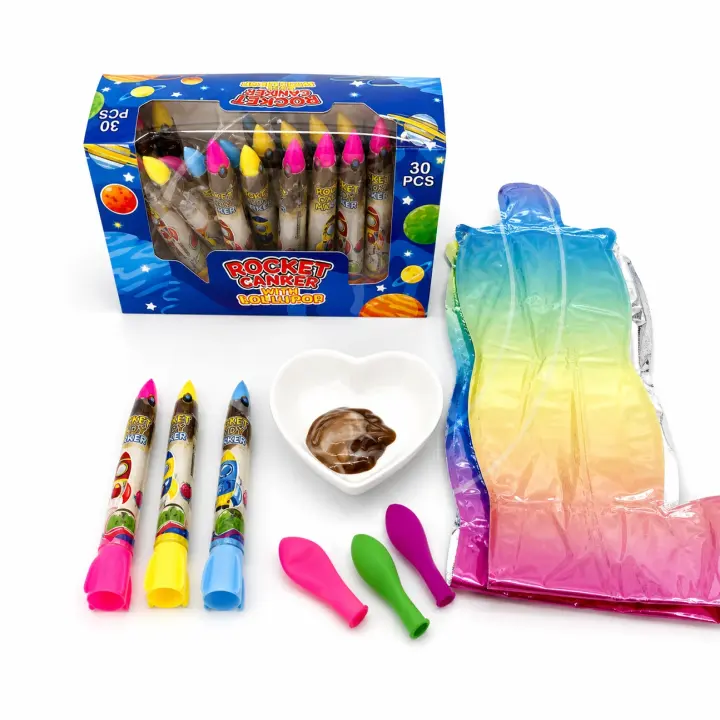
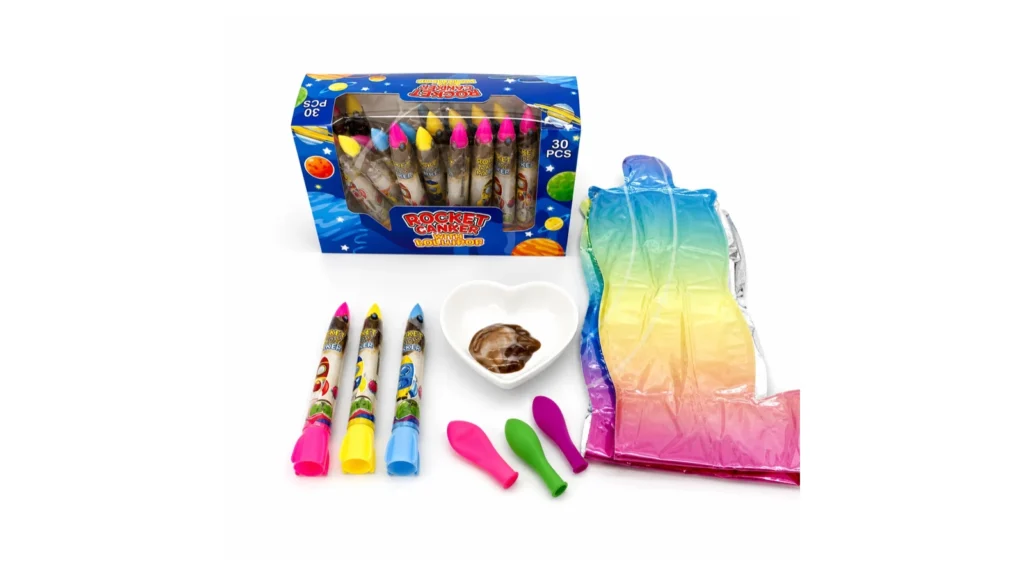
A Balloon Rocket Chocolate RFQ should describe the complete sellable presentation, not only the 5 g chocolate dip. KidStar SKU YMX-232 is recorded as 5 g chocolate dip × 30 pieces × 20 display boxes per carton, while the reference image shows a rocket-shaped candy unit, separate balloon pieces, a display box, and an example of the assembled activity.
The direct answer is to lock seven points before comparing a quotation: exact SKU, edible portion, non-food components, assembly route, consumer pack, display count, and destination-review questions. The image identifies the concept, but it does not by itself establish the final component list, age positioning, instructions, label file, materials, market classification, or approval status.
Treat the complete presentation as the quoted product
YMX-232 is not comparable to a loose chocolate sample. Its commercial meaning depends on the relationship between the chocolate dip, rocket-shaped unit, balloon components, individual presentation, and 30-piece display. A supplier can quote the right food but the wrong pack route if the buyer writes only “5 g chocolate.”
Anchor every request to the live YMX-232 product page and attach the approved reference image. Then state which items shown in that image are expected in each sellable unit. If a component is illustrative rather than included, the current written specification should say so before the buyer approves a sample or artwork.
Do not infer component materials, flavors, food-contact status, consumer instructions, certifications, or destination suitability from color or shape. Those are evidence questions for the exact commercial version.
Build one component register before requesting price
The buyer should turn the pictured concept into an auditable component register:
| Component level | Current evidence | Buyer must confirm |
|---|---|---|
| Edible portion | Product record states 5 g chocolate dip | Exact formulation file, flavor/version, label inputs, and whether 5 g refers only to the edible portion |
| Rocket-shaped unit | Visible in the reference image | Whether it is the primary food pack, how it is sealed, and what parts are included |
| Balloon pieces | Several colored pieces appear in the image | Exact quantity, material evidence, intended use, warnings or instructions proposed, and whether they ship inside every unit |
| Consumer presentation | Concept is shown as a multi-part experience | Final front, back, side, opening, assembly, date-code, and barcode views |
| Display box | Product record states 30 pieces | Open and closed display, piece count, dimensions, remaining-unit stability, and resale role |
| Export carton | Product record states 20 display boxes | Current carton dimensions, gross/net weights, case marks, and handling route |
This register is not a destination compliance decision. It is the minimum shared description needed before the buyer can send the pack to the appropriate internal, retailer, import, and market advisers.
Keep the product record and sample on one version
Request a representative commercial presentation through the confectionery samples route. A useful sample request names the SKU, market, outlet, intended consumer presentation, required components, display evidence, and questions that must be resolved before approval.
On receipt, record:
- the sample date and version reference
- every edible and non-food component received
- quantity of each component in one consumer unit
- seals, attachment points, and visible condition
- instructions, warnings, label panels, barcode area, and date-code area supplied
- open and closed display views with the actual unit count
- differences between the sample, product image, product record, and proposed commercial file
If the pictured concept, sample, and current file disagree, place the project on hold. Do not solve the mismatch by guessing which version the quotation intended.
Route destination questions before artwork approval
A multi-component confectionery presentation can raise questions that a food-only RFQ does not. The buyer should ask its responsible destination-market reviewers to determine the applicable classification, labeling, instructions, material evidence, warnings, testing route, and age or channel restrictions for the final configuration.
The candy labeling and documentation checklist can organize the food-file questions, but it should not be used to declare the separate components approved. Likewise, the supplier should provide current evidence and product details without replacing the importer’s destination review.
Keep any conclusion market-specific and version-specific. A review for one component set, artwork file, or destination should not be copied to another configuration without reconfirmation.
Use pass, hold, or reject gates
| Result | Meaning | Next action |
|---|---|---|
| Pass | Product, components, sample, pack hierarchy, and destination-review inputs match one dated version | Request a quotation on that exact configuration |
| Hold | The concept fits, but component, file, label, display, or review questions remain | Request the missing evidence and keep pricing assumptions provisional |
| Reject | Product identity, component set, pack route, condition, or intended channel misses the agreed brief | Close that version or request a clearly identified alternative |
This gate prevents visual approval from being mistaken for commercial approval. It also gives the supplier a precise reason for every open item.
Write one comparable YMX-232 RFQ line
After the sample and component register are aligned, write one RFQ row containing:
- YMX-232 and the exact product link
- 5 g chocolate dip × 30 pieces × 20 display boxes
- approved sample date and full component list
- consumer-unit, display, and carton definitions
- stock or adapted packaging scope
- requested quantity, destination, and trade term
- evidence and label responsibilities
- destination-review questions still open
- rule for handling any later component or artwork change
The quotation should answer that row, not a general request for “rocket candy” or “balloon chocolate.” If the component list changes, reopen the affected sample, label, pack, and destination checks before comparing the revised price with the original.
Move forward only when the concept is reproducible
YMX-232 belongs in a buyer shortlist only when one complete sellable unit can be described, sampled, reviewed, packed, and quoted without relying on assumptions from the picture. The novelty of the presentation may start the conversation; the component register is what makes the conversation commercially usable.
Send the component and RFQ brief with the destination, outlet, quantity direction, exact YMX-232 link, sample version, component register, and open review questions. KidStar can then answer against the same configuration rather than restarting from an image-only inquiry.