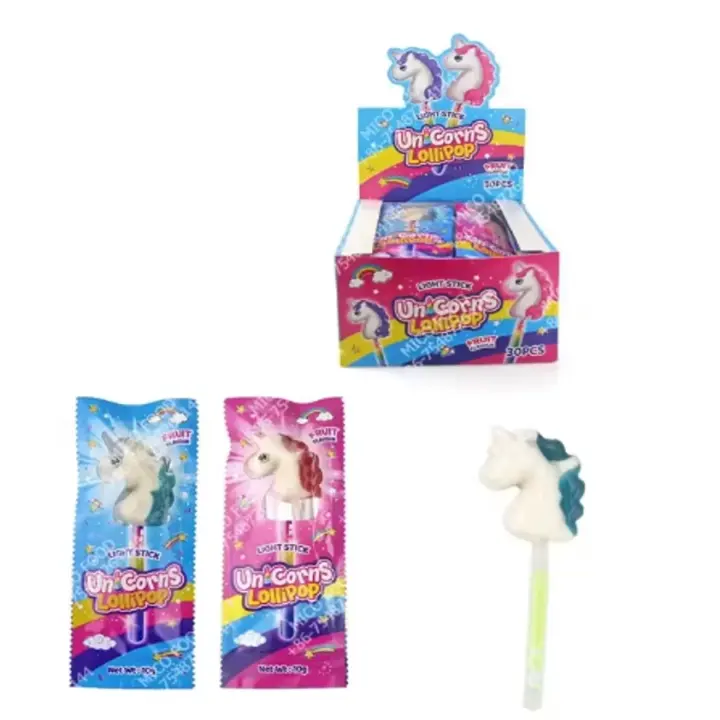
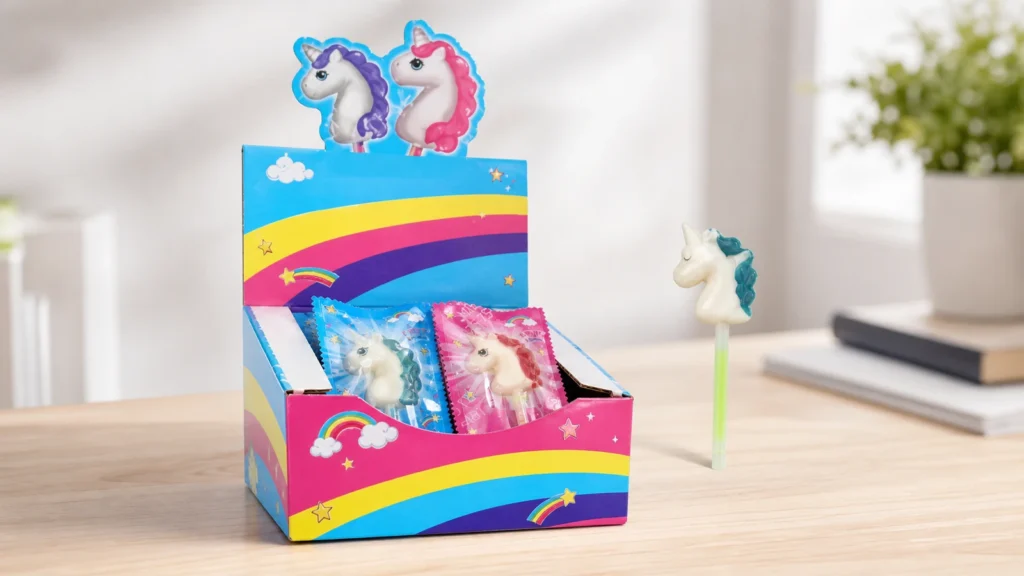
Many novelty candy lines look easy to approve because the product is visually strong and the conversation quickly turns into, "Can you quote this one too?" That is usually the wrong sequence. Importers, distributors, and wholesalers get better results when they decide what job the item should do before they add it to a trial range. KidStar SKU YMX-151 is a useful example because it is an exact Glow Stick Lollipop route packed as 10 g x 30 sticks x 24 boxes/carton. The question is not whether the candy looks interesting. The question is whether this exact display-box format belongs in the buyer’s first counter-test mix.
When buyers answer that question early, the first quote becomes easier to use. The sales team knows whether the line is meant to create novelty at the till, support a mixed lollipop offer, or fill a low-risk test slot in a value-driven program. The supplier also gets a better brief because the request is tied to one exact SKU, one exact pack route, and one realistic outlet plan instead of a vague request for "something fun."
Start with the job the product must do at the counter
A counter-test mix is not a random set of colorful items. It is a working shortlist that has to win a small amount of shelf or till space. That means every item should have a defined role. Some items are there to lift visibility. Some are there to support a value price point. Some help the buyer round out a broader novelty offer without forcing a full custom-pack program on the first order.
For YMX-151, the buyer should first ask whether the item is being evaluated as:
- a traffic-building novelty piece for impulse counters
- a support line inside a broader lollipop or mixed candy offer
- a seasonal or promotional add-on for selected outlets
- a low-commitment test line that can be reviewed quickly in real stores
Those routes are not the same. A chain buyer with strict assortment logic may need a very clear reason to introduce a novelty line. A wholesaler serving mixed independent stores may care more about whether the display box is easy to place, easy to understand, and easy to reorder. A distributor running a mixed promotional program may focus on whether the item helps build a more interesting counter story without complicating the first shipment.
That is why the first file should already tie the product to the outlet reality. The product page for YMX-151 gives the exact SKU and pack route. The buyer still has to explain where that route is supposed to win.
Use one channel-fit table before you ask for price
Price matters, but price without channel fit creates weak range decisions. A short decision table forces the buyer to describe what success would look like in the test.
| Counter-test question | What to confirm for YMX-151 | Why it matters |
|---|---|---|
| Outlet type | Is the first test for wholesalers, mixed convenience, mini markets, or general trade counters? | Different outlets tolerate novelty and display density differently |
| Role in the mix | Is YMX-151 meant to be a lead novelty item or a support SKU beside more standard lines? | Stops the line from being judged with the wrong commercial expectation |
| Display route | Will the display box be shown as-is, or does the buyer need a different presentation discussion later? | Keeps the review tied to the real stock pack |
| Trial scale | Is this a narrow pilot, a distributor sample set, or a broader first stocking run? | Changes how much commercial detail the buyer needs immediately |
| Reorder logic | What signal would justify a repeat order: quick turnover, retailer feedback, or mixed-case demand? | Makes the first quote part of a repeat plan instead of a one-off curiosity |
This table also helps the supplier respond with the right supporting pages. If the buyer is still deciding whether the stock route is enough, Samples and the wider product directory may be more useful than jumping straight into customization. If the buyer already knows the product works but wants to discuss how the display route should evolve, Packaging Customization becomes the more relevant next step.
Check the pack route, not only the visual novelty
The usual mistake with novelty lollipops is to approve the look and forget the pack route. That causes trouble later because the buyer thought they were reviewing a fun unit, while the supplier thought they were being asked to support a display-box program.
YMX-151 is not only a colorful lollipop concept. It is an exact SKU sold in a defined packaging structure. That structure affects:
- how the item is presented during the first commercial review
- whether the outlet can use the stock display route immediately
- how the buyer compares it against more standard lollipop lines
- whether the first order is meant to validate appearance, sell-through, or shelf practicality
When the pack route is not discussed early, the buyer may over-read the sample. A good sample proves the product has enough shelf personality to deserve a test. It does not automatically prove that the buyer should scale it into a broad range, change the pack route, or treat it like a mass-market core line.
This is where the catalog page is helpful. It lets the buyer compare whether YMX-151 should sit next to other lollipop or novelty options, or whether it should stay a narrower test item until the first counter feedback is clear.
Decide whether the stock route is enough for the first test
Many first orders fail because the buyer tries to solve the second-stage packaging question before the first-stage commercial question is answered. With a counter-test item, the cleaner route is often to keep the first pass practical.
For YMX-151, that usually means asking:
- Is the current stock pack good enough to test the item’s role?
- Does the buyer need immediate private-label work, or only a clean first commercial review?
- Would the outlet learn more from a fast stock-route trial than from delaying the project for packaging changes?
- If the item performs well, what would the second-stage packaging conversation need to solve?
That does not mean customization is unimportant. It means the buyer should use Packaging Customization at the right moment. If the first goal is to learn whether the novelty route earns space in the mix, the stock pack can often answer that question faster. If the buyer already knows the channel wants a different presentation, then the packaging conversation should be attached to a clear second-stage brief, not mixed into a vague first inquiry.
Build the first buyer brief around one commercial decision
The most useful first message is not long. It is specific. For a product like YMX-151, the buyer can move the discussion forward by sending one short brief that includes:
- the exact SKU link and product name
- the outlet type or distribution route being tested
- whether the item is leading the novelty test or supporting a broader mix
- whether the stock display route is the one being reviewed
- what would count as a successful first result
- what decision the supplier should help the buyer make next
That last point matters. Some buyers really need sample support first. Some need a price frame for a defined pilot. Some want help narrowing the mix before the quote is finalized. If the supplier knows which decision matters now, the answer becomes much more useful.
Counter-test checklist for Glow Stick Lollipop YMX-151
- Tie the review to exact SKU YMX-151 and its 10 g x 30 sticks x 24 boxes/carton route.
- Define the outlet type before asking the supplier to compare the item with broader lollipop ranges.
- Decide whether the line is supposed to lead the novelty mix or support a mixed offer.
- Keep the first test focused on the stock pack unless there is already a real reason to open Packaging Customization.
- Use Samples when the main goal is to judge shelf role, display practicality, and repeat potential.
- Send the market, channel, and first-order goal through the contact page so KidStar can answer with a usable test route instead of another generic quote.