For U.S.-bound candy samples, calling the parcel “samples” does not create a blanket exemption from FDA prior-notice requirements. FDA’s current guidance says trade samples are commercial rather than personal use, and articles of food sent by express carrier remain subject to the prior-notice rule unless a specific exclusion or enforcement policy applies.
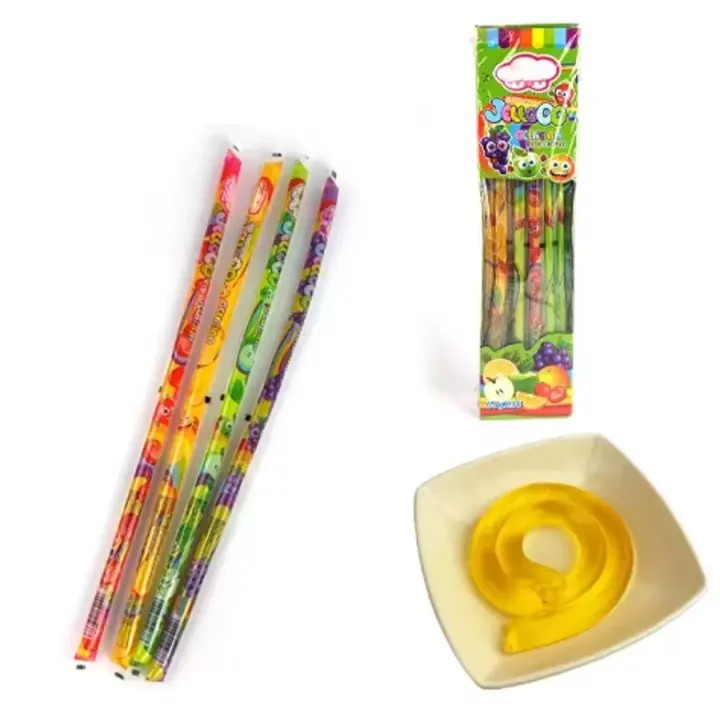
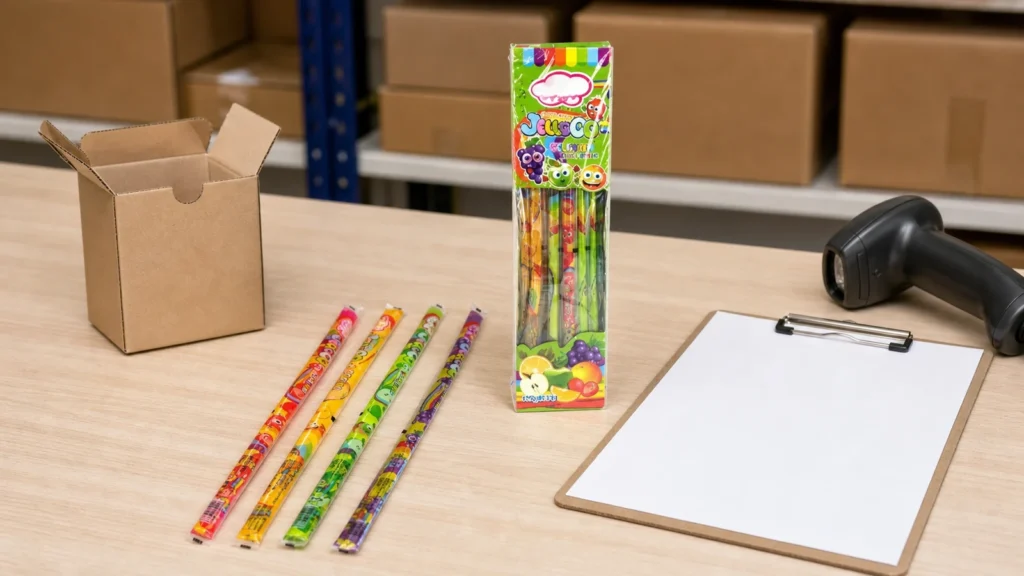
The direct answer is to stop the shipment until the buyer, importer, broker, or responsible compliance party confirms the product identity, intended use, shipment route, facility information, prior-notice responsibility, and required confirmation details. KidStar SKU YMX-140 Pudding Jelly provides a concrete food-sample example, but the final filing and admissibility decision must follow the actual shipment and current U.S. requirements.
Start with the intended use of the sample
The first question is not whether the parcel is small. It is what the candy will be used for after arrival.
FDA’s October 2023 Edition 4 guidance states that there is no general prior-notice exemption based on small value or quantity, for food samples used in research and development, or for food samples used in test marketing. It also says a trade sample carried into the United States is not covered by the personal-use exclusion because a trade sample is for commercial use.
The same guidance describes a narrower enforcement-discretion policy for certain quality-assurance, research, or analysis samples when quantities are consistent with that purpose and the entire sample is used up or destroyed after testing. That policy is not the same as a general exemption. Buyers should have the responsible importer, broker, laboratory, or authority review whether it applies to the actual shipment.
For a tasting, buyer evaluation, test-marketing, retailer presentation, or other commercial food-sample route, do not assume the parcel can move without prior notice.
Fix the exact product identity before booking
YMX-140 is recorded as Pudding Jelly packed as 60 g × 30 sticks × 12 boxes per carton. A sample parcel may contain only a few sticks or one box, but the shipment file still needs the identity and quantity of the food actually sent.
Use the YMX-140 product page to anchor the internal request, then record:
- exact SKU and current product name
- actual sample quantity and package size in the parcel
- manufacturer and shipment origin information required by the responsible filer
- intended U.S. recipient and use
- carrier and transport mode
- anticipated arrival details available at the time of filing
- the party submitting or transmitting prior notice
- the confirmation number and where it must appear for the chosen route
Do not copy the full 30 × 12 commercial carton hierarchy into the parcel quantity field unless the parcel actually contains that amount.
Use a pre-dispatch responsibility table
| File owner | Question to close | Evidence to retain | Hold signal |
|---|---|---|---|
| Buyer or importer | What will the YMX-140 sample be used for in the U.S.? | Written intended-use statement | “Sample” is the only explanation |
| Supplier | What exact food, package size, and quantity will be sent? | SKU, product description, unit count, package photos, commercial or pro forma document | Parcel contents differ from the request |
| Importer or broker | Does prior notice apply, and who will submit it? | Named responsible party and reviewed shipment facts | Responsibility is left to the courier without confirmation |
| Prior-notice submitter | Which data and timing apply to this route? | Submission record and confirmation details | Filing is based on estimated or inconsistent product identity |
| Carrier or logistics contact | What route and declaration placement are required? | Booking and document instructions | International-mail and express-carrier rules are treated as identical |
| Receiving team | Who will receive, store, evaluate, or dispose of the samples? | Recipient, address, evaluation plan, and disposition record when relevant | No owner after arrival |
This table is an operational control. It does not replace the FDA rule, customs entry work, FSVP responsibilities, facility registration, labeling review, or professional advice.
Do not rely on the courier label alone
FDA’s guidance says food transported by express carriers or express consignment operators is not exempt from prior notice. It also distinguishes international mail: prior notice must be submitted and confirmed before the food is sent, and the confirmation number has a specific customs-declaration role.
That means “FedEx sample,” “DHL sample,” or “no commercial value” is not a complete import plan. Before dispatch, the parties should reconcile the carrier booking with the FDA submission route and the customs documents. A courier can move the parcel, but the buyer still needs to know who owns the food-import information and whether the data across systems match.
The KidStar sample process can organize product selection and physical evaluation. U.S. import requirements remain a separate buyer/import-team responsibility.
Treat the confirmation number correctly
A prior-notice confirmation number is evidence that FDA received a submission for review. FDA’s guidance states that receipt of the number does not mean the food has been approved for admission, will not be examined, or complies with every other applicable U.S. requirement.
Keep three states separate in the file:
1. submitted and received for FDA review 2. matched to the actual shipment and route 3. admitted after all applicable import requirements are considered
This prevents a team from treating one system receipt as a product approval or shipment clearance. FDA also states that it does not approve, certify, license, or otherwise sanction individual food importers, products, labels, or shipments in advance through the ordinary food-import process.
Reconcile the parcel before handoff
On dispatch day, compare the physical contents with the product and quantity used for the import file. For YMX-140, check the number of sticks or boxes actually packed, the package-size description, the recipient, and the transport route. If any of those facts changed after prior notice was prepared, the responsible party should review whether the existing submission can still be used or must be changed or replaced.
A useful final photo set shows the individual YMX-140 unit, all units going into the parcel, the closed inner package, and the sealed outer parcel. Avoid publishing sensitive document numbers in shared chat; store them in the controlled shipment file.
U.S. candy-sample dispatch checklist
- State the intended use of the sample in writing.
- Do not assume small quantity or “no commercial value” creates an exemption.
- Tie the parcel to exact SKU YMX-140 and the physical quantity sent.
- Name the importer, broker, or other responsible compliance party.
- Confirm who submits prior notice and which shipment facts they need.
- Match the carrier route, customs document, and confirmation instructions.
- Keep facility-registration, FSVP, labeling, and admissibility questions separate.
- Treat the confirmation number as a receipt for review, not a product approval.
- Reconcile the packed parcel with the filed product and quantity before handoff.
- Preserve the submission and receiving records in one controlled file.
Send the target U.S. recipient, intended sample use, exact YMX-140 quantity, carrier route, requested timing, and named importer or broker through the contact page. KidStar can prepare the product-side sample facts, while the responsible U.S. import team confirms the current filing and entry route before shipping.
Sources reviewed
- FDA: Importing Human Foods — official FDA import overview; reviewed 2 September 2026.
- FDA: Prior Notice of Imported Food, Questions and Answers, Edition 4 — official nonbinding guidance; October 2023 edition; reviewed 2 September 2026.
- FDA: Importing Food Products into the United States — official FDA procedures page; reviewed 2 September 2026.
- KidStar SKU YMX-140 Pudding Jelly product record — first-party product record; reviewed 2 September 2026.