EU BPA candy packaging review now needs a component-by-component document check, because the general transitional deadline for certain final food-contact articles manufactured using BPA was July 20, 2026. Importers should map every food-contact component, its material, manufacturer, intended use, and declaration evidence before approving new EU-bound packaging.
The direct answer is not to assume that a clear candy jar contains BPA or that it is automatically BPA-free. Use KidStar SKU YMX-004 Powder Candy as a real pack-mapping example—8 g powder × 48 jars × 12 tubs—then obtain packaging-specific evidence for the exact production version and have the responsible EU operator review it.
What changed under Regulation (EU) 2024/3190
Commission Regulation (EU) 2024/3190 prohibits the use of BPA and its salts in the manufacture of covered food-contact materials and the placing on the Union market of food-contact materials manufactured using BPA, subject to limited derogations. Its scope includes plastics, adhesives, rubbers, ion-exchange resins, printing inks, silicones, and varnishes or coatings.
The regulation entered into force in January 2025. For many non-compliant single-use and repeat-use final food-contact articles that had complied with the earlier rules, the general 18-month transitional period ended on July 20, 2026. Some narrowly defined applications have longer periods. The European Commission’s implementation guidance says imported food-contact materials follow the same transitional rules when placed on the Union market.
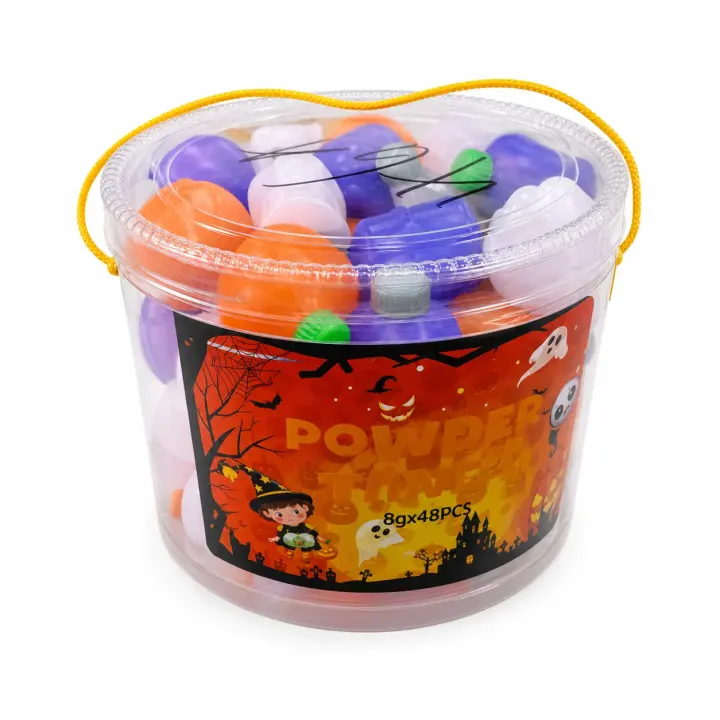
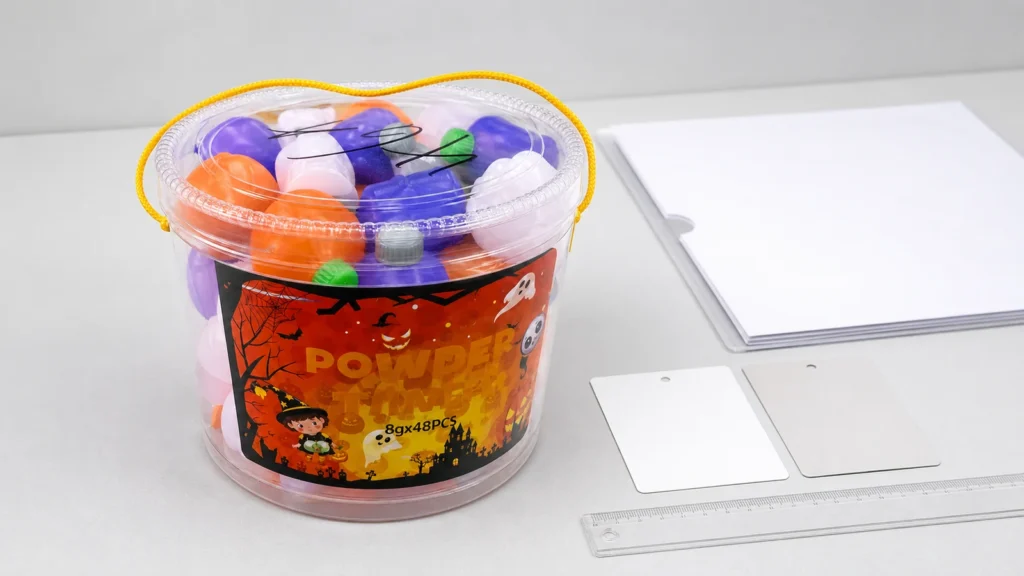
This is a packaging-document trigger, not proof about YMX-004. The live image shows a clear outer tub and individual bottle-shaped powder-candy units, but a photograph cannot identify the polymer, coating, adhesive, printing-ink system, or manufacturing chemistry.
Map the exact YMX-004 pack before asking for a declaration
Start with the current product record and identify each component that may contact food or form part of the finished packaging system.
| Pack level | Current YMX-004 reference | Buyer question | Evidence owner |
|---|---|---|---|
| Candy unit | 8 g powder candy | What directly contains the powder? | Food/pack supplier |
| Unit container | Bottle-shaped jar and closure shown in the image | Exact resin, closure, liner, colorant, and food-contact use? | Packaging manufacturer |
| Unit print/label | Printed or labeled consumer unit | Ink, coating, adhesive, and non-contact barrier route? | Printer/converter |
| Outer tub | 48 jars per tub | Is the tub food-contact, secondary packaging, or both in the final use? | Pack supplier and buyer |
| Carton | 12 tubs per carton | Any food-contact role, or transport only? | Supplier/buyer |
Do not reuse a declaration from a similar-looking jar. Match documents to the exact component, supplier, material grade, color, manufacturing site, and date or version.
Request eight fields in the packaging evidence file
Regulation (EU) 2024/3190 requires a written declaration of compliance for covered food-contact materials and articles at relevant marketing stages before retail. Annex III lists information that belongs in the declaration. A buyer-facing evidence request should capture at least these eight fields:
1. identity and address of the business issuing the declaration 2. identity and address of the manufacturer or importer when different 3. exact identity of the intermediate material or final food-contact article 4. declaration date and controlled document version 5. list of relevant bisphenols or derivatives used in manufacture, where applicable 6. confirmation that the article complies with the rules applicable to it 7. intended food-contact use, including relevant time and temperature conditions 8. supporting test, supplier, or compliance documents needed to substantiate the declaration
The importer should have a responsible technical or legal reviewer confirm what is required for the exact article. A supplier questionnaire is not the declaration itself, and a declaration is not a substitute for the evidence needed to support it.
Use a red-amber-green document decision
Convert the file review into an action table so open questions do not disappear into email threads.
| Status | Evidence state | Buyer action |
|---|---|---|
| Green | Exact component and version identified; declaration and supporting evidence match intended use | Continue to artwork and final pack approval |
| Amber | Material or intended use is known, but supplier/version/test support is incomplete | Hold approval and request the missing evidence |
| Red | Declaration refers to another article, supplier, resin, use condition, or outdated rule set | Reject the file for this pack version |
| Out of scope decision pending | Buyer has not established whether the component falls within the reviewed food-contact role | Escalate to the responsible EU reviewer |
Keep “not shown to contain BPA” separate from “documented as compliant.” Silence in a material sheet is not a compliance conclusion.
Check lids, labels, inks, and adhesives—not only the jar body
The official regulation covers more than plastic resin. A pack audit should trace closures, liners, labels, adhesives, printing inks, coatings, and any intermediate material that becomes part of the final food-contact article.
Ask the packaging chain to name the component and the role of each layer. If a printed label sits outside the direct food-contact surface, record that construction instead of assuming the rule is irrelevant. If the container is supplied through several converters, preserve the link between upstream evidence and the final article.
The packaging customization route helps define artwork and pack changes, while the candy labeling documentation checklist keeps food-label decisions separate from packaging-material evidence. Both files should point to the same controlled product version.
Do not let old stock and new production share one status
Transitional provisions can depend on article type, manufacture, placing on the market, intended food, and date. The Commission guidance also explains how imported food-contact articles are treated. Buyers should therefore separate:
- stock already placed on the Union market
- empty packaging waiting to be filled
- newly manufactured packaging
- repeat-use articles
- any narrowly defined application that may have a longer transition
Do not make that classification from a sales invoice alone. Record the relevant dates, the legal operator’s role, the exact article, and the reason for the selected route, then have the responsible EU specialist confirm it.
Lock the evidence before artwork and order approval
Packaging material changes can affect artwork, testing, seal performance, price, and lead time. Use a controlled approval sequence:
1. identify the exact YMX-004 production and pack version 2. map every component and supplier 3. obtain current declarations and supporting evidence 4. resolve red and amber items with the responsible EU reviewer 5. approve material and intended-use conditions 6. approve artwork against the same version 7. approve the physical sample or pre-production pack 8. release the purchase order only after the evidence index is complete
If the buyer needs a wider pack comparison, use the pouch-versus-jar decision guide without assuming that one format is automatically easier to document.
Send one controlled EU packaging brief
For an EU-bound YMX-004 review, send the destination member state, exact pack version, intended use, unit and outer-pack structure, material evidence already held, artwork status, quantity direction, and open compliance questions through the contact page. Do not send confidential formulas or third-party certificates through an uncontrolled channel.
KidStar can then answer the commercial request against the exact 8 g × 48 jars × 12 tubs reference while the importer retains responsibility for the EU legal and market decision.
Sources reviewed
- KidStar YMX-004 Powder Candy product record, reviewed August 28, 2026.
- EUR-Lex: Commission Regulation (EU) 2024/3190, published December 31, 2024 and reviewed August 28, 2026.
- EUR-Lex: Note for Guidance on Regulation (EU) 2024/3190, published December 17, 2025 and reviewed August 28, 2026.