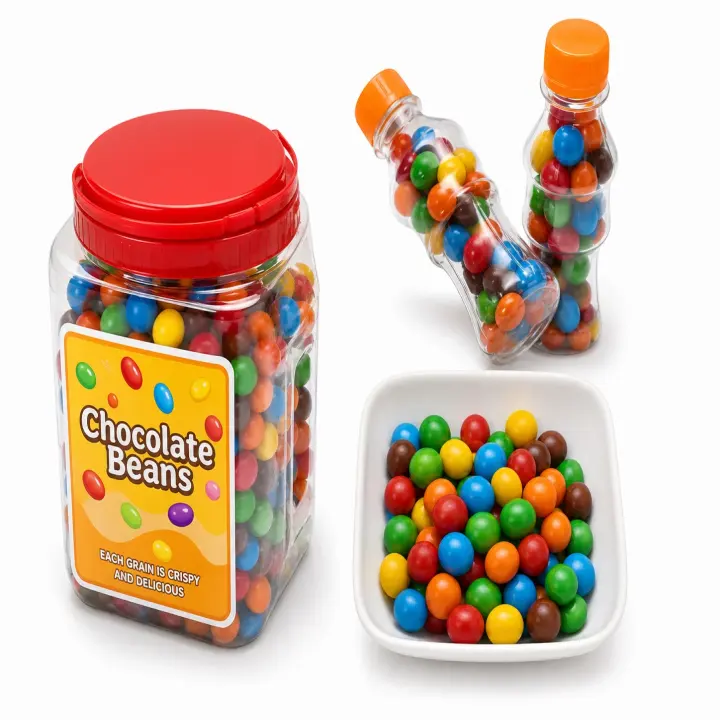

Chocolate import planning into the European Union is no longer only a question of flavor, pack design, and launch timing. For buyers working on chocolate lines, supply-chain evidence now matters much earlier in the workflow. That is why KidStar SKU YM-004 is a useful planning example. It is a 7 g large chocolate bottle packed as 60 small bottles x 10 jars/carton, which means it can look like a simple impulse line while still raising documentation questions for EU-facing routes.
The current issue is the EU Deforestation Regulation, often shortened to EUDR. The regulation covers cocoa among the listed commodities, and the European Commission currently says it will apply from 30 December 2026 for large and medium operators and from 30 June 2027 for other micro and small operators. For a buyer building an EU route, that means product choice, supplier records, and launch timing can no longer be left until the end.
This article does not assume that every chocolate bottle line automatically falls into the same customs treatment. Buyers still need to confirm the exact classification and route with their compliance and customs teams. But if the planned YM-004 route falls under the EU’s covered cocoa-derived product scope, the sourcing file should start earlier than many confectionery teams expect.
What changed in 2026 and why buyers should care now
The European Commission updated EUDR guidance and implementation tools in 2026 to prepare businesses for the end-of-2026 application date. The core message is that companies placing covered products on the EU market need a due-diligence workflow that can show the products are deforestation-free and produced in accordance with the relevant legislation of the country of production.
For importers and private-label buyers, that matters for two reasons:
- launch calendars that once focused only on samples and packaging now need a compliance workstream
- supplier conversations need to start with scope screening and data readiness, not only with price and artwork
The practical change is timing. A buyer who waits until the first purchase order is nearly ready may discover that the sales team likes the item but the supporting traceability file is not ready. A buyer who screens the route earlier can still move quickly, because the commercial and compliance tracks run in parallel instead of colliding at the end.
First decide whether your YM-004 route is inside the cocoa product scope
The regulation itself covers cocoa and certain derived products, and official EU guidance explains that food preparations containing cocoa can fall within the relevant product scope. That means a chocolate item cannot be waved through with a generic "it is only confectionery" assumption.
For YM-004, the first screening questions should be:
- Is the planned EU route actually a cocoa-containing chocolate product under the relevant customs heading?
- Is the line being placed on the EU market by an operator that must hold the due-diligence file?
- Is the first buyer acting as an importer, downstream operator, or trader in the route?
Those role questions matter because the regulation assigns different responsibilities across the chain. If the buyer does not identify the role at the start, the team can end up asking the wrong party for the wrong file.
This is where the YM-004 product page helps as a stable product anchor, while the certifications and compliance page helps frame the supplier-document conversation. The buyer should use those pages to keep the SKU fixed while the legal role and market route are clarified.
Build the due-diligence file before the label file is final
The strongest operational change under EUDR is that the traceability file should not be treated as a last-minute attachment. Official EU guidance says operators need information and evidence that supports compliance, including supply-chain details tied to the relevant commodity. For cocoa-derived routes, the official guidance also explains that highly processed products still require product-level diligence.
For a buyer planning an EU route for YM-004, the working file should usually cover:
| File item | Why it matters for an EU-facing chocolate route | Who normally drives it first |
|---|---|---|
| Product scope screening | Confirms whether the exact route falls into the covered cocoa-derived product set | Buyer compliance or importer team |
| Supplier chain map | Shows who supplied the cocoa-derived inputs and which commercial parties are involved | Supplier and sourcing team |
| Due-diligence statement workflow | Determines how the route will be documented in the EU information system | EU operator/importer side |
| Commodity traceability evidence | Supports the claim that the cocoa-linked route meets the EUDR standard | Supplier with operator review |
| Launch-date check | Prevents a commercial launch from outrunning the compliance timeline | Buyer project owner |
That does not mean the buyer must solve every legal detail alone. It means the buyer should know early whether the file exists, who owns it, and whether the supplier route is mature enough for an EU launch.
Match the launch timeline to the official EUDR dates
One reason buyers need to reopen planning now is the official application timetable. As of August 1, 2026, the Commission’s current overview says:
| Business situation | Official application date to plan around |
|---|---|
| Large and medium operators | 30 December 2026 |
| Micro and small operators | 30 June 2027 |
| Micro and small operators already covered by the EU Timber Regulation | 30 December 2026 |
This matters for YM-004 because a buyer launching late in 2026 may still be approving samples and artwork while the operator side is already preparing for the regulation’s application. If the launch is targeted for early 2027, the buyer should work backward from the date when the route will be placed on the market rather than from the sample date alone.
The lesson is not to stop sourcing chocolate products. The lesson is to stop treating compliance timing as a separate last-week task.
Keep the supplier brief practical and SKU-specific
Once the buyer believes YM-004 may be part of an EU route, the supplier brief should stay narrow and operational. A good request usually asks:
- exact SKU: YM-004
- target market: specific EU country or region
- route type: stock export, importer label, or private-label path
- expected operator on the EU side
- current product classification assumption
- traceability or due-diligence documents already available
- open questions that still block the launch
That kind of brief is stronger than a vague request for "all compliance documents." It helps the supplier answer with the right evidence instead of a generic pack of files that may not match the EU route.
The packaging customization page is still relevant, but it should come after scope screening, not before it. If the route needs new artwork, brand work, or language updates, those tasks should move in parallel with the diligence file rather than replacing it.
Hold the EU launch when one of these risk signals appears
Buyers should usually slow the EU route for YM-004 when:
- nobody can confirm whether the route is in scope under the cocoa-derived product list
- the operator role on the EU side is still unclear
- the supplier cannot explain what traceability evidence exists for the cocoa-derived inputs
- the sales team wants to open the market before the due-diligence workflow is assigned
- the label conversation is moving faster than the market-entry evidence
Those are not reasons to reject the SKU. They are reasons to separate a general export route from a time-bound EU route and keep the decision tree clean.
Use YM-004 as a launch-planning test, not only a sample item
YM-004 is a helpful example because it looks commercially simple while exposing a real change in EU import planning. The stronger buyer workflow is to fix the SKU, screen the scope, assign the operator role, and build the due-diligence lane before the route hardens.
If you want KidStar to review whether YM-004 fits a general export route or an EU-specific planning path, send the target market, route type, and current compliance questions through the contact page. That allows the team to respond with the right product and document workflow instead of a generic chocolate offer.
Sources reviewed
- European Commission: Regulation on Deforestation-free Products
- EUR-Lex consolidated text of Regulation (EU) 2023/1115
- European Commission: Commission updates product scope and digital tools to support implementation of EUDR
- EUR-Lex guidance document for Regulation (EU) 2023/1115
- KidStar SKU YM-004 product record
- KidStar certifications and compliance page